CBS Spiked Colbert’s Talarico Interview and Created the Biggest Campaign Ad of 2026

Screenshot
CBS kept a Democratic Senate candidate off of Late Night and instead staged a breakout moment for him, and terrific promotional material for a show that will go off the air in May.
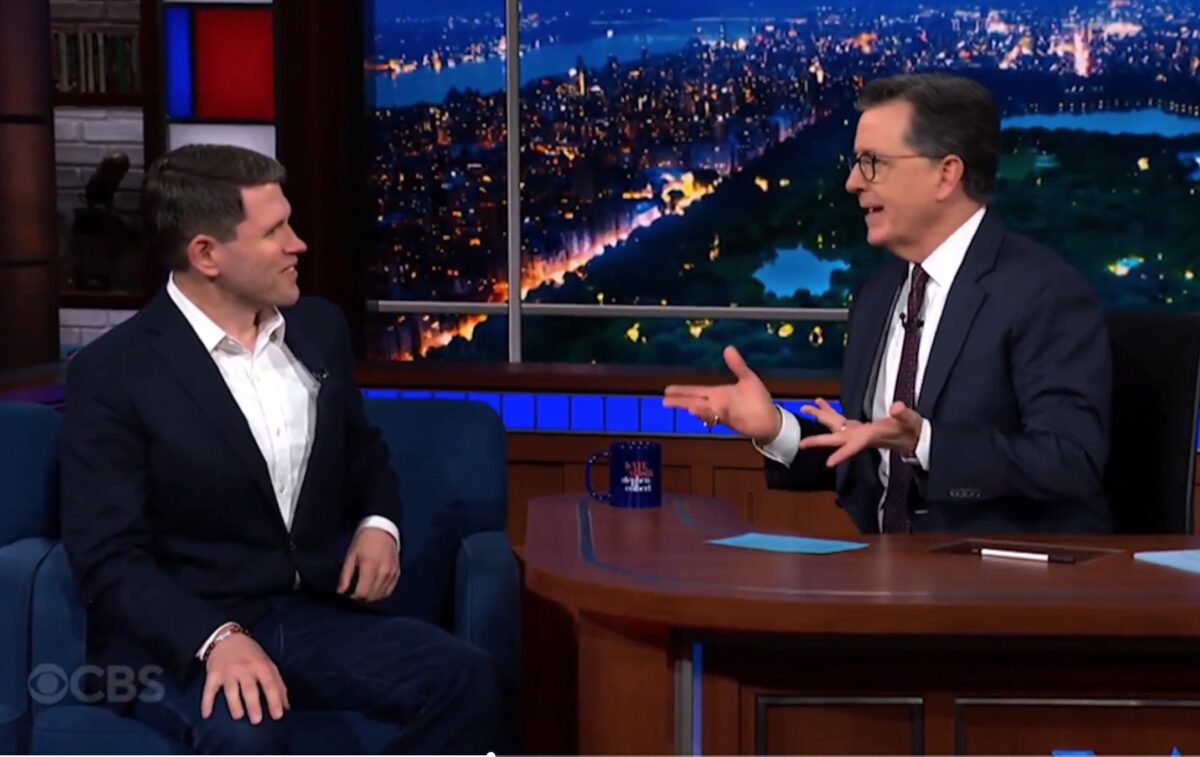
Something extraordinary happened on late night CBS when host Stephen Colbert candidly revealed to viewers that a planned interview with Texas Democratic Senate candidate James Talarico had been spiked, then went into great detail as to why, not at all hiding his abject disdain for the decision.
The explanation was anxiety over the byzantine FCC equal-time rule, a 1934 statute governing broadcast license holders. Rather than quietly pivot to another guest, Colbert turned the kill into the show. The ban became the bit. Fueled by both genuine outrage and sharp showmanship, he understood the rules of modern attention: nothing travels faster than something framed as forbidden.
Talarico is running in a crowded Texas Senate race where name recognition is oxygen. The anachronistic equal time rule exists to prevent broadcasters from tilting the scales by favoring one candidate over others. Yet by spiking the interview and publicly attributing the move to regulatory fear, CBS delivered him something far more valuable than a late night appearance. He received a national storyline about suppression.
Talarico wasted no time leaning into it. Sharing a clip of Colbert explaining the spike, he posted on X: “This is the interview Donald Trump didn’t want you to see. His FCC refused to air my interview with Stephen Colbert. Trump is worried we’re about to flip Texas.” In other words, the regulatory caution instantly became campaign messaging. The segment CBS declined to air as scheduled turned into a rallying cry distributed to millions without the constraints that triggered the anxiety in the first place.
Colbert also understands the promotional upside. With his show ending in May, a very public clash with network lawyers reframes him as a host unafraid to challenge corporate caution. That narrative attracts viewers. The segment that never aired became better television than the interview likely would have been. In turning the spike into content, Colbert strengthened his own relevance while amplifying his guest.
What changed is the risk tolerance — not because the law shifted, but because CBS parent Paramount is navigating a media landscape where regulatory goodwill matters for reasons that have nothing to do with late-night bookings.
For decades, late-night programs operated with broad confidence that they qualified for news interview exemptions even when politics ran through a comedic filter. Presidents and presidential hopefuls made the rounds without corporate legal departments slamming on the brakes. Now, with regulators signaling greater scrutiny and broadcast licenses always subject to federal oversight, lawyers are stepping in sooner. Political bookings begin to look like exposure.
The asymmetry makes the caution look even more misplaced. Fox News, MS NOW, podcasters, YouTube personalities, and every streamer with a camera can platform candidates for hours without worrying about equal time complaints. The rule applies only to over-the-air broadcasters. That means legacy networks hesitate while their competitors surge ahead. The practical effect is simple: the only outlets chilled are the ones already losing ground in the attention economy.
And here is the deeper incoherence. CBS does not primarily reach its audience through the mechanism being regulated. Late night in 2026 is a clip engine: far more viewers encounter it on YouTube, TikTok, Instagram, and X, often the morning after broadcast. The FCC polices a long-outdated broadcast pipe, but its audience lives somewhere else. Applying a 1934 broadcast framework to a distribution model dominated by algorithms is a mismatch only corporate lawyers could love
By transforming a routine booking into a controversy about government pressure, CBS guaranteed Talarico more exposure than a standard Colbert appearance would have generated. A normal segment would have cycled through predictable partisan reactions and faded. A story about a network spiking a candidate under regulatory fear carries heat. It invites amplification, indignation, and repeat sharing across platforms untouched by the rule.
The Bulwark’s Sonny Bunch captured the broader frustration on X: “Main takeaway from the Talarico-CBS-Colbert thing is, once again, that the FCC should probably just be abolished and in an age of unlimited reach thanks to the internet most rules governing broadcast media are completely obsolete.” That argument goes further than many would, but it underscores the obvious tension. Broadcast remains regulated as if scarcity governs political speech. The internet has erased scarcity.
The irony is hard to ignore. A rule designed to ensure fairness among candidates produced a singular advantage for one of them. By trying to avoid tilting the race, CBS created a moment none of Talarico’s opponents received: a national platform framed around the idea that powerful forces wanted him muted.
In a media ecosystem driven by virality and grievance, suppression operates as promotion. A network anxious about regulatory exposure ended up producing the most effective campaign clip in the race.
This is an opinion piece. The views expressed in this article are those of just the author.
New: The Mediaite One-Sheet "Newsletter of Newsletters"
Your daily summary and analysis of what the many, many media newsletters are saying and reporting. Subscribe now!







Comments
↓ Scroll down for comments ↓