
Doth Protest Too Much? Trump’s Unprompted Cognitive Defense Keeps the Aging Story Alive

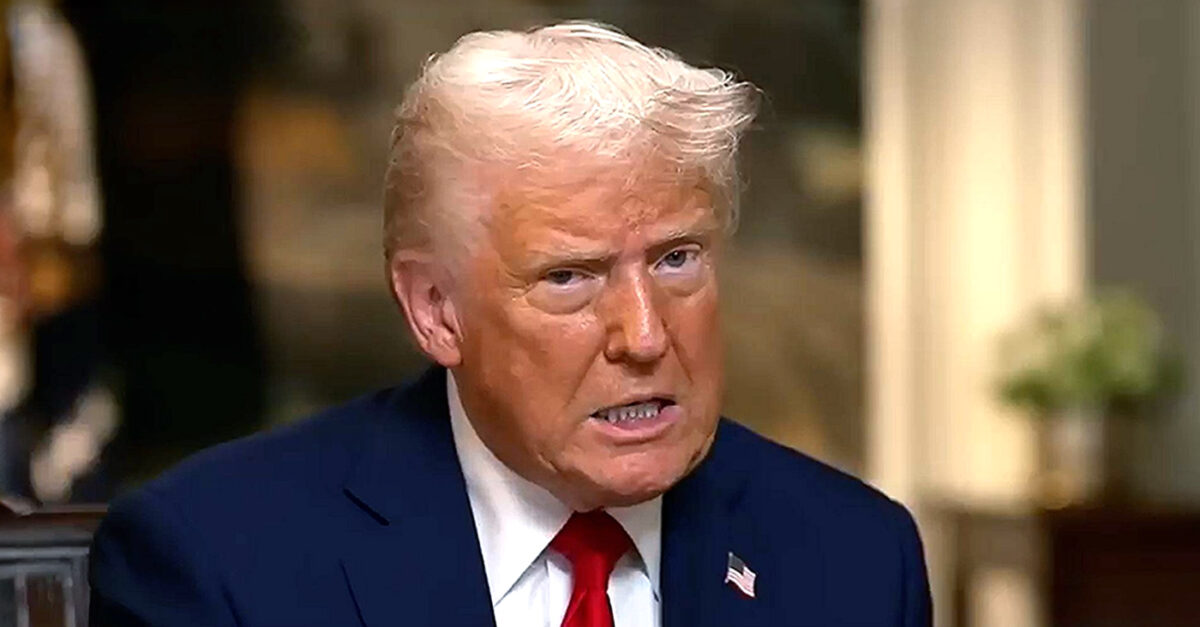
President Donald Trump reignited questions about his health on Friday with a Truth Social post declaring himself in “PERFECT HEALTH,” boasting that he “ACED” a cognitive exam, and calling for mandatory testing for anyone seeking the presidency or vice presidency. January 2 is traditionally a dead news day in Washington, the kind of moment when stories fade rather than metastasize.
Trump chose to revive one.
The White House Doctors have just reported that I am in ‘PERFECT HEALTH,’ and that I ‘ACED’ … my Cognitive Examination,” Trump wrote. “I strongly believe that anyone running for President, or Vice President, should be mandatorily forced to take a strong, meaningful, and proven Cognitive Examination. Our great Country cannot be run by ‘STUPID’ or INCOMPETENT PEOPLE!
The post followed a Wall Street Journal exclusive that drew attention through detail rather than drama. The Journal did not question Trump’s cognition. It described a 79-year-old president showing visible signs of aging, resisting medical advice, and growing increasingly irritated by scrutiny of his physical condition.
Swollen ankles. Excessive aspirin use leading to bruising. Hearing issues. Fatigue during public events. Compression socks discarded because he “didn’t like them.” Makeup applied to conceal cuts on his hands. Trump himself complained that undergoing advanced imaging had given critics “ammunition.”
That complaint was revealing. It framed medical care as a political liability rather than a responsibility, and health as a matter of optics rather than condition.
For years, Trump ridiculed Joe Biden’s age, accusing him of decline, stage management, and reliance on aides to control appearances. By the end of Biden’s term, his cognitive decline was even more evident and politically consequential. The Journal now describes Trump being urged to shorten meetings, conserve energy, and stay alert during public events. The difference is not subtle. Biden’s team worked to suppress the narrative. Trump revived it himself on a slow news day built to bury stories
Shakespeare had a phrase for this. “The lady doth protest too much, methinks,” Queen Gertrude observes in Hamlet. The vow is so emphatic it draws attention to the anxiety beneath it. Excessive protest does not reassure. It exposes.
Notably, Trump’s response did not engage the Journal’s reporting. He reframed the issue as mental acuity and demanded a standard tailored to a test he knows he can pass. Passing a cognitive screening is not evidence of presidential fitness. It is a floor, not a ceiling. Treating it as proof of excellence reduces governance to a binary performance, stripped of institutional weight and complexity.
The outburst also revealed something sharper. Trump has lost a step in the discipline that once defined him. For years, he understood when to redirect attention and when to let a story suffocate on the calendar. Friday offered him exactly that exit. He did not take it. Instead, he pulled the issue back into the open, ensuring continued focus on a subject that had no strategic reason to persist.
That choice matters. It suggests fixation rather than control. The protest itself became the headline.
When defense becomes performance, performance becomes evidence. Trump’s insistence on “PERFECT HEALTH” did not quiet the conversation. It ensured it would continue. And the fact that he could not let a story die on the quietest news day of the year exposed exactly what the Journal reported: not cognitive decline, but something harder to manage. The loss of discipline. The drift from instinct into fixation. The weakening grip on the gift that once made him dangerous.
This is an opinion piece. The views expressed in this article are those of just the author.
New: The Mediaite One-Sheet "Newsletter of Newsletters"
Your daily summary and analysis of what the many, many media newsletters are saying and reporting. Subscribe now!





Comments
↓ Scroll down for comments ↓