
Jimmy Kimmel Threads an Impossible Needle in a Monologue for the Moment

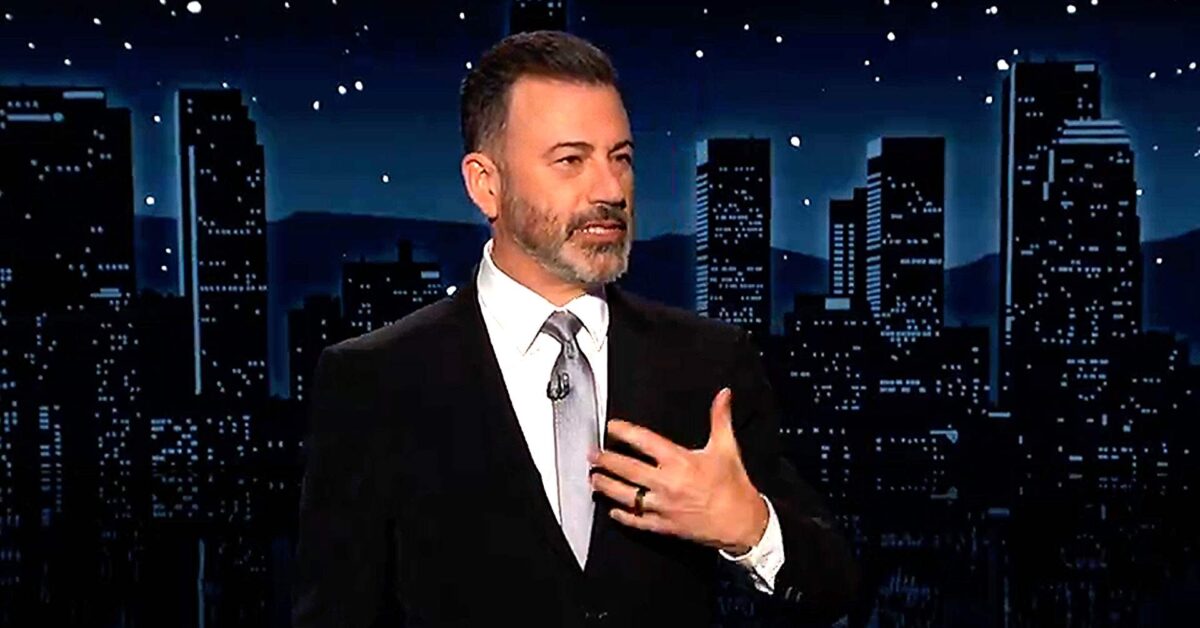
Every so often, a late-night monologue can transcend comedy and become a kind of civic address. Jimmy Kimmel delivered one of those on Tuesday night.
After a week of suspension, pressure campaigns, and fevered speculation, he returned to ABC with the unenviable task of responding to his own controversy while honoring the tragedy that set it all in motion: the murder of Charlie Kirk.
What unfolded was not just deft television. It was a masterclass in rhetorical balance, pairing vulnerability with principle, contrition with defiance. Kimmel didn’t just thread the needle — he turned the act itself into a lesson in how free expression can survive, even in a culture addicted to outrage.
Kimmel began in a register we rarely see on late-night television: raw grief. His voice cracked as he recounted Kirk’s death, a note he later hit while describing Erika Kirk’s remarkable act of forgiveness for her husband’s killer. “That’s a true Christian belief,” Kimmel said, aligning himself with a grace that seemed to humble him. He spoke not as a satirist or provocateur, but as a human being reckoning with loss.
He also addressed his own words — the ones that had ignited the firestorm. He was contrite, insisting that he had never meant to say the shooter was MAGA, but suggesting instead that he was pointing to the immediate politicization of the tragedy by MAGA figures themselves. He admitted that he, too, had politicized in that moment. That mattered. Contrition is rare in public life, and even more rare on television. Kimmel didn’t try to hedge or soften the blow. He owned it.
And yet, woven into that humility was something harder, sharper: defiance. Kimmel reminded viewers that freedom of speech is not negotiable, that a president cannot — must not — use the levers of government to push a critic off the air simply because he didn’t like a joke. He was frustrated with ABC’s decision to suspend him, but his critique extended beyond corporate timidity. This was about principle, about the stakes of democratic culture itself.
Then came the twist — the move that flipped the script on his critics. Kimmel cited his political and ideological foes like Ted Cruz, Ben Shapiro, Clay Travis, and even FCC Commissioner Brendan Carr — all conservatives who have, at one time or another, positioned themselves as defenders of free speech. He quoted them directly, turning their past rhetoric into present-day testimony for his own cause. Even President Donald Trump, who once celebrated “total free speech” in America, was hoisted by his own words — this after calling for Kimmel’s firing once more before the broadcast.
For years, conservatives have defined themselves as the defenders of expression, railing against what they call “cancel culture” from the left. But on Tuesday night, Kimmel inverted the dynamic. It was the liberal late-night host who claimed the mantle of free speech, forcing his usual critics into silence.
Yes, the usual outrage merchants are trolling, but legacy conservative outlets — the ones with more to lose — have thus far been notably restrained, at least judging from the remarkably muted reaction on the first two hours of Fox & Friends. I suspect that will change, but by conceding his own error and elevating the conversation to constitutional principle, Kimmel stymied the usual cycle.
This was the hidden genius of the monologue: contrition and defiance, delivered in one breath. He admitted fault, even embarrassment, and then used that vulnerability to stand taller on the terrain of principle. It is a pairing that feels nearly impossible in today’s discourse, where every apology is seen as weakness and every defense as arrogance. Kimmel showed that the two can live together, and that when they do, they carry an uncommon power.
He didn’t shy away from his principles or policies he believes in either. He spoke about keeping kids safe from gun violence, about the values that continue to shape his worldview. But the tone was less a cudgel than a conviction, expressed with the sincerity of someone who knows his platform may not always be secure.
Will it change the toxic spiral we are in? Likely not. Outrage will churn on, the next controversy already waiting. But for one night, millions of Americans saw something unusual: a man who could cry, admit fault, and still defend his right to speak without flinching. It was emotional, funny in flashes, but above all, it was honest.
That may not heal our wounds. But it did something valuable in its own right: It reminded us that grace and principle, humility and strength, are not opposites. They can — and must — coexist if we are to have any hope of climbing out of the anger that consumes us.
This is an opinion piece. The views expressed in this article are those of just the author.
New: The Mediaite One-Sheet "Newsletter of Newsletters"
Your daily summary and analysis of what the many, many media newsletters are saying and reporting. Subscribe now!





Comments
↓ Scroll down for comments ↓