Pam Bondi Shows Katy Tur Was Right on Trump Weaponizing Grief

Screenshot
The assassination of Charlie Kirk should have been a moment of pause. However one felt about the brash conservative provocateur and free speech advocate, his killing was shocking and sobering. The instinct in a healthy civic culture would be to stop, to grieve, to allow space for shock before the machinery of politics whirred back to life. That instinct has all but vanished.
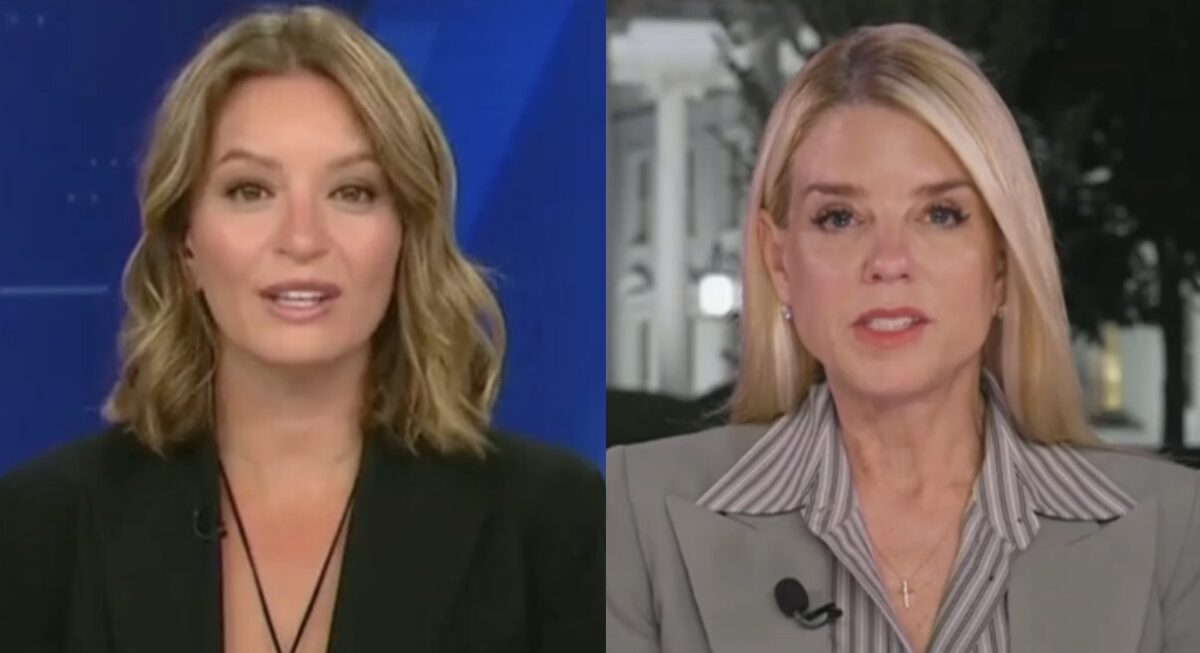
Instead, Kirk’s death became instant fodder for partisanship. Katy Tur’s much-maligned question on MSNBC — whether President Donald Trump might use the assassination “as a justification for something bad” — was clumsy in its timing and drew harsh criticism, even from me.
But the events that followed suggest that while she was premature in asking about how it would play out in terms of policy, she has been proven absolutely correct in her premise.
Since Kirk’s death, Trump swiftly folded the tragedy into his broader narrative of grievance, promising investigations into his political enemies. When asked about how he can fix the dangerously divided nation, he admitted that he “couldn’t care less” if what he was about to say got him in trouble — then followed by blaming the divide on the extreme left, while defending the extreme right for just wanting to fix the country.
Then came Attorney General Pam Bondi, who appeared on Hannity to issue an extraordinary threat: Office Depot employee who was fired for declining to print Charlie Kirk memorial flyers, she said, could face prosecution. “We can prosecute you,” Bondi warned, implying their refusal was tantamount to a hate crime.
“We will absolutely target you, go after you, if you are targeting anyone with hate speech,” she blustered.
In that single flourish, Bondi revealed both the hypocrisy and the danger of our moment. For years, conservatives built their identity around resisting compelled speech. They defended the Colorado baker who refused to make a wedding cake for a same-sex couple, arguing that the state could not force him to craft words or symbols he did not believe. They have resisted pronoun laws, flag displays, and workplace diversity pledges on the same principle: free expression includes the freedom not to participate.
Now, that principle is being inverted. Under Bondi’s logic, a clerk who declines to run flyers for many see as a political martyr is not exercising freedom of conscience but committing a crime. In this new order, mourning itself becomes compulsory. To refuse is to risk prosecution.
It is not just the hypocrisy that is chilling, but the speed—barely had Kirk’s family absorbed the shock when the tragedy was conscripted into the permanent campaign. There was no civic pause, no moment of unadorned mourning. Instead, we were told that to grieve correctly meant to grieve publicly, and to grieve publicly meant to align with the party line.
That is the real danger Katy Tur stumbled toward in her awkward question. Not merely that Trump would exploit Kirk’s assassination, but that the machinery around him would turn private sorrow into a public loyalty test.
Charlie Kirk’s death deserved a measure of dignity. Instead, it has been transformed into a tool: for Trump to project power, and for Bondi to threaten prosecution. What began as tragedy now doubles as spectacle, forcing citizens not just to reckon with violence but with the creeping idea that even grief itself is no longer free.
This is an opinion piece. The views expressed in this article are those of just the author.
New: The Mediaite One-Sheet "Newsletter of Newsletters"
Your daily summary and analysis of what the many, many media newsletters are saying and reporting. Subscribe now!








Comments
↓ Scroll down for comments ↓