
Paul Thomas Anderson’s ‘One Battle After Another’ Feels Like a Call to Action

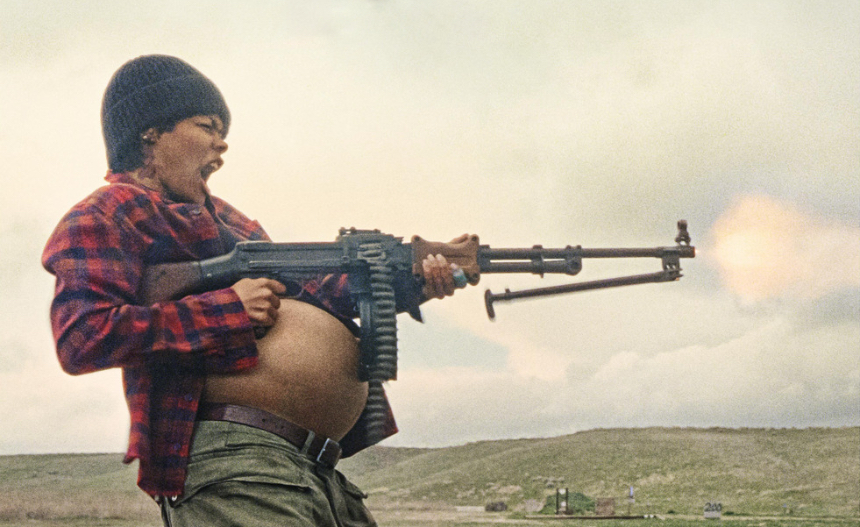
Paul Thomas Anderson’s One Battle After Another isn’t just another prestige drama—it’s a mirror, a provocation, and, depending on who’s watching, a clear call to action. That action, however, depends entirely on the viewer.
The film opened this weekend, landing at a moment when America is deeply divided, and it leaves no easy answers: for some, it reads as a spark for renewed activism; for others, a warning about unchecked state power; for others still, a meditation on national healing.
Like the nation itself, it poses urgent and complex questions about resistance, authority, and the future—questions that refuse to be neatly answered and that feel as immediate as they are impossible.
The story follows a radical collective, the French 75, as they mount increasingly bold actions against what they view as a dangerously overreaching government. The plot points feel culled from this morning’s headlines: Immigration detention centers, surveillance networks, militarized police—no target is off-limits. Anderson renders these young activists with clear-eyed complexity: they’re idealistic, reckless, inspiring, and deeply human.
While the film is grounded in personal drama, its setting is unmistakably contemporary. Immigration crackdowns, wealth disparity, violent protests, and an increasingly militarized state serve as the backdrop. Reuters aptly called the film “political without preaching,” praising Anderson’s ability to weave satire and human emotion into a single, propulsive narrative.
Midway through, the timeline leaps sixteen years forward. The revolutionaries have aged, and the nation has hardened. Stoner protagonist Bob Ferguson—played wonderfully by Leonardo DiCaprio—is now a father, raising a daughter in a country where surveillance and militarization have become normalized. His old nemesis, Col. Lockjaw (played to cartoonish effect by Sean Penn) has risen in power. The battles of youth haven’t been won or lost; they’ve calcified into the architecture of modern America.
This is where Anderson’s film transcends simple political drama. It captures a society at a crossroads, where different audiences may see entirely different prescriptions for what comes next.
I saw the film Sunday night with my 22-year-old son, and while we both loved it, our discussion afterward felt heavy. He’s a recent college graduate (magna cum laude!) who is frustrated by a frozen job market and currently working at a bar. He’s no Gen Z poltical stereotype as he often talks about how his generation needs to reclaim patriotism. He felt the movie was almost dangerous—that many in their 20s might take the revolutionaries as a call to action.
I, by contrast, saw it as a grave warning of where we’re heading unless things change dramatically. The recent rise in political violence only underscores the film’s urgency, though nothing has yet sparked the kind of decisive shift that might alter the nation’s course.
For some, particularly younger viewers, the French 75’s revolutionary defiance feels less like fiction and more like a reasonable response to systemic failures—an implicit call to rekindle activism and demand change. For others, the same events might feel like a warning about chaos, extremism, and the need for stronger state control. And for many, it may simply surface a gnawing desire for reconciliation in a fractured nation.
Critics have highlighted this interpretive elasticity as one of the film’s greatest strengths. “It doesn’t romanticize rebellion,” Jake Coyle wrote for AP, “but it understands why people fight.” The New Yorker’s Justin Chang called it “an unsparing portrayal of extremism and resistance that captures the combustible energy of generational change.”
Anderson isn’t taking sides; he’s holding up a mirror.
The government he depicts isn’t cartoonishly evil—it’s paranoid, powerful, and often blind to the human cost of its policies. The revolutionaries aren’t flawless heroes—they’re passionate, messy, and morally complicated. The film refuses to flatten these tensions. Instead, it immerses the viewer in them.
This is why One Battle After Another feels so urgent. It arrives at a time when younger Americans are navigating historic wealth inequality, a stagnant job market, and a political system that often seems incapable of addressing their grievances. When they watch Anderson’s film, they’re not just watching a story—they’re watching their context, their future, and their potential choices play out in heightened form.
Some critics have accused the film of flirting with romanticizing radicalism. Reason magazine’s Peter Suderman argued Anderson “lets the radicals off too easily.” But while that critique isn’t entirely unfair, it also misses the point. The film doesn’t prescribe; it provokes. It recognizes that when institutions feel unmovable, activism—sometimes radical—emerges not as fantasy, but as a rational response.
Ultimately, Anderson’s achievement is that he’s made a film that refuses to tell viewers what to think. Like all great art, it leaves you wrestling with the biggest, thorniest questions—questions that don’t just feel current, but pressing. What kind of nation do we want to live in? What kinds of actions are justified to build it? And who decides?
This is an opinion piece. The views expressed in this article are those of just the author.
New: The Mediaite One-Sheet "Newsletter of Newsletters"
Your daily summary and analysis of what the many, many media newsletters are saying and reporting. Subscribe now!








Comments
↓ Scroll down for comments ↓