
The Olivia Nuzzi/Ryan Lizza Mess Is Less Shocking Than the Creepy Men Who Escape Scrutiny

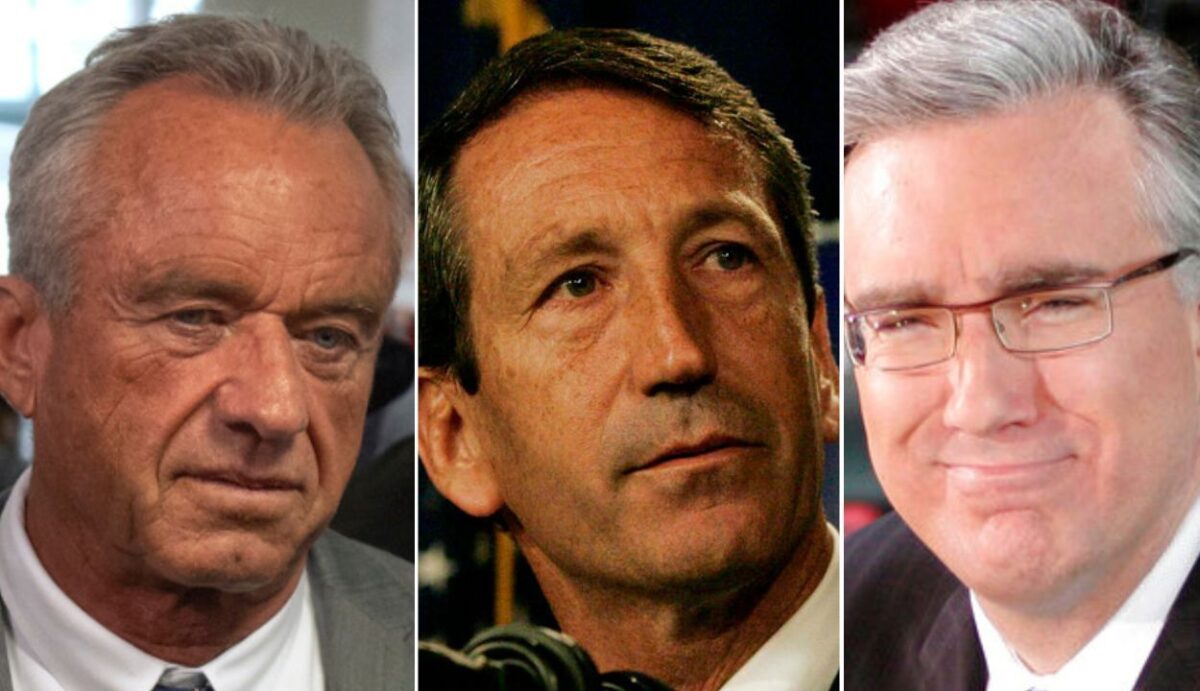
(Mark Schiefelbein/Mary Ann Chastain/Mark J. Terrill/AP photos)
Robert Kennedy Jr. walks out of the Olivia Nuzzi scandal still wearing the title HHS Secretary as if the whole mess were a minor scheduling hiccup. Keith Olbermann continues with his podcast and trademark moralistic thunder, the kind that lands very differently when you remember he once dated a reporter barely out of her teens. Mark Sanford remains a dependable booking for cable producers whenever they need a “colorful Republican voice,” even though his political résumé boasts one of the most infamous vanishing acts in modern governance.
Meanwhile, the journalists who got close to these men are the ones who deservedly lose their credibility, reputations, and bright futures. That’s not a coincidence or a moral mystery. It’s the pattern.
Take Nuzzi. She was a standout reporter, someone who seemed to glide into scoops with ease. But the relationship she developed with RFK Jr. — one part flirtation, one part late-night emotional entanglement, and one part political strategy desk — detonated her career. The political memo she sent him wasn’t just ethically questionable; it was astonishing in its blend of romantic language and strategic guidance. She told him he was the “best choice,” offered him debate-response ideas, suggested media plays, and sprinkled the whole thing with hearts and kiss emojis. She was covering a presidential candidate while simultaneously acting as his aide, strategist, and secret girlfriend.
Yet when that relationship came to light, only one person is — so far — seeing any sort of consequences. RFK Jr. didn’t lose his job. He didn’t lose standing. He didn’t lose credibility within the very political-media ecosystem that supposedly values propriety. The scandal barely grazed him. She’s unemployed; he’s still sitting in the Cabinet.
For anyone wondering if I’m going easy on Nuzzi: I’m not. I’ve previously written about her narcissistic comeback tour, which was entirely void of contrition for ethical lapses she still seems unwilling to own.
Olbermann is a different chapter of the same narrative. When he dated Nuzzi, she was a college student and he was in his 50s — a dynamic that should have been disqualifying anywhere outside a PornHub search bar. People close to her described him as a “sugar daddy” figure, someone who covered tuition and showered her with gifts. And yet when Olbermann went on to reinvent himself as a crusading voice of moral outrage, nobody bothered to bring up the barely legal college student he had dated for four years. His career marched on unbothered, as if nothing about that relationship reflected on his judgment or his professional standing.
Sanford, in politics, is the purest expression of this same Teflon effect. A sitting governor of South Carolina simply vanished for six days, told his staff he was hiking the Appalachian Trail, and secretly flew to Argentina to be with his mistress — abandoning his office, lying to his own administration, and creating a national spectacle. Any normal politician would have been finished. Sanford got censured, regrouped, and was later sent right back to Congress by voters who treated the whole thing as an eccentric subplot.
So why do these men keep emerging intact while the journalists near them wind up cratered? The answer is simpler than anyone in the industry wants to admit: political journalism needs the men in power more than it needs the reporters.
RFK Jr. is a Cabinet secretary and a recognizable national figure. Sanford can offer quotes and analysis that only a former governor with serious Republican lineage can provide. Olbermann has an audience, a platform, and a built-in storyline that makes for easy content. These men deliver what newsrooms need — access, credibility, ratings, and clicks. Even the best reporters don’t. Reporters are, ultimately, replaceable. There is always another 22-year-old eager to chase the next scoop in Washington. But you can’t manufacture a Kennedy, or a governor, or a legacy anchor.
That’s the transactional truth: the industry protects what it can’t replace and discards what it can. Reporters delight in picking through the bones of those they compete with, but refuse to risk access with powerful players and give them a pass. It’s gross.
This creates an impossible situation for the journalists caught in the middle. The job demands closeness — real closeness, the kind that gets you late-night texts, private insights, unfiltered anxieties, the raw material of political reporting. Reporters are pushed toward intimacy because intimacy is what produces the news. But when that closeness moves an inch too far, the blame lands entirely on the journalist, never on the powerful figure who steered the interaction or benefited from it.
And so the cycle repeats itself. A reporter gets too close, flames out, and becomes the face of the scandal. The newsroom performs its ritual of accountability. The powerful man remains untouched, ready to be quoted, booked, or platformed again the very next day. The access economy remains intact.
If political media wants to get serious about ethics, it has to stop pretending these are stories about individual lapses. They’re stories about a system that punishes the people who are easiest to replace and protects the people the industry depends on. Until that changes, we’ll keep seeing the same headline with different names: the reporter burns, the access survives, and the creeps never leave the frame.
This is an opinion piece. The views expressed in this article are those of just the author.
New: The Mediaite One-Sheet Newsletter
Your daily summary and analysis of what the many, many media newsletters are saying and reporting. Subscribe now!











Comments
↓ Scroll down for comments ↓