
Judge Throws Trump’s Own Words Back at Administration While Ruling Against the President

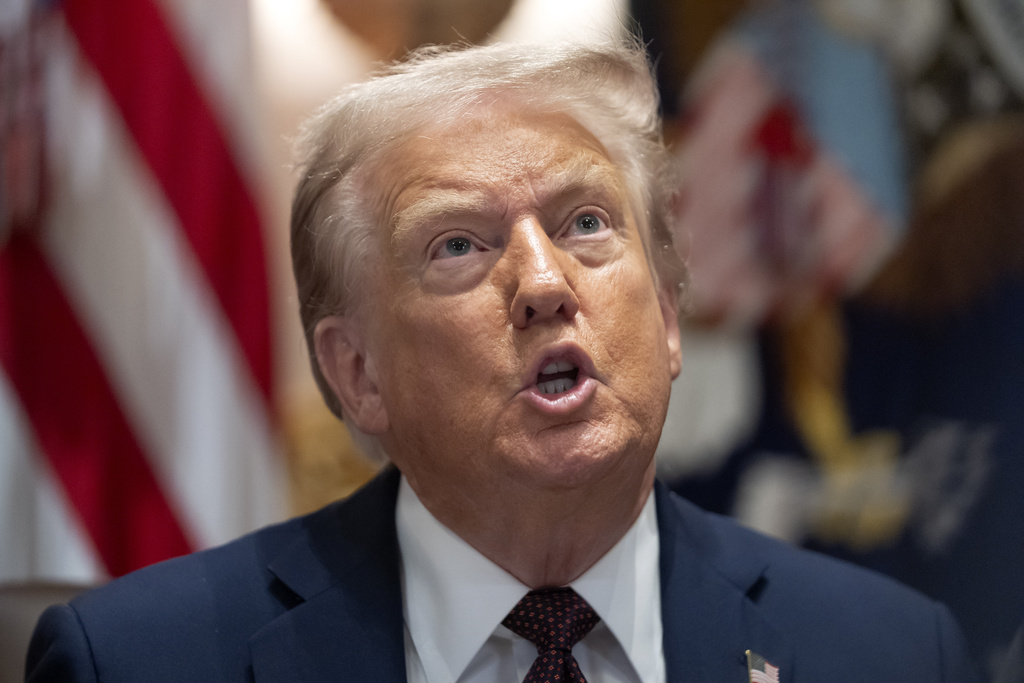
AP Photo/Mark Schiefelbein
A federal judge blocked the Trump administration from freezing federal grants and funding to Harvard University on Wednesday, and while doing so, cited President Donald Trump’s own words to undercut a key argument by government lawyers.
U.S. District Judge Allison Burroughs accused the administration of using allegations of anti-Semitism against Harvard as“a smokescreen for a targeted, ideologically-motivated assault on this country’s premier universities.”
Harvard sued the Trump administration in April after the president canceled nearly $3 billion in funding. As a condition for restoring the money, the administration imposed a list of demands on the school, which included “stoppage of deplatforming,” “a comprehensive mask ban,” “organizational changes to ensure full transparency and cooperation with all federal regulators,” and a review of programs that “fuel antisemitic harassment,” among other conditions.
In her ruling, Burroughs said that while fighting anti-Semitism is a noble aim, the administration’s targeting of Harvard has been driven by “First Amendment retaliation.” To underscore the point, she pointed to several statements by Trump and administration officials:
For instance, in the forty-eight hours following the April 14 Freeze Order, the President took to social media multiple times to talk about Harvard. He posted on Truth Social that Harvard is “a JOKE” that “should no longer receive Federal Funds.” His stated concerns (which would later be echoed in the May 5 Freeze Order) were untethered from antisemitism and instead based entirely on Harvard’s “hiring almost all woke, Radical Left, idiots and ‘birdbrains’ who are only capable of teaching FAILURE to students,” including “two of the WORST and MOST INCOMPETENT mayors in the history of our Country,” referring to Democratic mayors Bill de Blasio and Lori Lightfoot. This post echoed his comments from a day earlier, when he opined, again on Truth Social, that “[p]erhaps Harvard should lose its Tax Exempt status and be Taxed as a Political Entity.” Again, that post did not reference antisemitism explicitly but rather was focused on Harvard’s “pushing political, ideological, and terrorist inspired/supporting ‘Sickness[.]’” It was not until nearly ten days later that the President would call Harvard “Anti-Semitic,” doing so in a Truth Social post that, in the same breath, called Harvard a “Far Left Institution” and a “Liberal mess, allowing a certain group of crazed lunatics to enter and exit the classroom and spew fake ANGER AND HATE.”
A similar barrage followed Harvard’s decision to litigate rather than settle this case, with Administration officials being clear about the connection between that decision and the funding cuts. In particular, on May 28, 2025, the Secretary of Education summarized the situation with Harvard, stating:
“When we looked at different aspects of what Harvard was doing relative to antiSemitism on its campuses they were not enforcing Title VI the way it should be. And we had conversations with President Garber and I expected that we would have more, but Harvard’s answer was a lawsuit so that’s where we find ourselves. . . . I think the President is looking at this as, OK, how, how can we really make our point[?]”
The same day, during an interview in the Oval Office, the President himself said that Harvard is “hurting [itself]” by “fighting,” contrasting Harvard with Columbia, who he noted “has been . . . very, very bad . . . . But they’re working with us on finding a solution.” He declared that Harvard “wants to fight. They want to show how smart they are, and they’re getting their ass kicked.” His conclusion: “[E]very time [Harvard] fight[s], they lose another $250 million.”
In brief, Defendants’ contention that Harvard’s First Amendment activities were not a “substantial and motivating” factor in the funding terminations, or that those terminations were animated by non-retaliatory motives, does not square with the government’s communications regarding its decision, which specifically and repeatedly linked the coordinated funding cuts to Harvard’s decision to “fight.” That “fight” (Harvard’s decision to speak out and litigate its case in the courts and the marketplace of ideas), however, is indisputably protected by the First Amendment. Borough of Duryea, 564 U.S. at 387. To the extent the Court can consider these public statements, they provide additional support for granting Plaintiffs’ summary judgment motion as to their First Amendment claims; to the extent it cannot, however, the administrative record, standing alone, is more than sufficient to demonstrate that Defendants impermissibly retaliated against Harvard for refusing to capitulate to the government’s demands. Plaintiffs are thus entitled to summary judgment on their First Amendment retaliation claims.
–
New: The Mediaite One-Sheet "Newsletter of Newsletters"
Your daily summary and analysis of what the many, many media newsletters are saying and reporting. Subscribe now!





Comments
↓ Scroll down for comments ↓