Journalists Fight on Twitter About Using Twitter to Contact Amtrak Crash Victims

Twitter is many things, among them a personal microblogging platform, an extraordinary delivery mechanism for immediate information, and a generator of interactions that transcend physical and societal barriers. These functions often find themselves in direct conflict with one another with no clear rules of adjudication, as was the case when victims from the Philadelphia train derailment began tweeting about the carnage only to be swamped by media requests:
Woman takes to Twitter to share news her cousin was killed in Amtrak crash & is deluged by reporters. Deletes tweets. pic.twitter.com/XEboAo6oJS
— Brian Ries (@moneyries) May 13, 2015
One of the journalists screencapped there took offense, noting that contacting people involved in news-making events was an elemental action of journalism:
@moneyries If you've never contacted family of victim, you're not a real reporter. And if you "shame" people for doing job, even less of one
— Sasha Goldstein (@NYCitySasha) May 13, 2015
And we were off:
big difference btwn contacting family face-to-face after tragedy & tweeting at them literally hours after death @nycitysasha @moneyries
— pronounced bluhp-man (@blippoblappo) May 13, 2015
We've all been guilty of this. But there's got to be a more humane way for us to behave when news breaks… *ducks* https://t.co/D1QtSpN765
— Wesley Lowery (@WesleyLowery) May 13, 2015
lot of reasons for public's distrust/distain of media: a major one is that internet has help us reach peak vulture status (& do so publicly)
— Wesley Lowery (@WesleyLowery) May 13, 2015
Los Angeles Times’ Matt Pearce, whose Twitter feed has evolved into a real-time j-school graduate seminar, weighed in as well, countered that the “Twitter media query” was a technological evolution of the standard TV/interview request, which was how journalists have always gained reactions and information to late-breaking events.
Before you get mad at reporters requesting interviews on Twitter, just know that family interviews don't just magically appear on TV.
— Matt Pearce (@mattdpearce) May 13, 2015
A lot of times people don't want to talk to reporters after a tragedy. But often they do! Reporters have to ask to know the difference.
— Matt Pearce (@mattdpearce) May 13, 2015
The debate here is largely of degree vs. kind: is contacting someone via Twitter just the social media version of pestering them for an interview at a crash site, or a wholly different phenomenon in which internet content producers mine Twitter for suffering to coldly aggregate? Does being at the site to solicit interviews entail an emotional and experiential engagement fundamentally negated by the distance of social media? That the two are not mutually exclusive — journalists have been called vultures since the dawn of the profession — only complicates the matter:
@blippoblappo You can be insensitive over any medium. Many people would find door knocks way more intrusive than tweets.
— Matt Pearce (@mattdpearce) May 13, 2015
@mattdpearce @moneyries and in extreme volume – social/online means an infinite number of outlets contacting traumatized people
— Wesley Lowery (@WesleyLowery) May 13, 2015
@mattdpearce @moneyries while in the past it was an AP reporter and the guy who worked for your local paper
— Wesley Lowery (@WesleyLowery) May 13, 2015
This is not to say anybody here is being a scold versus a practitioner. Ries clarified that he hardly considered bounds of right and wrong to be clearly elucidated, and said that everybody was more or less culpable:
@WesleyLowery @mattdpearce its a tough thing. on one hand, i’m guilty of it myself. no better way to find an immediate source. on the other
— Brian Ries (@moneyries) May 13, 2015
@WesleyLowery @mattdpearce there’s got to be another way. but it’s not like all media would agree to ‘send a representative’ or something…
— Brian Ries (@moneyries) May 13, 2015
FTR I’m not shaming reporters doing this. I do it too. Just raising the point that it’s generally terrible, a problem that needs solved.
— Brian Ries (@moneyries) May 13, 2015
If you’d like to carp that the media have once again made the story about themselves, the comment section is down yonder.
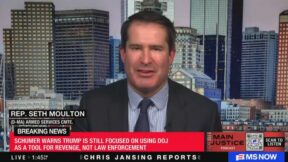
[Image via screengrab]
——
>> Follow Evan McMurry (@evanmcmurry) on Twitter
New: The Mediaite One-Sheet "Newsletter of Newsletters"
Your daily summary and analysis of what the many, many media newsletters are saying and reporting. Subscribe now!







Comments
↓ Scroll down for comments ↓