DOJ’s Prosecution of Comey ‘Hanging by a Thread’ After New Revelations About Grand Jury

AP Photo/Andrew Harnik, File
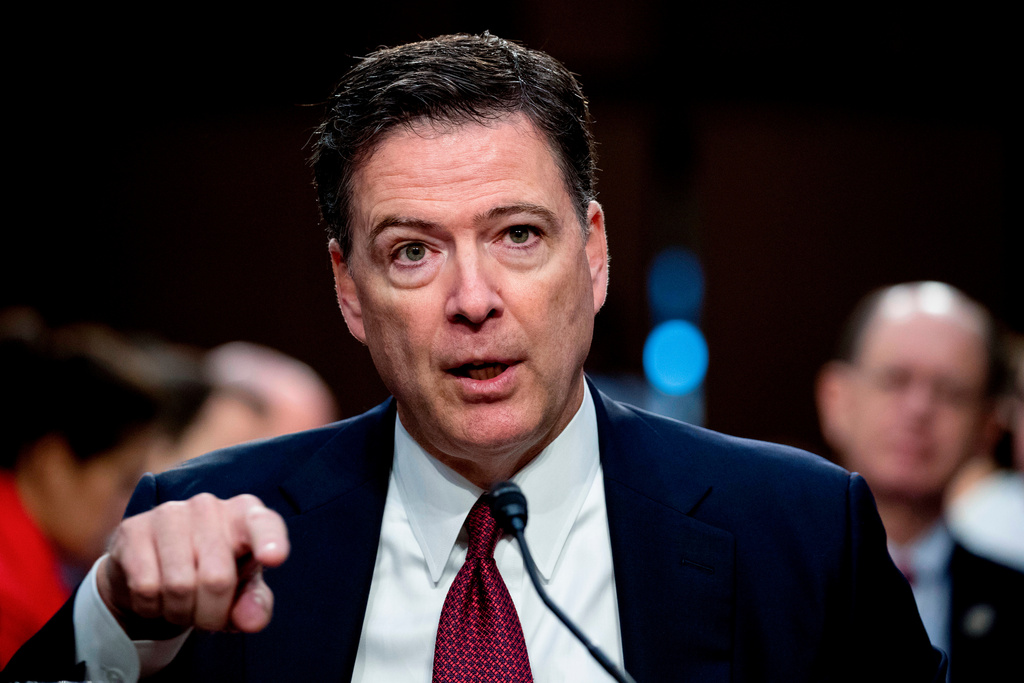
The Department of Justice’s quest to prosecute former FBI Director James Comey took another blow Wednesday after a court hearing that exposed new revelations about the grand jury proceedings in the case.
Last month, Comey entered not guilty pleas for the two counts against him: making a false statement to Congress and obstruction of a congressional proceeding. After waiving his right to have the indictment read to him in court, he asked for a jury trial.
The case has been widely panned as lacking in legal merit, even by numerous conservatives, with many viewing the case as a politically motivated prosecution by President Donald Trump and finding multiple flaws with the documents filed by the president’s recent appointee for U.S. Attorney for the Eastern District of Virginia, his former attorney Lindsey Halligan.
Comey’s legal counsel, former federal prosecutor Patrick J. Fitzgerald and experienced criminal defense attorney Jessica Nicole Carmichael, have challenged the case on multiple grounds, arguing that Halligan’s appointment was improper, that the case is malicious prosecution, and that he is being treated differently from other similarly situated people.
Among the revelations at Wednesday’s hearing was the fact that the full grand jury never reviewed the entire two-count indictment after they had rejected one of the charges.
U.S. District Judge for the Eastern District of Virginia Michael Nachmanoff, a Biden appointee, grilled Halligan about the details of the grand jury proceedings, as reported by Politico:
“You’re counsel of record. You can address the court,” Nachmanoff said to Halligan, asking her to explain whether grand jurors beyond the foreperson were present when the original indictment and a narrower substitute one were presented to a magistrate judge.
“The foreperson and another grand juror was also present,” Halligan said, apparently confirming that all the grand jury members present that day did not see the substitute indictment prepared after the group declined one of the false-statement charges Halligan urged.
Nachmanoff did not say precisely what action he was contemplating about the possible irregularity in the grand jury process, but his intense focus on the issue suggested he may view it as critical and, perhaps, fatal to the government’s case.
As he addressed Halligan, the judge declared he “just wanted to make sure” that indictment had never been seen by the full grand jury.
Halligan confirmed that it had not. She then sat down after speaking for less than a minute.
Legal observers following the case were shocked by this revelation. Comey’s defense team argued that this issue alone was enough to be a “complete bar to prosecution,” reported Lawfare senior editor Anna Bower, and the prosecution was now “hanging by a thread,” wrote Politico senior legal affairs reporter Kyle Cheney.
Nachmanoff also questioned the prosecutors about whether any of the career DOJ prosecutors had originally recommended against pursuing charges against Comey. The DOJ argued that the answer to that question was “privileged” as attorney work product, but Assistant U.S. Attorney Tyler Lemons did admit to seeing drafts of a declination memo that argued against prosecuting Comey — a document that would spell out weaknesses in the case and the existence thereof bolsters defense arguments that this is a malicious and politically motivated prosecution.
According to Cheney, Deputy Attorney General Todd Blanche’s office ordered the prosecutors assigned to the case “not to disclose” if career prosecutors wrote a declination memo.
The judge has not yet issued a ruling, ordering both parties at the end of the hearing to submit briefs specifically addressing the issue of the indictment not being shown to the entire grand jury, in light of a case from another circuit, Gaither v. U.S., with facts that were similar, but not exactly the same.
Cases from other circuits are not considered controlling precedent but can be persuasive to the court when they address similar facts and legal issues and are based on Supreme Court opinions or other case law that is controlling precedent in that court. If the judge finds the Gaither case to be relevant and persuasive, that should end Comey’s prosecution, as the court in Gaither stated a “flat rule” of “dismissal of indictments not found by 12 jurors,” as Lawfare senior editor Roger Parloff noted.
This article has been updated with additional information.
New: The Mediaite One-Sheet "Newsletter of Newsletters"
Your daily summary and analysis of what the many, many media newsletters are saying and reporting. Subscribe now!




Comments
↓ Scroll down for comments ↓