Court Grants Fox News Additional Discovery in Smartmatic Case – But Allows Case to Move Forward

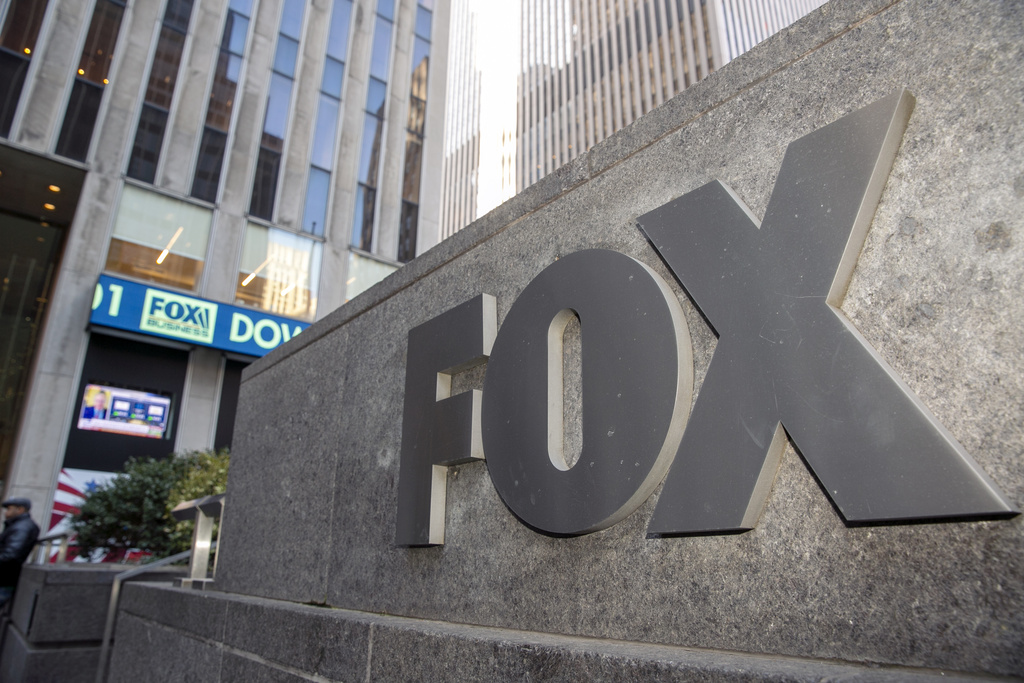
Ted Shaffrey/AP photo
A New York appeals court granted Fox News some additional discovery rights to defend against Smartmatic’s defamation lawsuit — but that discovery will be of limited use as a potential defense and the court also allowed the case to continue toward trial.
The litigation so far
In 2021, Smartmatic filed a $2.7 billion defamation suit against Fox, alleging that the network’s coverage falsely accused the voting technology company of committing fraud in the 2020 election to steal the victory from President Donald Trump and give it to President Joe Biden, and that these false statements damaged the company’s reputation and resulted in its employees being subjected to death threats and harassment.
The case has a number of similarities with the defamation lawsuit filed against Fox by another voting technology company, Dominion Voting Systems, which settled in April 2023 for a stunning $787.5 million just as the trial was ready to begin in Delaware.
Discovery in the Dominion case revealed a trove of emails, text messages, and other communications between the network’s executives and on-air personalities admitting they knew the election fraud claims were false, mocking Trump’s attorneys and surrogates as “crazy” for pushing them, and fretting about falling in the ratings to upstart competitors like Newsmax and OANN if they didn’t indulge MAGA viewers.
Likewise, no current or former Fox employee who testified in the Smartmatic case said they believed Smartmatic switched votes or otherwise committed fraud in the 2020 election, and discovery has unearthed another pile of internal Fox communications relating to this case, some of which were included in a redacted motion filed in June 2025, which was then updated with fewer redactions that August.
One of these communications was a Dec. 5, 2020 text message from Fox News host Jesse Watters to his colleague Greg Gutfeld that said, “Think about how incredible our ratings would be if Fox went ALL in on STOP THE STEAL,” contradicted by Watters’ testimony that he never “bought into” the claims that “software and voting machines” like Smartmatic’s were used to switch votes, calling such claims “pretty out there” and he had “seen no evidence that Smartmatic Technology switched votes in the 2020 Election in the United States.”
Other internal Fox communications sharply criticized the election fraud claims by Rudy Giuliani, Sidney Powell, and other Trump allies about Smartmatic by using words that included “crazy,” “really crazy,” “f*cking crazy,” “[t]ons of crazy,” “so f*cking cray,” “bullsh*t,” “bs,” “bonkers,” “kooky,” “wacky,” “bananas,” “more than fantastical,” “comic book stuff,” “insane,” “INCORRECT,” “conspiracy theories,” “ridiculous conspiracy theories,” “a complete nut,” “a bit nuts,” “so nuts,” “totally nuts,” and “just MINDBLOWINGLY NUTS.”
Separate criminal allegations involving Smartmatic
While the litigation progressed, the Department of Justice indicted Smartmatic in October 2025 for an alleged bribery and money laundering scheme in the Philippines, accusing the company of paying government officials in order to win lucrative contracts, adding the company via a superceding indictment to an already in-progress criminal case against three Smartmatic executives. Federal prosecutors have also accused Smartmatic of overbilling Los Angeles County in order to create a “slush fund” to pay these bribes, and of bribing a Venezuelan official with a gift of luxury real estate.
As reported by the Los Angeles Times, Smartmatic’s attorneys filed a motion to dismiss the indictment in March, arguing that “the company had been cooperating with the Justice Department since it first learned of its investigation in 2021, including by producing millions of pages of documents and making presentations to federal agents,” the trial date for the individual executive defendants had been set, “and the company believed that it was in the clear.” In its motion, Smartmatic argued that the Trump DOJ was prosecuting it out of a politically-motivated “campaign of retribution.”
Fox has cited these criminal proceedings as relevant in the civil defamation action to defend against Smartmatic’s arguments that Fox’s defamatory statements damaged its business, by attempting to prove that the company was already in trouble.
Smartmatic had secured an order partially limiting Fox’s discovery in the separate criminal matters in a hearing last October, but on Thursday, a New York appeals court issued a ruling in which both sides have claimed some victory.
The appellate court’s order, written by Judge David B. Cohen of the New York Supreme Court’s 1st Judicial District, partially vacated the order limiting Fox’s discovery, finding that the superseding indictment that added Smartmatic to the ongoing criminal case “was both an unusual and unanticipated circumstance,” and Fox would be “substantially prejudiced” if not allowed to pursue discovery into the superseding indictment and the allegations regarding Los Angeles County.
A spokesperson for Fox News Media provided the following statement to Mediaite:
We are pleased with the court’s decision to grant our request to conduct discovery into the impact on Smartmatic’s business of its indictment and allegations in the criminal case involving Smartmatic’s business activities in Los Angeles County.
The order also denied Fox’s motion to vacate and motion to stay until the federal criminal proceedings concluded, meaning the overall case is still moving forward to trial — a development that Smartmatic’s spokesperson touted in their statement:
Smartmatic welcomes the appellate court’s decision denying Fox’s latest attempt to delay this case. For years, courts have repeatedly rejected Fox’s efforts to avoid accountability. The facts have not changed: Fox knowingly spread false claims about Smartmatic, causing severe harm to the company and undermining public trust in elections, and has never apologized. We look forward to continuing toward trial and presenting the truth before a jury.
Elements of defamation and potential partial defense for Fox
In general, to prove a defamation claim, a plaintiff has to prove 1) the defendant made a public statement of fact (either in writing or verbally, to at least one third party), 2) the statement is clearly identifiable as being about the plaintiff, 3) the defendant knew or should have known the statement was false, and 4) the false statement caused damage to the plaintiff.
Here, the discovery Fox is seeking regarding the federal criminal case is connected only to that last element, the damages caused to the plaintiff.
The current federal criminal proceedings involving Smartmatic are not about the November 2020 election, and in the six-and-a-half years since then, the dozens of lawsuits filed by Trump and his allies, the investigations by state and federal government agencies and private individuals and organizations, and media reports have all failed to establish evidence of election fraud, and certainly not by Smartmatic.
The statements that aired on Fox that Smartmatic alleges are defamatory were aired on national television and streamed online, video recordings and transcripts exist, and the parties are not disputing that the statements were made or what wording was used.
Again, whether or not Smartmatic or any of its executives committed any crimes connected to the Philippines or elsewhere would not be relevant in proving whether or not Fox knew or should have known the statements it was making about Smartmatic were false. The similarities with the Dominion case support Smartmatic’s arguments that Fox’s statements were defamatory, as do the rulings in a separate defamation lawsuit Smartmatic filed against MyPillow proprietor Mike Lindell, finding that his election fraud accusations against the company were “false and defamatory as a matter of law.”
At best, the criminal matters will allow Fox to argue that Smartmatic’s business reputation was already separately harmed by such alleged wrongdoing and the potential criminal penalties. Considering that the civil court is not allowing Fox to delay until the criminal case is finished, and the criminal case is a separate factual matter, it would be highly unlikely that Fox can claim that Smartmatic was completely damaged beyond repair and any defamation from their broadcasts caused zero additional damage.
Basically, the discovery Fox is seeking may provide some arguments for reducing the damages Smartmatic says it suffered from the defamatory statements, but it is highly unlikely it can uncover any defenses to whether or not Fox’s statements were defamatory or wipe out all damages Smartmatic claims.
This is an opinion piece. The views expressed in this article are those of just the author.
New: The Mediaite One-Sheet "Newsletter of Newsletters"
Your daily summary and analysis of what the many, many media newsletters are saying and reporting. Subscribe now!








Comments
↓ Scroll down for comments ↓