Federal Judge Smacks Down Trump’s Executive Order Defunding NPR and PBS: ‘Unlawful and Unenforceable’

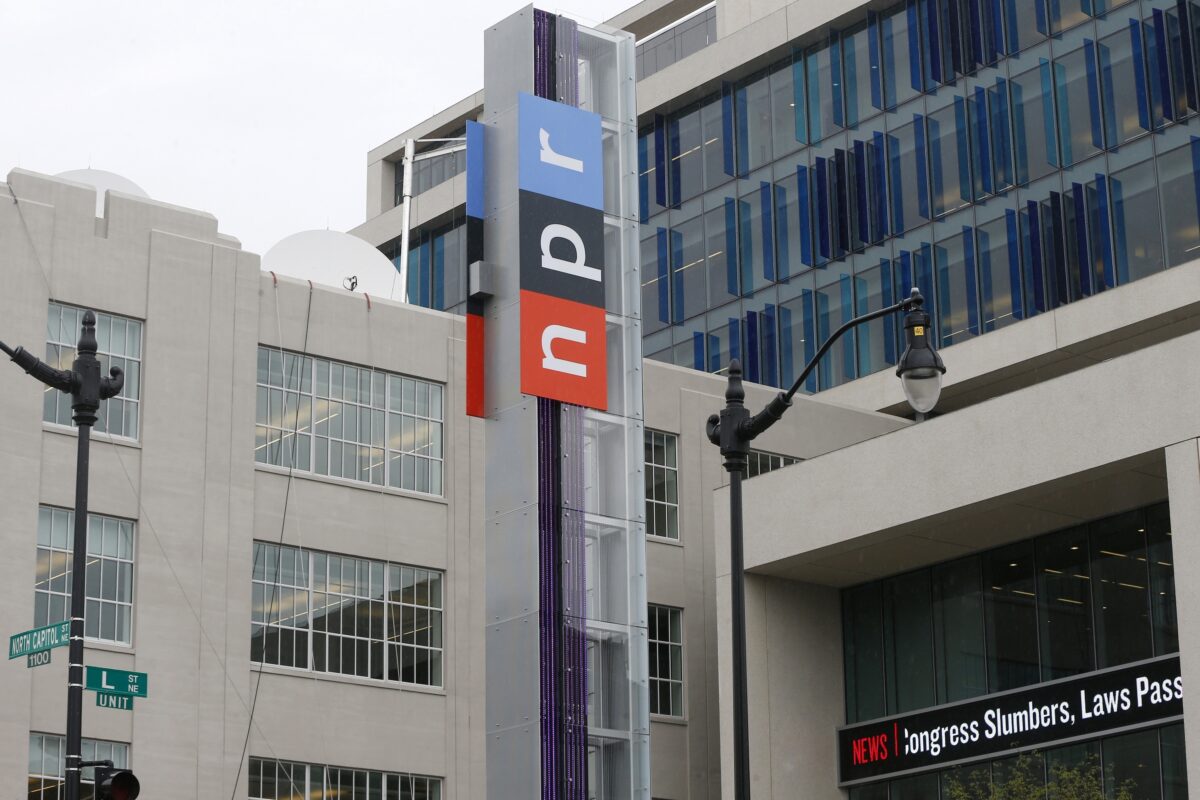
AP Photo/Charles Dharapak, File
A federal judge struck down President Donald Trump’s executive order to cut off funding to NPR and PBS on First Amendment grounds, declaring the order to be “unlawful and unenforceable.”
During Trump’s second term, he has aggressively criticized media outlets he felt gave him negative coverage, and he has continued to threaten and file lawsuits against media companies as well. At issue in this lawsuit is an executive order Trump signed in May 2025 that ordered all federal funding to NPR and PBS to be cut off.
In the order, Trump claimed that “neither entity presents a fair, accurate, or unbiased portrayal of current events” and “have fueled partisanship and left-wing propaganda with taxpayer dollars.” He argued they did not have a constitutional right to taxpayer subsidies, calling it a “highly inappropriate and an improper use of taxpayers’ money.”
In a 62-page opinion, Judge Randolph Moss with the U.S. District Court for the District of Columbia, an Obama appointee, smacked down the Trump administration’s arguments on First Amendment grounds.
Interestingly, before he was a judge, Moss served as an assistant attorney general in the Office of Legal Counsel at the Department of Justice, and wrote a memorandum opinion in 2000 that the DOJ could not indict a sitting president, arguing that indicting or criminally prosecuting a sitting president “would unconstitutionally undermine the capacity of the executive branch to perform its constitutionally assigned functions.”
Former Special Counsel Robert Mueller cited Moss’ 2000 memo among the reasons for his decision to not indict Trump.
Moss’ most recent legal writing is far less likely to be cheered by the president. The judge acknowledged that the president can “engage in his own expressive conduct, including criticizing the views, reporting, or programming of NPR, PBS, or any other news outlet with whom he disagrees,” and the government has the power to “decide which views or perspectives to convey—and which not to convey—in any such government speech or program,” and “impose limits” on how federal funding is used and chose the recipients based on “legitimate criteria.”
“But the First Amendment draws a line,” Moss wrote, “which the government may not cross, at efforts to use government power—including the power of the purse—to punish or suppress disfavored expression by others.”
The judge cited multiple Supreme Court and D.C. Circuit opinions finding that the government “may not deny a benefit to a person on a basis that infringes his constitutionally protected…freedom of speech even if he has no entitlement to that benefit.”
Trump’s executive order defunding NPR and PBS “crosses that line” into punishing protected speech, Moss continued:
It does not define or regulate the content of government speech or ensure compliance with a federal program. Nor does it set neutral and germane criteria that apply to all applicants for a federal grant program. Instead, it singles out two speakers and, on the basis of their speech, bars them from all federally funded programs. It does so, moreover, without regard to whether the federal funds are used to pay for the nationwide interconnection systems, which serve as the technological backbones of public radio and television; to provide safety and security for journalists working in war zones; to support the emergency broadcast system; or to produce or distribute music, children’s or other educational programming, or documentaries. And it applies to grants from the (now defunct) Corporation for Public Broadcasting (“CPB”), the Federal Emergency Management Agency (“FEMA”), the Department of Education, the National Endowment for the Arts (“NEA”), and all other federal agencies….
The message is clear: NPR and PBS need not apply for any federal benefit because the President disapproves of their “left-wing” coverage of the news. Because the First Amendment does not tolerate viewpoint discrimination and retaliation of this type, the Court will issue judgment against the federal-agency defendants declaring Section 3(a) of the Executive Order is unconstitutional and will issue an injunction barring those defendants from implementing it.
Moss wrote that the court’s judgment would declare the president’s executive order to defund NPR and PBS “unlawful and unenforceable,” and “will also enter a permanent injunction barring the agency defendants from implementing or enforcing that direction.”
After the ruling was posted, Mediaite was sent statements from Katherine Maher, the president and CEO of NPR, and Theodore Boutrous, NPR’s attorney from the law firm Gibson, Dunn & Crutcher LLP.
Statement from Katherine Maher, President & CEO, NPR:
Today’s ruling is a decisive affirmation of the rights of a free and independent press — and a win for NPR, our network of stations, and our tens of millions of listeners nationwide. The court made clear that the government cannot use funding as a lever to influence or penalize the press, whether as a national news service or a local newsroom. Public media exists to serve the public interest — that of Americans — not that of any political agenda or elected official. NPR and our Member Stations will continue delivering independent, fact-based, high-quality reporting to communities across the United States, regardless of the administration of the day.
Statement from Theodore Boutrous, NPR’s counsel and Partner, Gibson, Dunn & Crutcher LLP:
Today’s ruling is a significant victory for the First Amendment and for freedom of the press. The district court’s decision bars the government from enforcing its unconstitutional Executive Order targeting NPR and PBS because the President dislikes their news reporting and other programming. As the court expressly recognized, the First Amendment draws a line, which the government may not cross, at efforts to use government power—including the power of the purse—‘to punish or suppress disfavored expression’ by others. The Executive Order crossed that line.
Read the judge’s opinion here.
This article has been updated to add the statements from Katherine Maher and Theodore Boutrous.
New: The Mediaite One-Sheet "Newsletter of Newsletters"
Your daily summary and analysis of what the many, many media newsletters are saying and reporting. Subscribe now!






Comments
↓ Scroll down for comments ↓