CNBC Drops Gas Price Scoop — Trump War Cost Americans Whopping $59 Billion Extra in Fuel Costs

CNBC anchor Steve Liesman dropped new reporting on the effect of President Donald Trump’s war on gas prices — that Americans have spent an extra $59 billion on gas, diesel, and jet fuel since the war began.
The Iran War has contributed to months of bad inflation numbers, largely fueled by a sharp rise in gasoline prices.
On Friday’s edition of CNBC’s Squawk Box, Liesman told fellow anchor Joe Kernen that he asked Mark Zandi at Moody’s to calculate the total each American has paid in extra costs since the war started.
He also revealed that the cost to each American has outstripped the larger-than-expected tax refunds they received this year — an average of $447 each in extra gas costs versus a $384 average refund increase:
CNBC HOST JOE KERNEN: New reporting this morning on higher gasoline prices and the impact on spending. Senior economics reporter Steve Liesman joins us now. I knew you were gonna do this. You talked about this quite a bit yesterday, right? Steve, you gave us sort of a, like foreshadowing, like Shakespeare or something.
CNBC ANCHOR STEVE LIESMAN: Deep deep tease in the business Joe, which I know you haven’t been in for a very long time But that’s what it’s called. It’s called a deep tease It’s a day ahead of time.
The gas bill, joe, from the surge in oil prices is starting to add up for consumers, raising concerns about whether the resilient consumers so far can hang on much longer.
Mark Zandi at moodys.com. He calculated the total bill so far at the request of CNBC. I asked him for this couple of days ago. That’s how I knew it was coming.
He finds it equals $59 billion dollars, made it mostly of gasoline, then there’s a diesel cost and an implied jet fuel cost in those higher airline fees.
That amounts to about $450 per household, a cost that’s been manageable in part because you can see there, bigger tax refunds have offset it.
But in mid-May, you can the extra fuel cost outstrips the refunds, that’s averaged about $380. So now it’s higher.
Zandi warning, “Unless the war ends soon, financially pressed consumers will have no option, but to turn more cautious in their spending, threatening the already soft economy.”.
And Goldman Sachs has come to a similar conclusion. They wrote in a report, “We believe that the recent resilience in spending largely reflects an outsized boost from the OB-BBA related tax cuts and expect that spending headwinds from higher inflation will weigh on spending growth for the rest of the year.”.
Now the potential offsets to this, you could have better job growth, you could have better wage growth, and also you might have expanded oil production and reinvestment of those petrodollars.
In the meantime, for now, real incomes consumers adjusted for inflation–.
Real incomes have fallen in five of the past seven months and there’s the year-over-year rate and that includes the past three as inflation has taken a bite.
Costco they said last night that gas is taking a bigger share of their members’ spending.
And they see consumers becoming more price-sensitive even while non-gas sales stayed strong.
Zandi estimating if we go on the way we’ve been going, prices stay at current level. It’s gonna be about a $2,000 hit per household once you do the one-year anniversary of the start of the war, Joe
CNBC HOST JOE KERNEN: Like, why did I cancel that order for that new Ferrari EV?
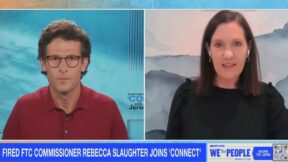
Watch above via CNBC’s Squawk Box.
New: The Mediaite One-Sheet "Newsletter of Newsletters"
Your daily summary and analysis of what the many, many media newsletters are saying and reporting. Subscribe now!






Comments
↓ Scroll down for comments ↓