Jack Smith Mocks Trump Argument In Brutal Smackdown Of Trump’s Demand To Dismiss Election Crimes Case

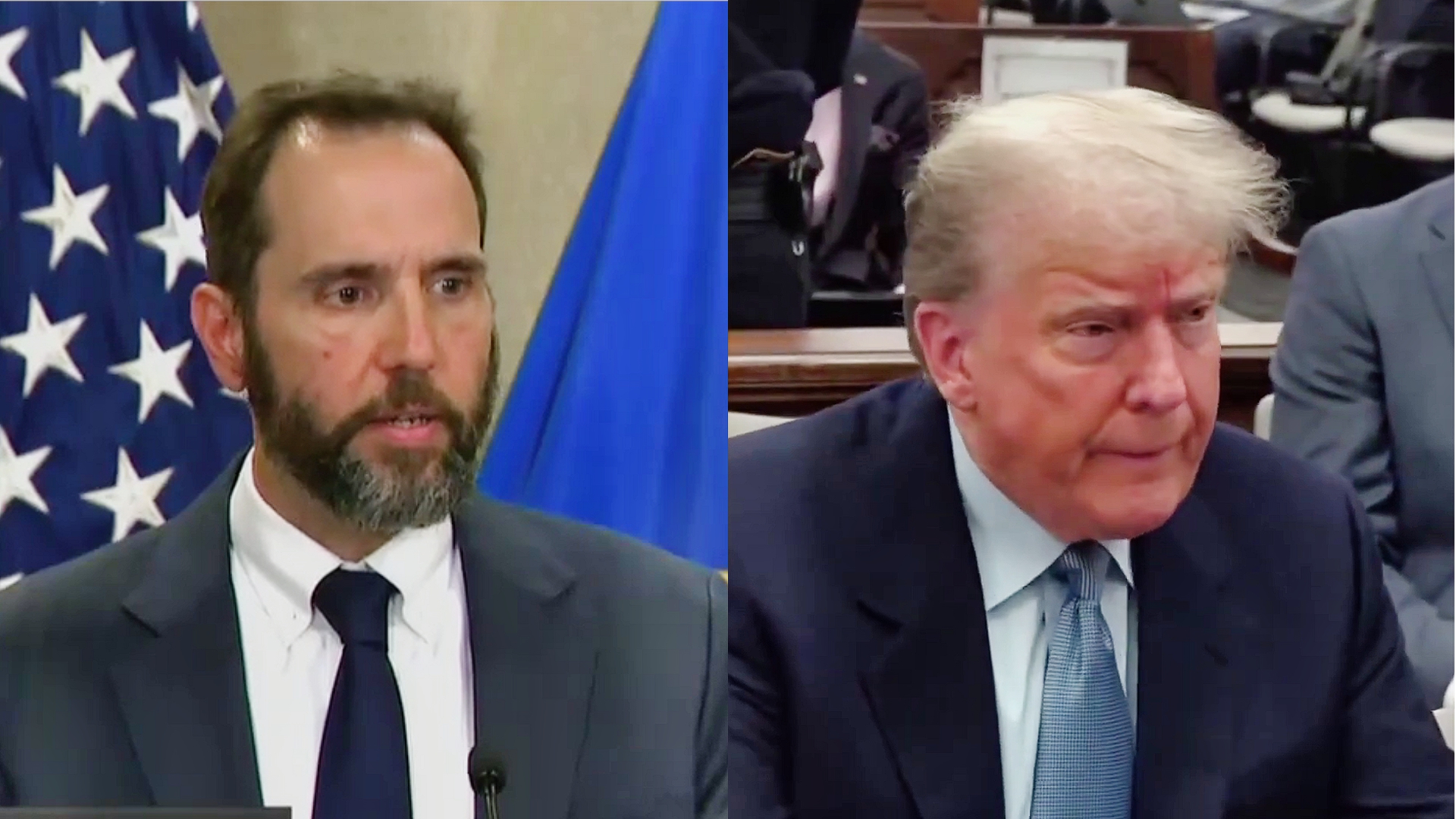
Special Counsel Jack Smith torpedoed ex-President Donald Trump’s reasoning as he brutally smacked down Trump’s motion to dismiss the election crimes case.
About two weeks ago, Trump’s legal team filed a motion to dismiss Smith’s indictment against Trump for his attempt to overturn the 2020 presidential election, for which the former president faces charges of conspiracy to defraud the United States, conspiracy to obstruct an official proceeding, obstruction of and attempt to obstruct an official proceeding, and conspiracy against rights.
On Thursday, Smith filed a blistering 54-page response smacking down Trump’s motion, including a brief but devastating assessment of one of the defense claims (emphasis added):
Defendant Donald J. Trump moves to dismiss the indictment, asking the Court to afford him absolute immunity from criminal prosecution for what he expansively claims was official conduct during his presidency. ECF No. 74 (“Mot.”). That novel approach to immunity would contravene the fundamental principle that “[n]o man in this country is so high that he is above the law.” United States v. Lee, 106 U.S. 196, 220 (1882).
The defendant is not above the law. He is subject to the federal criminal laws like more than 330 million other Americans, including Members of Congress, federal judges, and everyday citizens. None of the sources the defendant points to in his motion—the Constitution’s text and structure, history and tradition, or Supreme Court precedent—supports the absolute immunity he asks the Court to create for him.
In staking his claim, he purports (Mot. 29) to draw a parallel between his fraudulent efforts to overturn the results of an election that he lost and the likes of Abraham Lincoln’s Gettysburg Address and George Washington’s Farewell Address. These things are not alike.
The more apt parallel the defendant identifies (Mot. 17-18) is to judges, who, like a former president, enjoy absolute immunity from civil damages liability for certain conduct but who are “subject to criminal prosecutions as are other citizens.” Dennis v. Sparks, 449 U.S. 24, 31 (1980). The same is true for the defendant. For the reasons set forth below, the defendant’s motion to dismiss the indictment based upon presidential immunity should be denied.
The argument to which Smith is responding is a passage in which Trump’s attorneys compare his speech inciting the Jan. 6 on the Capitol with famous speeches by former Presidents Abraham Lincoln and George Washington:
The tradition of Presidents making public statements on matters of national concern arose in the first days of the Presidency and encompasses some of the most historic Presidential actions in American History, including George Washington’s Farewell Address and Abraham Lincoln’s Gettysburg Address. President Theodore Roosevelt described the Presidency as a “bully pulpit” for advancing policy views on matters of public concern. When a President speaks to the public on matters of public concern— especially issues of uniquely federal concern, like federal elections—those statements fall in the heartland of his or her official duties.
Smith’s filing goes on to knock down Trump’s claims for 50-plus pages and concludes, “For the foregoing reasons, the Court should deny the defendant’s motion to dismiss the indictment on the ground that a former president is immune from criminal prosecution.”
New: The Mediaite One-Sheet "Newsletter of Newsletters"
Your daily summary and analysis of what the many, many media newsletters are saying and reporting. Subscribe now!




Comments
↓ Scroll down for comments ↓