Pete Hegseth’s ‘Freedom Tour’ With Trump Media Shows the Danger of Press Limits

(Tom Williams/CQ Roll Call via AP Images)
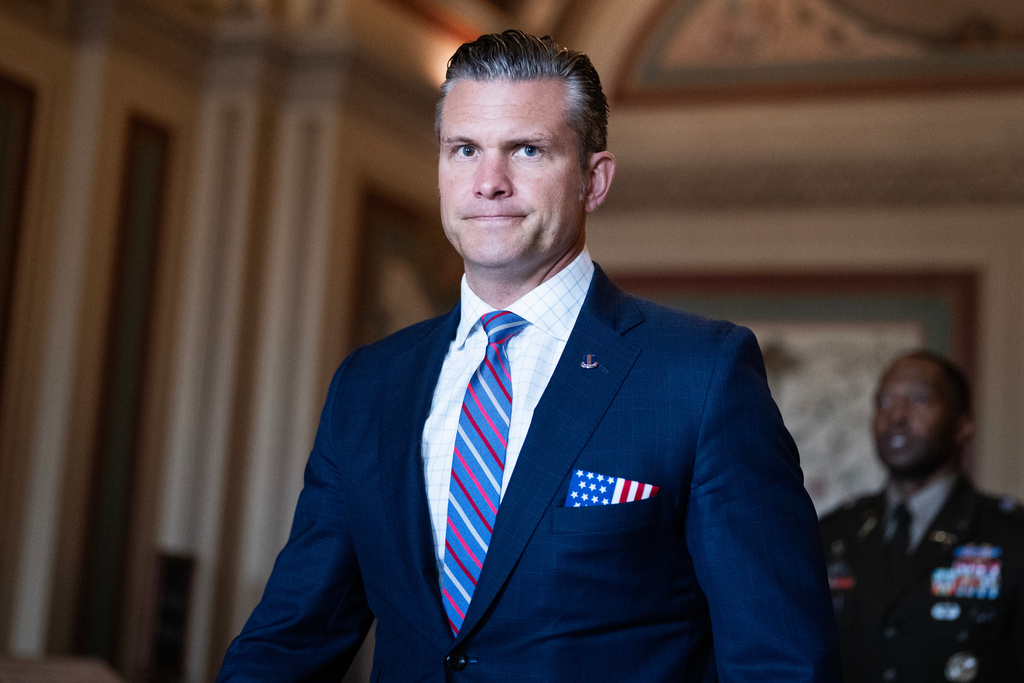
Secretary of Defense Pete Hegseth, who has rebranded his position as “Secretary of War,” followed the U.S. military invasion of Venezuela with a revealing press strategy: he shut out the Pentagon press corps and instead traveled with a hand-picked group of right-wing influencers and loyalist outlets on what the Pentagon itself branded the “Arsenal of Freedom Tour.”
The timing was striking. U.S. forces had just carried out an operation inside a foreign country that ended with the capture and extradition of Nicolás Maduro. In the immediate aftermath, the administration avoided calling the operation what it plainly was, leaning on softer language that suggested a limited or targeted action. That effort collapsed when senior Trump adviser Stephen Miller later acknowledged publicly that the United States had invaded Venezuela. The word mattered because it placed the operation in a category that has traditionally triggered heightened scrutiny and aggressive questioning.
That scrutiny did not follow.
As Oliver Darcy reported, the reporters invited to travel with Hegseth were not members of the established Pentagon press corps. They were sympathetic media figures and online personalities who have praised Hegseth, echoed the administration’s framing, or dismissed mainstream journalism outright. One attendee reportedly asked Hegseth to autograph a book he had written. The moment was revealing. It captured a relationship built on admiration rather than accountability.
Darcy wrote:
According to people familiar with the matter, the Pentagon extended invitations not to the established press corps, but to a collection of right-wing outlets the administration has actively sought to elevate. Invited media figures included Fox News Digital’s Morgan Philips, Lindell TV’s Heather Mullins, and The Federalist’s Shawn Fleetwood. One invited figure, John Konrad of the niche maritime outlet GCaptain—a member of what the Pentagon has dubbed its “new” press corps—made little effort to conceal his admiration for Hegseth, publicly gushing about him in multiple social media posts and volunteering, “I voted so hard for this 🇺🇸.”
This reporting documents the mechanics of the Pentagon’s media manipulation—who was invited, who was excluded, what access was granted. The significance extends beyond press access. The administration did not restrict coverage of a policy announcement or a messaging rollout. It restricted independent observation of American military force being used to invade a foreign country and capture its leader. That choice carries constitutional weight. It removes one of the few real-time checks the framers expected would constrain executive war powers.
When established reporters walked out of the Pentagon in December, critics warned the consequences would only become visible when military action required real scrutiny. The Venezuela invasion provided that test. The only people positioned to witness American military force being used abroad were those who had asked Hegseth for autographs.
In October, the Pentagon announced a new press policy that rewrote the terms under which journalists could cover the Defense Department. The policy imposed restrictions on routine reporting practices, tightened rules around background conversations, and introduced vague enforcement standards that placed journalists at risk of losing access for doing their jobs. Reporters could be punished for coverage the Pentagon deemed unfavorable without clear guidelines about what crossed the line. The message was clear. Coverage would continue only so long as it remained acceptable to the department.
The reaction from news organizations was swift and unusually unified. Legacy outlets across the ideological spectrum refused to accept the new terms and surrendered their Pentagon access badges in protest. Fox News joined them. That mattered because it underscored the nature of the objection. This was not ideological posturing. It was a professional judgment about whether national security reporting could remain independent under the new rules.
By December, the Pentagon press room had been vacated by reporters unwilling to operate inside that framework. The department did not reverse course. It repopulated the space with partisan observers, activists, and online figures comfortable with the new arrangement. At the time, critics warned that the consequences of this shift would only become visible at moments of military consequence, when scrutiny matters most. Those warnings were dismissed as hypothetical alarmism—until they weren’t.”
The Venezuela operation provided that moment.
The Pentagon insists it remains transparent. Its spokesman has claimed that officials are constantly engaging with reporters and has suggested that Hegseth has provided background briefings to mainstream outlets, though without identifying them. Information flows selectively, attribution disappears, and the appearance of openness substitutes for sustained scrutiny. Anonymous briefings are defended as transparency even as the administration routinely attacks anonymous sourcing when it produces inconvenient reporting.
The implications extend beyond press politics. The use of military force abroad sits at the core of democratic accountability. The framers understood that secrecy follows war and that executive power expands fastest in moments like these. They assumed leaders would seek to control the narrative after acting and relied on an independent press to complicate that effort by asking questions in real time.
The Pentagon’s current press strategy narrows that check. After an invasion, it chose affirmation over scrutiny and loyalty over experience. That choice shapes the public record. And in this case, the first draft of the war was written by people who asked the Secretary of Defense for his autograph.
New: The Mediaite One-Sheet "Newsletter of Newsletters"
Your daily summary and analysis of what the many, many media newsletters are saying and reporting. Subscribe now!






Comments
↓ Scroll down for comments ↓