NY Times Demands Israel Stop Pushing ‘Provably False’ Claim About Photographer in Scathing Letter

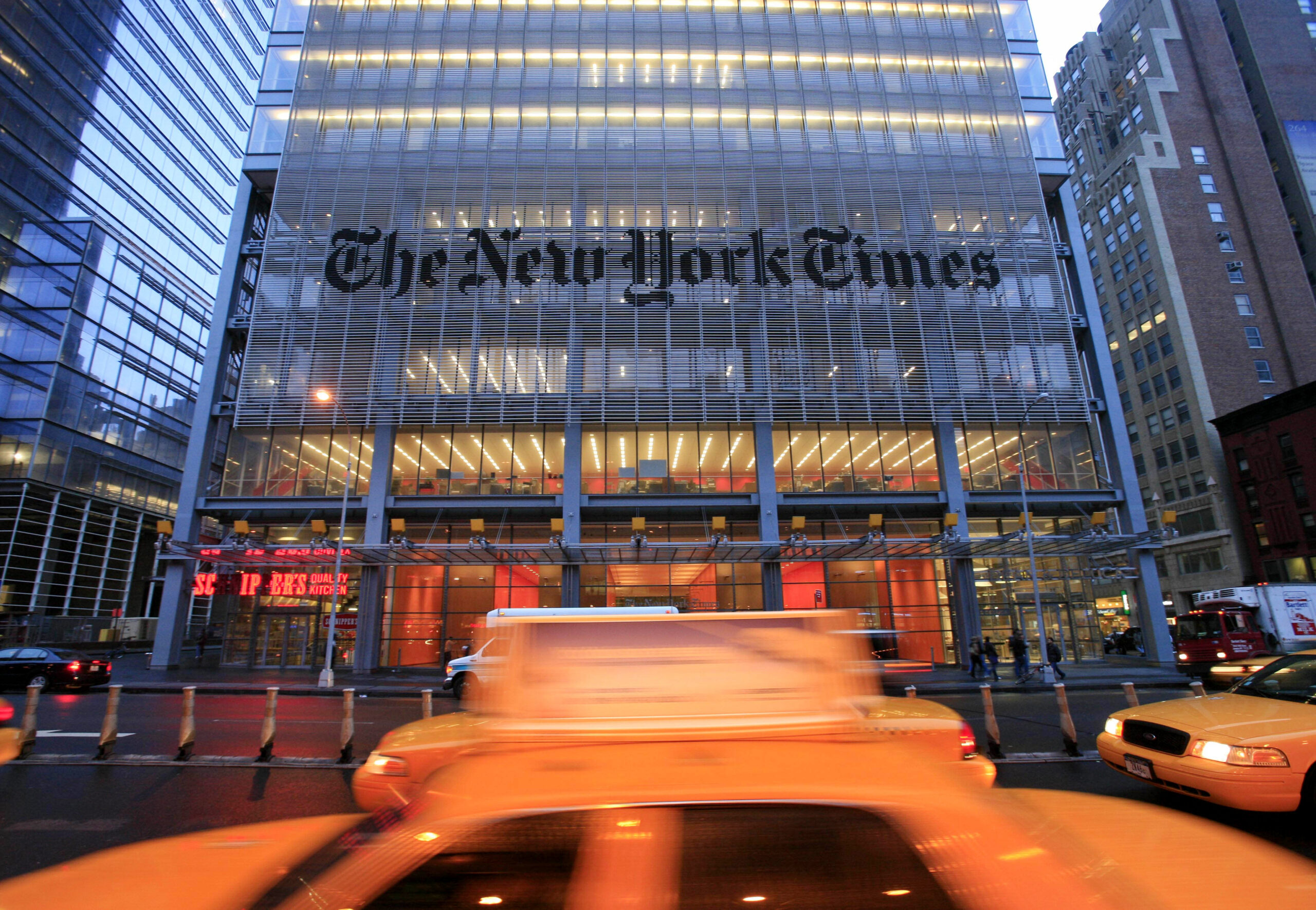
The New York Times demanded Israel’s Ministry of Foreign Affairs cease making claims that one of their freelance photographers had connections to Hamas and knew about the October 7 attack on Israel in advance.
In a scathing letter written to the Israeli Consulate General in New York by the Times’s deputy general counsel David McCraw, he accused Israel’s Ministry of Foreign Affairs of making “provably false” claims about the photographer, Yousef Masoud.
The letter came after Masoud won a Polk award alongside another freelancer for the Times, Samar Abu Elouf, for photojournalism. In response to the award, a spokesperson for Israeli Consulate General in New York sent a letter to the George Polk committee claiming ties between Masoud and Hamas.
The spokesman, Itay Milner, claimed Masoud had “public connections to Hamas and well-documented foreknowledge of the terror group’s plans for invasion mortally compromise the integrity of his reporting.”
The Times fired back at those allegations, which McCraw called a “fabrication,” in his letter on Saturday. McCraw noted that the claims about Masoud “can be traced back to the reckless posting by the advocacy group Honest Reporting,” and pointed out that the head of the group later said his claims were speculation.
According to the letter:
I have written to the Ministry of Foreign Affairs in the past to ask that the Ministry cease perpetrating the provably false claim that the freelance photographer Yousef Masoud was embedded with Hamas terrorists on October 7. He was not. Yet your recent letter to the administrators of the Polk Awards once again repeats that falsehood. You do a disservice to your office and to the public by joining in what is nothing more than a smear campaign.
The false accusations against Mr. Masoud can be traced back to the reckless posting by the advocacy group Honest Reporting that insinuated — without any evidence — that Mr. Masoud, a freelance photographer who has done work for The New York Times, may have had prior knowledge of the Oct. 7 attack.
The basis for Honest Reporting’s claim is a fabrication: that Mr. Masoud began shooting pictures at 5:30 a.m. when the attack began an hour later. Wrong. Mr. Masoud, we know from the photographic evidence, began shooting photographs after 6:30 a.m. – from his home’s rooftop with the fighting visible in the distance – when the noise of combat awoke him.
Let me be clear again: the accusation that anyone associated with The Times had advance knowledge of the attack or was embedded with Hamas terrorists at any time is simply false. Mr. Masoud was not even working for The Times on October 7. But even if that were not so, there is no credible evidence that Mr. Masoud was somehow complicit in the attack.
McCraw continued that the “attacks” on the photographer are a threat to the press more broadly:
These attacks on Mr. Masoud are an attack not just on The New York Times but on photojournalists who are doing essential work in conflict areas. They put their lives at risk daily, working under conditions that often require them to rush into danger to bear witness and document important events. The world came to know more fully the horror of what happened to innocent Israelis that day as a result of such journalists’ work. Being a witness to such events is one of the essential roles of a free press in wartime. Yet, by adopting and perpetuating unsupported accusations of criminal behavior against journalists, you not only endanger them but undermine the journalistic work that the world depends on to understand the realities of the war.
——
New: The Mediaite One-Sheet "Newsletter of Newsletters"
Your daily summary and analysis of what the many, many media newsletters are saying and reporting. Subscribe now!



Comments
↓ Scroll down for comments ↓