
Mediaite Exclusive: Saving CNN With CEO Mark Thompson — FULL Interview Transcript

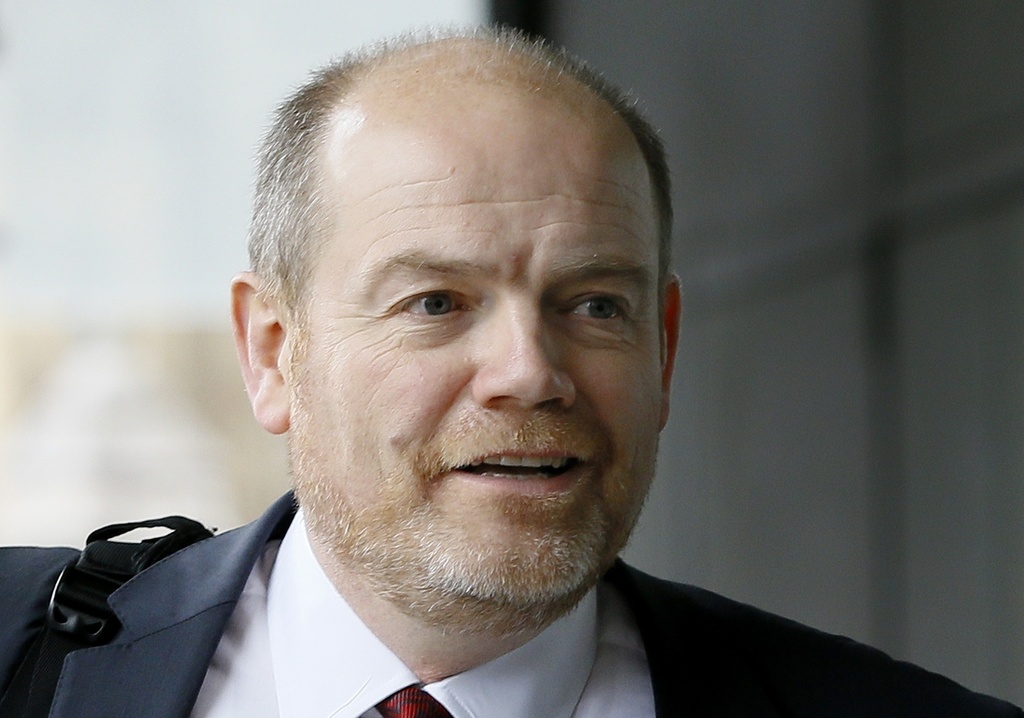
(AP Photo/Kirsty Wigglesworth, File)
Mark Thompson’s tenure at CNN has been quietly fascinating. Two years in, the British-born CEO remains something of an enigma—respected by staff, scrutinized by outsiders, and, by all accounts, remarkably calm in the eye of the storm.
CNN, like all legacy media, faces a rapidly shifting landscape: cord-cutting, social platforms siphoning attention, AI reshaping journalism, and the relentless competition for viewers’ trust. Yet Thompson approaches these pressures with the measured pragmatism and understated charm of a seasoned British schoolmaster—keeping a stiff upper lip, offering wry corrections when needed, and focusing on principle over spectacle.
I recently sat down for an interview with Thompson for an exclusive Mediate profile to commemorate his two-year anniversary in this current position and reflect on not just his task at hand, but also the current challenges all media executives face.
In this full transcript, Thompson speaks candidly about the network’s strategy, from subscription services and streaming initiatives to talent decisions and political positioning. He reflects on what differentiates CNN from competitors, how the network navigates ratings and audience expectations, and the deliberate, methodical philosophy behind its programming. He addresses controversial shows, departures, and the balance between live news and opinion, all while projecting the calm confidence of a leader who knows the stakes—and the landscape.
For anyone trying to understand how one of the world’s most iconic news brands is evolving under digital pressures—and how its CEO blends pragmatism, experimentation, and principle—this transcript is an unfiltered, authoritative look. It’s a rare opportunity to see the thinking behind the headlines, the strategic calculations behind programming, and the leadership style shaping CNN’s next chapter.
Note: portions of the interview were lightly edited for clarity.
*****
HALL: You’ve taken this job at a moment when the challenge feels bigger than just CNN — it’s really about the future of television and journalism. With audiences moving en masse to staring at thier phones or streaming, how do you make CNN feel essential again?
THOMPSON: It sounds silly but in 2012 people were asking the same question when I arrived at the New York Times, asking the same questions about the Times and the physical newspaper. And although the Times, like CNN, had a website since the middle 90s – I think the Times launched in ‘96, CNN launched in ‘95, the BBC launched in 1996, I think as well. And I’d spent years running the BBC before that. People obviously, quite understandably, said, “Yeah, well, you’ve got a website, but honestly, how are you ever going to get that to take the place of your physical newspaper? You’ll never get the economics to work.”
And broadly, I think the story of the New York Times is, we did that over a period of eight years. And by the way, it took us a long time. It got to the point where the idea of successfully making that transition and of building enough of a paying audience, and a really engaged audience to be the Times‘ digital asset. But in the end, when eventually you get to the switch off of a physical newspaper, which in my view will probably be in the mid-2030s, maybe late 2030s. So, probably more than 10 years from now. Actually, you’ve got a very viable, profitable business. And I would say Wall Street ended up believing that of the New York Times and the Times’ stock has reflected it.
And our challenge, I would say is similar broadly in character, but TV and TV news is a different world. It’s very different from newspapers. This is a world I know actually rather better than newspapers. We have a parallel task at CNN, which is to say, you know, what’s happened? Cable was a fabulous platform for news. Ted Turner was pretty much the first to see that in many ways in 1980. And cable grew from where it was in 1980 to the point where actually most households had it or had satellite or some other way of getting Pay TV. But at the moment, you could argue the finer points, but maybe 77 million households by now have cut the cord and don’t get cable anymore. And that number may change, but let’s imagine an average current rate of about 10% cutting the cord each year.
So this platform is no longer an effective platform for reaching much of America. And the task is simply to find pathways for getting CNN… And I want to say the full CNN experience, which is not just like a website with written news stories, but also Anderson Cooper and the great breaking news, the CNN experience into millions of households who don’t have cable TV, but who still want news. They cut their cords. I mean, news that you probably know is actually, as a genre, does pretty well on cable TV. CNN used to be, you know, in the middle ranking of cable channels, but CNN is now the most popular channel Warner Brothers Discovery has in cable. So that’s a kind of new thing.
News is more resilient in cable than almost any other genre. Big sport when they’ve got it, yes, but our issue, though, is that the actual total universe, the number of people who can get CNN via cable, is getting smaller and smaller. So we need to re-platform so we can reach people who want CNN. Even though they haven’t got news, and the service we’re launching pretty soon is designed to do just that.
HALL: Your subscription service launched a year ago, and streaming is set to debut this fall. What can you tell us about how this new product will work — and how you’ll navigate those tricky agreements with cable providers who still drive most of CNN’s revenue?
THOMPSON: If you decide you want to become a subscriber to CNN, you’re going to have, in the future, you’re gonna have two choices, like a basic layer, where you get CNN.com and you get unlimited access to that. And then a higher level, an All Access level, which also gives you an ability to access a close relative of the CNN cable experience and CNN. One which has been done in partnership with our incredibly important and trusted cable affiliate partners, and which people who subscribe to those cable services will be able to authenticate for free and access our product.
This is intended to be a breaking news service of national and international news. With programming and every single on-air anchor currently on CNN domestic cable news being presented. So a real chance, if you cut the cord, and you know, you’re happy with your choice of Netflix and HBO Max and Amazon to get your entertainment, but you miss news. This will be a way of getting news back in a way you can watch on a connected TV or watch on your phone or pretty much every other digital device.
HALL: The New York Times built its subscription business on must-read journalism from marquee bylines like Maggie Haberman among others. What’s CNN’s equivalent? What exactly do you think people will pay for?
THOMPSON: We’ve done a lot of market research, and in terms of willingness to pay in principle, asking “Would you pay for CNN?” CNN is right up there. By which I mean right up to and very competitive with The New York Times. Indeed in many of our surveys slightly above the New York Times in terms of the numbers of people who are prepared to pay. And I would say that after a year of launching a fairly straightforward subscription model, it honestly launched so we could learn about the skills and the tactics for growing a subscription model for CNN before we got the streaming offering ready. So we weren’t just trying to learn it all in one go. We got a year’s practice as it were. I would say that these models take time to grow, but nearly a year of experience has been encouraging in terms of willingness to pay. That’s good news.
And so, we want to try and persuade people that the CNN experience of when something important happens, that we are on the ground and we are often on the floor before everyone else. We have people that you know and trust who are going to go with you and the camera into the story and report it in real time. Although we will certainly provide and you’ll get complete access to everything we do in text and still images and short-form video and all the rest of it, you can also get live TV. And in fact, there’ll be a zone where you can look at, as I say, a domestic and international feed. We’re going to put up lots of live news feeds. So if you want to stick with one story or just simply wait for that press conference or the court case to end or the court case proceedings if it’s televised, you can watch those directly, unmediated.
This is going to be a service of news, which is not just complete access to a website which gets 140 million unique users a month – and is by most measures one of the biggest websites in the world. But also the TV service where literally you’re looking at the LA wildfires with Anderson Cooper in the shot doing a live interview with someone whose house is burning. So it’s meant to be one of the richest and most multimedia offers of news out there. And this is a service that, of course, cable subscribers are already paying for. So I think the willingness of the kind of content worth paying for and the willingness to pay data is encouraging. If you say, “Well, I’ll bet it will take you time to actually persuade people to do it.” Well, I think these take time.
At the New York Times, it took us more than four years to get to our first million subscribers. Four years, three months. But that model now with the ancillary products we launched like the crossword and Games and Cooking and Wirecutter and the rest of it, all of which I was involved in launching, now that’s nearly 12 million. In fact, they’ve probably already crossed 12 million subscribers now.
Scalability. I mean, I know quite a lot about that topic. It takes time, but I’ve been more optimistic about the possibility of scalability than almost anyone else. And at the Times, you know, we were proven right. I do think it’s only available to a small number of very well-known brands. And I think being a globally well-known brand, and CNN by most measures, is the best-known news brand in the world, not just the United States, that’s quite a big advantage as well. This will launch domestically only, initially, but the plan is it should be available anywhere.
HALL: Linear TV is still CNN’s biggest megaphone. But your ratings are down, which inevitably weakens that promotional power. How worried are you about that, and what’s your plan to turn it around?
THOMPSON: I want to kind of slightly argue with you — I would say ratings are not down broadly. You know what a rating is – it’s a percentage figure. And actually so far this year, for CNN is probably about 0.31. In 2015, the rating was 0.2. So we’re one and a half as big again in ratings as we were 10 years ago.
I don’t want to exaggerate, and I have to say, we got some exceptional ratings during COVID, but ratings are actually perfectly healthy. And by the way, one of the interesting side stories is that when I got to CNN in 2023, MSNBC was getting pretty close to matching us in the 25-54 demo. And in the first three quarters of 2023, so just as I was arriving, MSNBC had overtaken us in all audiences in the P2+ category. Back in 2017 was when MSNBC surged ahead in all the audiences. But CNN had kept its lead in the demo. But by 2023, in the first three quarters of 2023, CNN was only 6% ahead of MSNBC, and in fact, in the summer of 2023, it was a dead heat on exactly the same numbers.
And many people were saying, well, MSNBC is obviously going to overtake CNN in the demo as well. Well, suffice it to say, by the same quarters in 2025, we’re now 51% ahead of MSNBC in the demo, and we’ve halved the gap in all audiences. Over these two years, we are really competitive with MSNBC. We’ve halved the gap in all audiences, and we’ve turned a 6% lead into a 51% lead in the demo. So I would say that of course, you’ve got this basic thing, which is that the universe is contracting at 10% every year. So the absolute numbers come down.
If you look competitively, Fox, as I would be the first person to admit, Fox is a slightly different animal. In some ways, it’s a political affinity, a community service for people of one very big, strong political affection. But I would say our performance over the last two years against MSNBC has been highly competitive. And that’s not an accident. It’s because we work very hard. Our mornings are much stronger against MSNBC than they were. And prime time is performing. At the moment we’re doing better in the demo at every single peak time. Even though we had a massive change around in prime and brought lots of new anchors in, new shows, actually they’re performing pretty well. The numbers say they’re all performing very well competitively if you regard MSNBC as a competitor.
HALL: Nielsen’s new “Big Data” system paints a fuller picture of viewership across streaming and smart TVs. Does this data change how you see CNN’s performance — and how advertisers or investors should see it?
THOMPSON: Well, that’s right. And what I want to say that is even before we get our All Access service out there, although we may never be able to measure [TV and streaming] in quite the same way, hopefully over time it’s going to bring a significant new number of people in. I hope quite a lot of cord cutters come back into the family as well. I think one of the mistakes that people make about me is thinking, because quite understandably, Americans don’t know my background and prehistory, that I’m “really into digital and I’m not interested at all in linear.” I’ve spent years running television networks. And specifically, BBC. I ran Channel 4 in the UK, I was director of television and ran the whole BBC portfolio. And anyone who knew me then would tell you, I’m quite interested in competition and making sure that we’re putting our best foot forward. And we’ve made quite a lot of changes, some of them controversial in the schedule, to try and find ways of competing even as the universe contracts.
HALL: Fox News dominates cable ratings, even after paying $787 million for a defamation lawsuit. They have a clear, opinion-driven identity and point of view. How do you compete with that kind of programming — and audience loyalty?
THOMPSON: I think CNN’s strategic advantage is in news, and to some extent, news rather than opinion. I’m kind of very traditional and sort of, you know, in the footsteps of Ted Turner on this. I actually think that for CNN, the thing that people expect us to be is when really big things happen, we’re there. And we are fair-minded. We do everything we can to be accurate and timely, and they can trust what they hear about the news.
And, you know, some people when I got to CNN a couple of years ago said, “Well Mark, you just need to go back to the CNN strategy of 2017 and 2018 and just lean to the left, and, that worked well then. Maybe you could do it again.” And you know, our cable network and our website, have got a significant Republican and independent audience. And the audience makeup is very different from MSNBC or indeed, I would say, the New York Times’ subscriber base, which is typically, you now, Democrat voting or left-leaning. And remember, we are a global audience. We reach hundreds of millions of people around the world who think of us as American, but trustworthy, but also of news, you know, about what’s happening on the entire planet. And so to me, the strategic best positioning for CNN is that we are actually a news service as opposed to a kind of an opinion and debate service, masquerading as a news service.
That doesn’t mean we won’t have political discussion. And it doesn’t mean we won’t do things like the Abby Phillip’s NewsNight show at 10 o’clock. I was heavily involved in that re-org of that show. I’m pleased with it as one of maybe the only places on American TV you can actually see genuine MAGA Republicans and strong and vocal Democrats having at it. I think there’s a place for that as well. But to me, the core of the CNN proposition is always and has always been about news.
HALL: CNN has clearly pulled back from the “Resistance” era and repositioned itself closer to the center. Do you think that’s hurt your ratings?
THOMPSON: I don’t think our job is to be in the center. I think our job is to be out of the ring. I don’t think that our mission is to be centrist. Actually, it’s more about being fair minded across the political spectrum and recognizing that the best ideas may come actually from the political edges. It’s not for us to say that the only good politics are from the middle. I just want to say, let’s just point the camera at it and interrogate it and ask smart questions. But we’re very comfortable to have a broad range of political voices on the air. And we do. And that absolutely includes people who are members of the Trump cabinet or Trump administration or channeling those perspectives. We want to be able to understand and witness different people being tested and questions on their political beliefs.
HALL: Do you think CNN leans left?
THOMPSON: My view is, let’s just do our jobs as journalists. I think the strategy with a strategic advantage for us is around news and around fair-mindedness. But if you told me it may take a while for people to forget the recent past, well, it probably does. I mean, unfortunately, most of the things we’ve got to do are not instant successes. I’m aware that some people are saying, “You’ve been here two years, why isn’t this digital thing completely fixed now?” The answer is because it’s quite big and complicated. And if you look around, you’ll realize very few people have really succeeded. And to succeed, you need to get the right people in, plan it carefully and do it step by step.
HALL: Abby Phillip’s show is one of CNN’s few breakout successes lately, partly because it allows genuine and sometimes trainwreck debates. Does that tell you something about what audiences want from CNN?
THOMPSON: I think one thing I’ve been trying to do in different parts of the schedule is get a little bit more variety in. I don’t think, by the way, that every single show on CNN should be like that. There’s always a risk in cable TV that people say, “Well, that one works. Why don’t we do ten of them and see if that works better?” I think a more varied primetime experience where people get different flavors is good. I asked Kaitlan Collins to take on the combined role of Chief White House Correspondent and the 9 o’clock Anchor. That’s meant to be a different kind of innovation. It’s putting her in the room where it happens, inside the White House, at the same time as anchoring. That’s another way of trying to add a bit of difference in texture to primetime.
And I think you’ll see us continue to experiment with how we can add variety and character to what’s going on in the schedule. And, you know, avoid the kind of monotonous, endless focus on one subject, which is characteristically U.S. politics. So, variety in terms of content as well. But I think Abby Phillip’s show is doing something you don’t see, not just elsewhere on CNN, but really you don’t see anywhere that I’m aware of on American TV. I’m really excited about it and very proud of the way Abby’s made it her own.
HALL: Kaitlan Collins has shown real skill in challenging President Trump while staying in the room — but Trump has also targeted her personally. How do you support anchors who become political lightning rods?
THOMPSON: I want to say, obviously, we worry always about whether our people are being supported properly. We employ extremely tough customers and, you know, she’s an example of that. In a perfect world, insults and so forth wouldn’t fly, but we live in a country where free speech basically still thrives. I mean, there are some question marks about that as well, but I have to say, we’re not asking to be immune from criticism. In the rough and tumble of politics, political leaders often lash out at the media, particularly when, you know, they’re not happy with what the media are reporting. And often, if you’re not happy with the report, you attack the reporter. And so, I would prefer if my colleagues were never on the receiving end of that. I am also completely realistic about where we are at this moment in history. I think we are closely knit. We support each other, and I feel as an institution, we intend to get through this without diminishing our edge or losing our sense of duty to the public, despite any obstacles that are put in our way.
HALL: Jim Acosta built a strong digital following after leaving his show. In hindsight, was letting him go a missed opportunity?
THOMPSON: We’ve been making incremental changes to the schedule to see whether we can improve our competitive position in terms of audience engagement in that time slot, midnight to two Eastern. We’ve actually got exciting plans and we’ve got a new anchor talent coming in to do that slot. So, you know, that’s a real plan. That was always a real pan. And I would have been delighted if Jim had said yes.
HALL: Scott Jennings has become a polarizing figure — some see him as a truth-teller, others as a gaslighter. What’s your view of him, and do you want more voices like his on CNN?
THOMPSON: These people are human beings, and gathering interesting human beings and pointing cameras at them is what we do. I do think the idea of challenge, and of all of us being exposed to perspectives we maybe disagree about and having our own views put to the test is a healthy thing. And honestly, for me as a viewer and as an editor, I think the idea that you create environments for your audience where they’re just never challenged, and you have like token opposition is not good. Scott’s like D’Artagnan, he’s got his sword out and he’s got about four Democrats against him, but he spiked them all off. That’s much more like it, I think. He’s a worthy opponent, as it were, for the Democrats in the room. And it makes for not just good television, but also for in some ways, a slightly deeper testing of the ideas all the way around that table.
HALL: You’ve kept a much lower public profile than your predecessors. Is that a deliberate strategy, or just your way of working during a difficult transformation?
THOMPSON: I’m actually, you know, one way or another out and about quite a lot, but I think I’m very focused. You know, I’ve done quite a lot. I’ve been in the business for a frightening long time. This may be year 46 or something…year 47. And I don’t feel, from a personal point of view, that I’m trying to burnish a personal brand or prepare for another job or anything like that. I’m focused on CNN and its success. And you know when we think about journalism as a whole, the pressures it faces at every level from metro down, including, in the end, local news. And, by the way, the US network news divisions and more broadly, the European newspapers and TV news. Having one or two bastions of brands and newsrooms that can survive is really important. And you know, CNN has got a shot of survival and thriving. There aren’t many, I think, who can do that. So, you know I’m giving it its best shot. And my focusing on that is the best use of my time.
New: The Mediaite One-Sheet "Newsletter of Newsletters"
Your daily summary and analysis of what the many, many media newsletters are saying and reporting. Subscribe now!









Comments
↓ Scroll down for comments ↓