CDC Under New Scrutiny For Collecting Wide Variety of Covid-Related Data But Publishing ‘Only a Tiny Fraction’

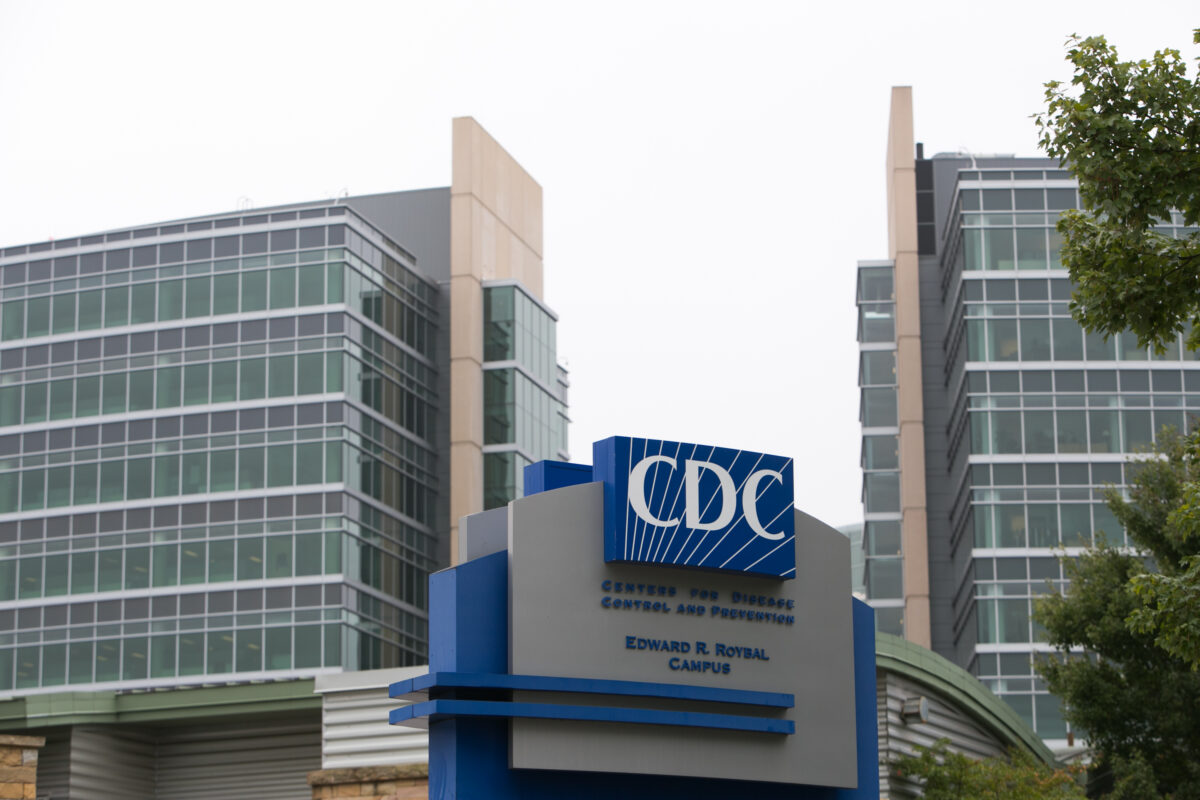
Photo by Jessica McGowan/Getty Images.
The Centers for Disease Control and Prevention have been a frequent target for criticism over its response to the Covid-19 pandemic, often over concerns about how the government agency was communicating information. Now, as a New York Times report highlights, that criticism may shift to focus on the flip side of that problem: that the agency is failing to communicate, including holding back vitally important data.
As the Times‘ Apoorva Mandavilli noted, the CDC has collected vast swaths of data during the pandemic, and there’s an eyebrow-raising quantity of it that has not been released until recently, was only partially released, was released only to state agencies, or access was otherwise limited.
For example, the CDC has been collecting data on hospitalizations for Covid-19 across the U.S. for over a year, breaking down the data by age, race, and vaccination status. Most of that data has not been made public.
Their report on the effectiveness of boosters in adults under 65 years of age, published two weeks ago, completely omitted all data for 18- to 49-year-olds, a massive gap in the report.
The “National Wastewater Surveillance System” (NWSS), a dashboard of data tracking the presence of SARS-CoV-2 levels in wastewater at testing sites across the country, was first posted on the CDC’s website earlier this month. Multiple state and local governments had already been collecting this information, and even sharing it with the CDC, for awhile — some from the very beginning of the pandemic. However, the CDC did not release any of these findings until now.
All in all, Mandavilli summarized the CDC’s actions as “publish[ing] only a tiny fraction of the data it has collected.”
In many of these examples, the CDC had an excuse for holding back the data, often citing concerns that the information could be misinterpreted, as CDC spokesperson Kristen Nordlund told the Times. Information about breakthrough infections among vaccinated Americans gave rise to specific concerns that it could lead people to question the vaccines’ effectiveness. But withholding that data hasn’t prevented that problem.
Another challenge has been the multiple layers of bureaucracy that must give their stamp of approval, both within the various divisions of the CDC and within the Department of Health and Human Services, the part of the executive branch which oversees the CDC.
Multiple outside public health experts panned the CDC’s slow release of data when contacted by the Times.
Epidemiologist Jessica Malaty Rivera was on the team that ran the Covid Tracking Project, an independent project that collected and published pandemic data until March 2021. She commented that they had been “begging for that sort of granularity of data for two years.”
Rivera was also dismissive of the CDC’s excuse about trying to prevent the data from being misinterpreted. “We are at a much greater risk of misinterpreting the data with data vacuums, than sharing the data with proper science, communication and caveats,” she said.
Dr. Yvonne Maldonado, chair of the American Academy of Pediatrics’s Committee on Infectious Diseases, expressed frustration over the difficulty of obtaining CDC data on children who were hospitalized with Covid and had other medical conditions.
“They’ve known this for over a year and a half, right, and they haven’t told us,” she said. “I mean, you can’t find out anything from them.”
Regarding the wastewater analysis, many experts view that data as critically important, both for its ability to accurately pinpoint case surges and new variants, and for the fact that it tracks the virus levels present in an entire community, and therefore doesn’t invoke the same privacy concerns that other methods of Covid tracking would.
In this case, the CDC was slowed down by trouble managing the data and publishing it in a way that was accessible and logical. An additional $11 billion in government funding to modernize their systems helped, but it was still a lengthy process. Still, eight of the 31 states currently tracking wastewater data with the CDC were doing so as far back as fall 2020.
New: The Mediaite One-Sheet "Newsletter of Newsletters"
Your daily summary and analysis of what the many, many media newsletters are saying and reporting. Subscribe now!









Comments
↓ Scroll down for comments ↓