Elon Musk Was Supposed to Destroy Twitter’s Double Standards, Not Enforce New Ones

Hannibal Hanschke/Pool via AP
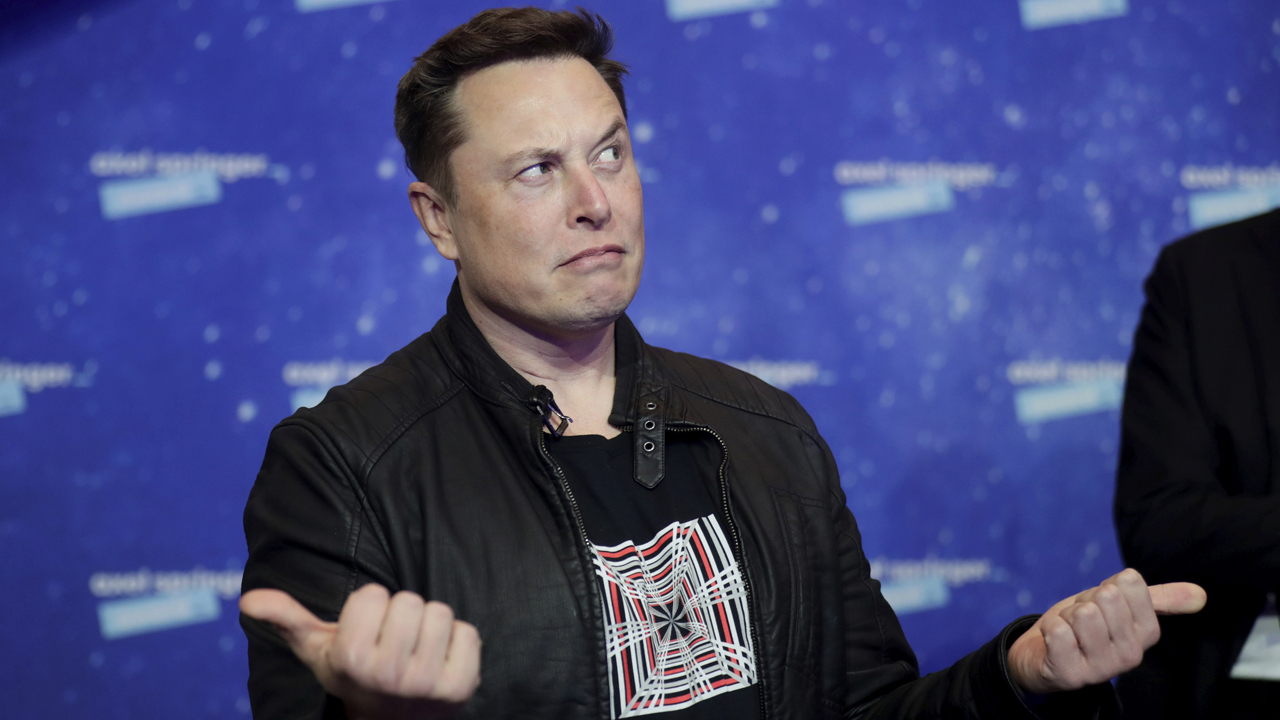
When Elon Musk walked through the doors of Twitter headquarters for the first time last fall, conservatives and free speech advocates greeted him as a liberator. Progressives, meanwhile, cried out like villagers after Genghis Khan breached the walls.
In retrospect, the most hysterical reactions to Musk’s arrival look rather silly. Charlie Warzel of The Atlantic pronounced Musk a “far-right activist” prone to the “cruel and senseless.” Senator Elizabeth Warren (D-MA) suggested Musk’s acquisition was “dangerous for our democracy.” At Bloomberg, Tim Culpan characterized the new regime as “a threat to us all.”
We managed to escape the past six months with our system of government and wellbeing intact. Yet those with rosier estimations of Musk’s intentions must now admit that the new owner of Twitter has not seen out his stated desire to turn the platform into a Shangri-La for free expression. In fact, his original sales pitch stands in stark contrast with his revealed preference for wielding arbitrary policies against those he perceives as acting against his personal interests.
Those who supported Musk’s pseudo-hostile takeover had legitimate gripes with the pre-Musk platform. Oftentimes, it appeared as though the rules were being enforced so as to satisfy a progressive demographic out-of-step with the rest of the country. Donald Trump was kicked off Twitter under thin pretenses. Ali Khamenei, the murderous, anti-Semitic lunatic and Supreme Leader of Iran remained online. No good-faith reading of Twitter’s own rules could support that status quo, but the people favored by Twitter leadership were calling for the former’s head, not the latter’s. The Hunter Biden laptop story was suppressed under false pretenses. Covid-era arguments deemed misinformation by Twitter later became conventional wisdom. It was Calvinball all the way down.
The problem? It still is. The rules may have changed, but the game remains the same. Invent reasons to disqualify your opponents and prosper. Musk plays an arguably more ruthless, if less ideological, version of it than his forebearers.
Indeed, in his short tenure as owner, he’s racked up a lengthy rap sheet of censorious action. Last December, Musk summarily suspended the accounts of several journalists he said were endangering himself and his family after a man climbed on top of a car carrying one of his children. At the time, it could be defended as the overreaction of genuinely concerned parent.
Time has proven that defense naïve.
In the process of implementing a change in verification policy, he stripped the New York Times of its blue checkmark even as he allowed other legacy accounts to hold onto their own as punishment for the gray lady’s stated intention of not paying for it in the future.
He labeled NPR a “state-affiliated” media source — which, despite its prodigious problems, it quite simply is not — even as he relaxed restrictions on outlets actually affiliated with the rogue regimes in China and Russia in an abridgment of official Twitter policy.
And he’s employed heavy-handed tactics to clamp down on perceived competitors. Most recently, Musk suddenly disallowed tweets with links to Substack, a publishing platform relied upon by many prominent independent journalists, from being retweeted, replied to, or liked after it introduced a new feature bearing a resemblance to Twitter. Musk is also preventing authors from embedding tweets on the site searches for “substack” on Twitter are replaced by a search for the word “newsletter.”
Besides making the user experience demonstrably worse, all of this serves only to make fools of those of us who took the billionaire at his word when he said he’d turn Twitter into a freer, sleeker operation. When he spent $44 billion on the platform, conservatives wondered, with some reason, if Musk had become the nation’s foremost culture warrior on their behalf. But what time has revealed is that Musk’s governance of the platform will be guided by perceived self-interest, rather than high-minded ideals.
Perhaps there existed some small sliver of Muskovites who cheered him on in the hopes of seeing their enemies punished in the same way they felt that they had. But a majority — including Twitter Files alums Matt Taibbi and Bari Weiss — sought only a better-functioning platform less inclined to put its own thumb on the scale.
If he ever shared that objective, the Elon Musk experiment at Twitter can to date only be considered a failure.
This is an opinion piece. The views expressed in this article are those of just the author.
New: The Mediaite One-Sheet "Newsletter of Newsletters"
Your daily summary and analysis of what the many, many media newsletters are saying and reporting. Subscribe now!



Comments
↓ Scroll down for comments ↓