If Ukraine-Biden Allegation Against Trump is True, Doesn’t it Mean We Must Revisit ‘Russian Collusion’?

Nearly every new romantic relationship begins with a blank slate, with each partner usually getting a significant benefit of the doubt when it comes to the other proving they have committed any major transgressions, like infidelity. But once serious suspicions are raised, and a pass is hesitantly given, the second time a similarly suspect episode arises, the burden of proof tends to be dramatically reduced.
In this circumstance, If one concludes that the second allegation is indeed based in fact, it would be beyond naïve and nonsensical not to revisit the reality of the first situation. For, obviously, if you suspect someone of cheating, they deny it, you let them off the hook, and then you immediately catch them red-handed doing exactly that, it is a pretty sure bet that you were wrong to exonerate them the first time around (even if you were instructed to do so by the attorney general the cheater suddenly hired to be in charge of the end of your investigation).
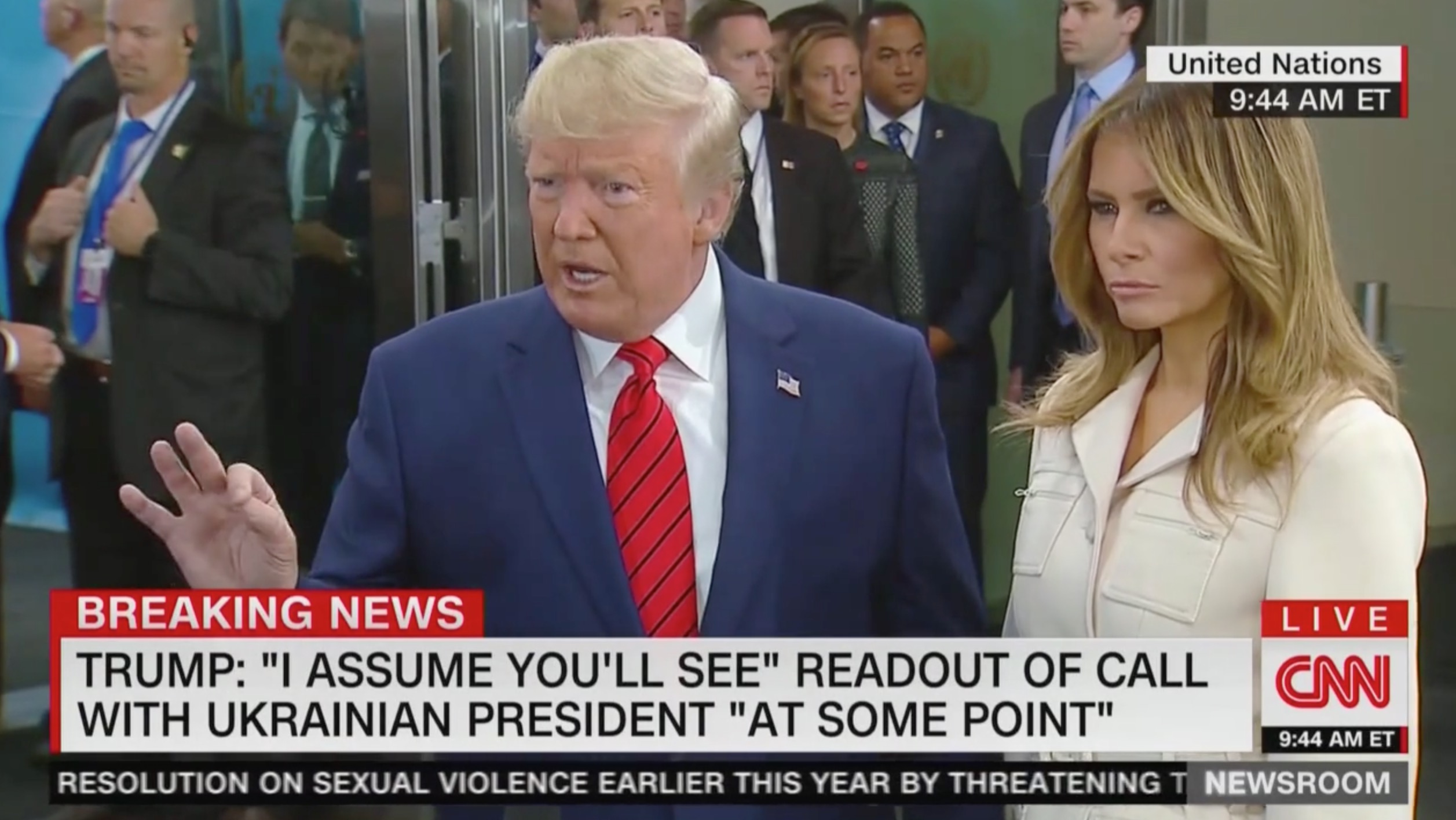
It is in this light that President Donald Trump’s emerging Ukrainian scandal, which increasingly appears like it will lead to his impeachment, takes on even more significance. After all, if Trump was willing to so brazenly “collude” with the Ukrainian president to interfere in the 2020 election cycle, just as he was escaping the Russian investigation, shouldn’t we now assume that he at least attempted to do exactly the same thing in 2016?
It is important to stipulate that we don’t yet know all of the important details of what really happened with regard to Trump’s efforts to get Ukraine to pursue a seemingly bogus investigation into Joe Biden and his son. It is still quite possible that the story will not pan out exactly as Trump critics are desperately hoping that it does.
At least so far, however, all of the pieces of a legitimate scandal appear to be falling perfectly into place. The latest revelation is that Trump ordered our military to put a hold on hundreds of millions of dollars in aid for Ukraine just a week before Trump had his now infamous phone call with their president where he repeatedly urged him to do his campaign dirty work for him.
So, for the sake of argument, let’s assume that Trump indeed did exactly what he and his own lawyer, Rudy Giuliani, have already publicly implied is true: he sought the underhanded help of a foreign government in his own presidential campaign. While you can argue that doing this as president of the United States, and thus using tax-payer money and the prestige of our government as leverage for his mob-like extortion, is worse than even what was alleged in the Russian investigation, it should not be underestimated just how much this Ukrainian allegation completely undermines the entire Trump defense with regard to what happened in 2016 with Russia.
Once you “know” that Trump was willing and able to be so overtly outlandish in this realm when he had every reason to know that he was under much more scrutiny than he was in 2016, it becomes nearly impossible to still believe that the Trump campaign didn’t really “collude” with Russia during that campaign. For instance, seen through the prism of the Ukrainian story, it is now laughable to think that Trump himself wasn’t directly involved in the infamous Trump Tower meeting with Russians offering dirt on Hillary Clinton, and his very public plea for Russia to find Hillary’s emails (which they tried to do that very night!) now can no longer be viewed as a harmless joke.
Then, of course, there is the number one fact that somehow got almost entirely lost in the Russia investigation: Trump, even as the GOP presidential nominee, was trying to build a Trump Tower in Moscow, publicly lying about it, and his personal attorney was lying to Congress about the timing of the deal in a way that sure seemed as if the perjury had to be somewhat directed by the president. This series of facts was always inexplicable. But, if the essence of the Ukrainian story is true, there is just simply no rational way to spin them as anything other than the smoking gun of “collusion” with Russia.
The two stories also share a couple of other potentially significant connections. For instance, Trump’s campaign chairman Paul Manafort, who is now in a federal prison, famously has had extensive — and very corrupt — dealings within Ukraine.
Then there is the timeline of these two stories. When Special Counsel Robert Mueller badly bungled his testimony to Congress on July 24th, it was officially clear that, despite a mountain of facts against him, Trump was going to get away his campaign’s interactions with Russia during the 2016 election.
Trump’s call the Ukrainian president, pressuring him to provide Trump with exactly the kind of help with Biden that the Russians delivered to him, via WikiLeaks, with Hillary, occurred the very next day, on July 25th. It was almost as if Trump was feeling free to hit up a new mistress the moment he was confident that his wife had been sufficiently fooled into staying with him.
So, as the facts continue to emerge on this Ukraine scandal, let’s not get bogged down on the details of it without at least giving some thought to what we now must conclude about the bigger picture. And let’s not forget the adage, “Fool me once… shame on me… fool me twice…”
John Ziegler is a senior columnist for Mediaite. He hosts a weekly podcast focusing on news media issues and is documentary filmmaker. You can follow him on Twitter at @ZigManFreud or email him at johnz@mediaite.com
This is an opinion piece. The views expressed in this article are those of just the author.
New: The Mediaite One-Sheet "Newsletter of Newsletters"
Your daily summary and analysis of what the many, many media newsletters are saying and reporting. Subscribe now!






Comments
↓ Scroll down for comments ↓