It Was Just a Halftime Show. The Meltdown Reveals How Dumb We’ve Become.

(AP Photo/Brynn Anderson)
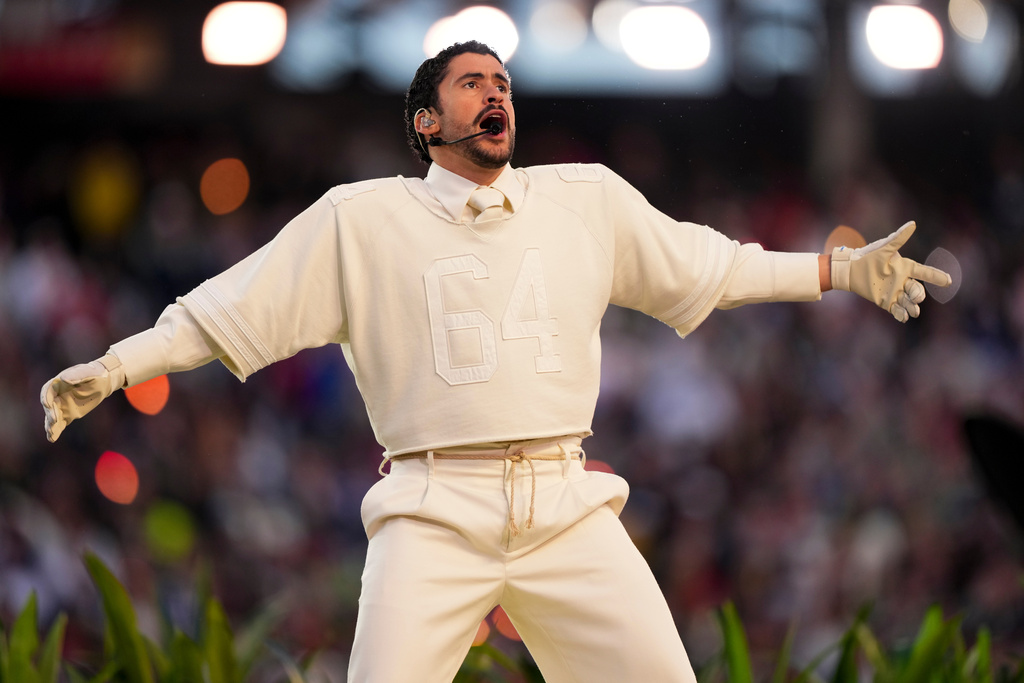
The most revealing thing about the Super Bowl halftime show was not Bad Bunny, Kid Rock, or even Donald Trump deciding that this was a useful place to weigh in. It was how quickly millions of people volunteered to be furious on cue, as if anger were a civic duty rather than an emotional habit that has gotten wildly out of hand.
This was a halftime show. Thirteen minutes of loud, glossy distraction designed to give people time to refresh drinks and argue about guacamole. It was never meant to unify the nation, heal divides, or signal the moral direction of the republic. Treating it as any of those things requires a level of seriousness that borders on parody. It’s like getting mad at someone else’s screensaver.
And yet here we are.
Conservatives decided the show was an insult, a provocation, proof that America is slipping away. It was framed as cultural displacement dressed up as criticism of taste, with Spanish lyrics treated less as a stylistic choice than a grievance. The outrage was immediate, familiar, and deeply incurious, the kind that confuses personal discomfort with national emergency. This would be easier to take seriously if it weren’t aimed at a league that has spent decades booking halftime acts based on audience math rather than cultural loyalty.
At the same time, social media filled up with progressive voices eager to sanctify the performance as a transcendent cultural moment. Not just good or enjoyable, but historic, brave, deeply moving. Bad Bunny’s fans undoubtedly loved it, and that’s fine.
But the rush to deify a Latin club-music superstar as if he had delivered a once-in-a-generation artistic statement was its own kind of performative excess. The set itself was slick and competent, heavy on choreography and spectacle, light on surprise, with the camera doing more work than the music. It was built to look impressive in clips and travel well across platforms, not to rewire anyone’s understanding of pop music or American culture. Calling that revolutionary felt less like appreciation and more like anxiety about saying the wrong thing.
TPUSA counterprogrammed. Trump posted. Everyone behaved exactly as expected, which is the real indictment. None of this was spontaneous. It was muscle memory.
It’s also worth remembering that the NFL helped create this monster. Halftime used to be exactly what the word implies: filler. Marching bands, cheerleaders, and relentlessly upbeat outfits like Up With People, who showed up five times between the 1970s and early ’90s to perform earnest, vaguely unsettling pageants no one mistook for art or politics.
The turning point came when the league realized halftime could be monetized, first by stopping viewers from leaving and then by partnering with the music industry to move units. Once Michael Jackson proved that a superstar could turn intermission into an event, the NFL happily transformed halftime into the most valuable promotional slot in entertainment. Artists got exposure. Labels got catalog bumps. The league got relevance beyond football. The cost was obvious but ignored: when you sell halftime as a cultural event, you invite people to treat it like one.
What’s striking is how badly people seem to want the halftime show to matter. Not to entertain, not to amuse, but to validate their worldview. Disliking a pop performance is normal. Deciding it confirms your theory of national decline or moral progress is something else entirely. That leap is where the plot gets lost.
The conservative backlash wasn’t really about music. It was about discomfort with change and the refusal to admit that not everything is designed to feel familiar anymore. The progressive overpraise wasn’t really about art either. It was about signaling moral alignment and extracting symbolic meaning from something engineered to be disposable. Both reactions inflated the significance of a spectacle precisely because triviality does not feed engagement.
That’s the part worth lingering on. We now live in an ecosystem where boredom is intolerable and neutrality is suspicious. Everything has to be a fight. Every cultural artifact must be processed through a partisan lens or it feels wasted. A halftime show cannot just exist. It has to offend, affirm, threaten, or redeem.
The saddest part is how joyless this all feels. The Super Bowl used to be a night where people argued about commercials and laughed at the excess of it all. Now it’s another venue for pre-scripted outrage, another excuse to perform allegiance. Nobody looks happy doing this. They look committed.
The problem with last night wasn’t the halftime show. It was the hunger to turn a forgettable performance into a referendum.
This is an opinion piece. The views expressed in this article are those of just the author.
New: The Mediaite One-Sheet "Newsletter of Newsletters"
Your daily summary and analysis of what the many, many media newsletters are saying and reporting. Subscribe now!






Comments
↓ Scroll down for comments ↓