
Sunday TV Exposed the Constitutional Breakdown Behind Trump’s Venezuela Claim

Screenshot
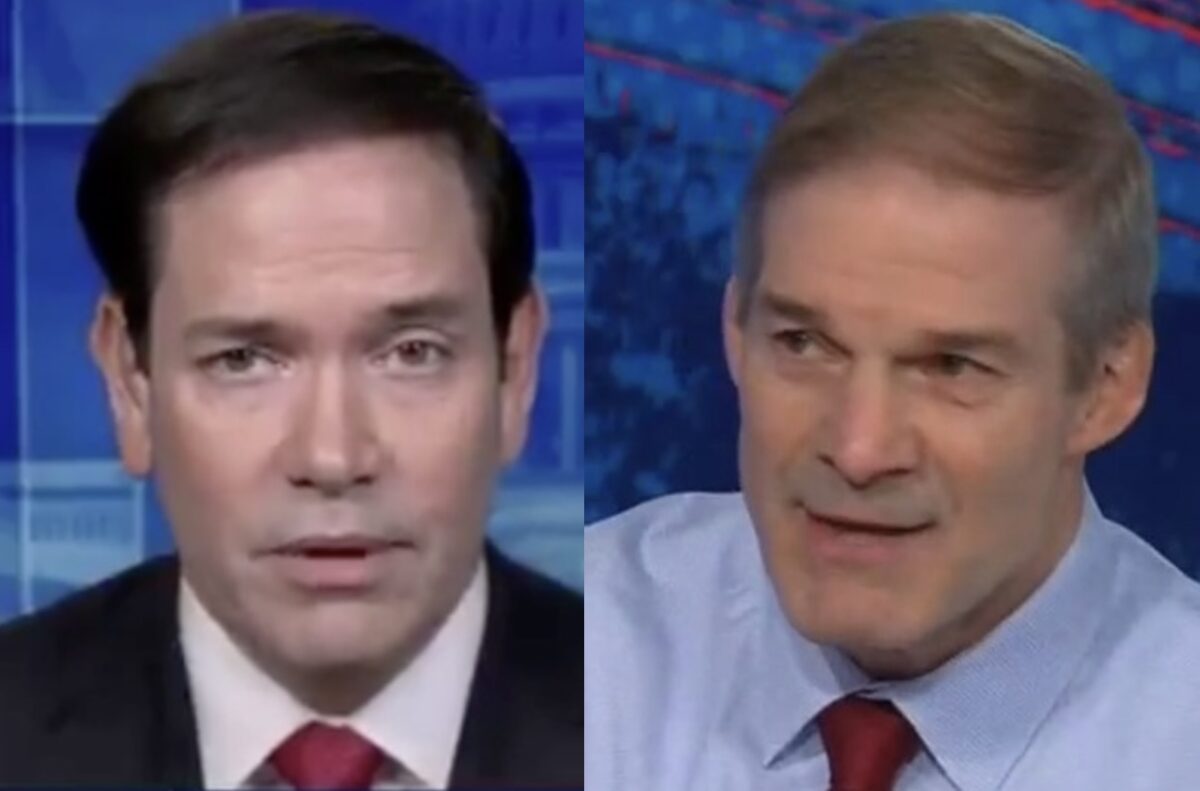
Secretary of State Marco Rubio spent Sunday morning on television being asked a single, basic question: under what legal authority is the United States now “running” Venezuela?
He never answered it.
That wasn’t a slip or a misunderstanding. It was a constitutional failure that played out live on national television.
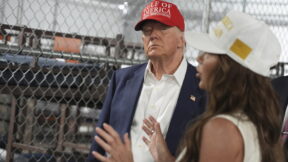
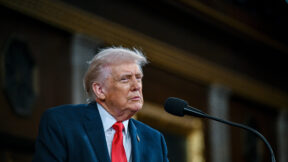
The question existed because of something President Donald Trump said the day before. During a Saturday midday press conference, Trump announced that after the capture of Nicolás Maduro, the United States would be running Venezuela until what he described as a “safe, proper and judicious transition.”
“We’re going to run the country,” Trump said.
That was not a rhetorical flourish. It was a claim of extraordinary power, one that requires a clear legal explanation.
On Sunday, Rubio was given repeated opportunities to provide one. On each network, the question came back in slightly different forms but always landed in the same place: under what law does the United States have the authority to take control of another country’s direction, economy, or governance?
Rubio responded with everything except an answer.
He talked about leverage. He talked about sanctions. He talked about drug trafficking, Iran, Hezbollah, and America’s national interest. He talked about oil storage capacity and corrupt elites. When pressed again, he talked some more. At no point did he cite a statute, an authorization, or a constitutional theory that would allow the United States to “run” another country. He repeatedly cited “court orders” that gave the U.S. legal standing — but never came close to elaborating on what those were.
On ABC’s This Week, Rubio was repeatedly asked by George Stephanopoulos to point to the legal authority behind taking over Venezuela. The Secretary of State pointed to court orders authorizing the seizure of sanctioned vessels, orders that allow the seizure of specific ships. They do not authorize the United States to govern a sovereign nation. Rubio never crossed that line because crossing it would require naming authority that does not exist or defending a theory he was not prepared to state plainly.
On Meet the Press, Kristen Welker tried to pin down who exactly would be running Venezuela after Trump publicly named Rubio himself, the defense secretary, and the chairman of the Joint Chiefs. Rubio refused to answer. He denied the premise, then returned to policy goals. When Welker asked why Congress had not approved any of this, Rubio said the administration did not believe approval was necessary and would engage Congress when it deemed it appropriate.
That statement alone should have ended the discussion.
In the American constitutional system, the executive branch does not decide when Congress matters. Congressional authorization is not discretionary. Treating it that way is not confidence. It is lawlessness.
The interviews worked not because the questions were clever, but because they were unavoidable. When a claim of power is made this plainly, repetition stops being theater and becomes exposure. Authority either exists and can be named, or it doesn’t.
What followed on CNN made clear that this was not just an executive failure. It was a legislative one.
Asked by Dana Bash what comes next and what authority Congress had exercised, House Judiciary Chairman Jim Jordan did not cite a law, an authorization, or a process. He said he trusts the president. He said he trusts Marco Rubio. He said he trusts the military.
That was the answer.
When the member of Congress charged with guarding constitutional boundaries responds to questions of war and cost by declaring personal faith in the executive, he is not defending the presidency. He is emptying Congress of purpose.
Rep. Jim Himes, who appeared afterward, put words to what viewers had just watched. One branch claiming sweeping power without explaining its legal basis. Another branch signaling it has no interest in demanding one. Checks and balances did not fail because they were overpowered. They failed because they were abandoned.
This is where the outrage belongs.
Not in Trump’s bluster. Not in Rubio’s verbosity. In the fact that senior officials went on national television and demonstrated that they cannot or will not explain the legal basis for an extraordinary assertion of power.
The administration is operating on a simple premise: decisiveness justifies itself. Results will vindicate process. Strength replaces permission. That premise works in rallies and friendly media because it is performative. It collapses the moment it encounters a format that still insists on an answer.
Sunday television did not manufacture a controversy. It documented one. A president claimed the United States is running another country. His secretary of state could not explain under what law. Congress declined to care.
That is not embarrassing. It is alarming. The Constitution was not debated on Sunday morning. It was ignored, in plain sight, while the public was told to trust the people ignoring it.
This is an opinion piece. The views expressed in this article are those of just the author.
New: The Mediaite One-Sheet "Newsletter of Newsletters"
Your daily summary and analysis of what the many, many media newsletters are saying and reporting. Subscribe now!




Comments
↓ Scroll down for comments ↓