The World Needs Europe to Rein In Social Media Before It Breaks Us All

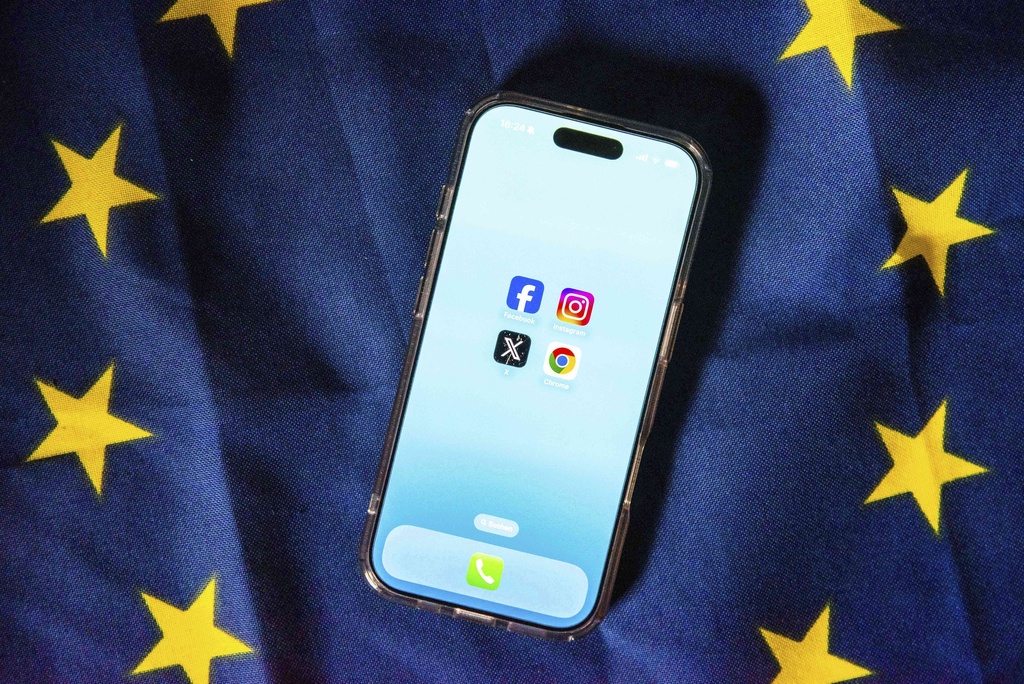
Photo by: Alicia Windzio/picture-alliance/dpa/AP Images
The newly released U.S. National Security Strategy criticizes Europe for what it calls “censorship of free speech and suppression of political opposition” through digital regulation. The document reveals an administration so thoroughly entangled with Big Tech that it cannot acknowledge the damage platforms cause, let alone confront it. And it gets the main thing backward: Europe would be doing the world a massive favor by taking the lead on desperately needed action.
A decade ago, few would have predicted that social‑media platforms would evolve from places of connection into algorithmic engines of addiction, polarization, and foreign interference. But that is what happened. Facebook and Instagram (Meta), TikTok (ByteDance), X (formerly Twitter), YouTube (Google), and others do not merely host speech; they direct what billions of people see. Their recommendation systems — tuned relentlessly for engagement — elevate whatever keeps users hooked. And that means pushing viewers to watch conspiracy, harassment, hate, fraud, or state‑backed disinformation campaigns.
If a hot‑dog vendor discovered that adding poison increased sales, we would not celebrate the innovation. We would shut him down. Profit is not a defense for practices that harm the public. The same moral logic must apply when the product is the information environment itself.
The harms are not speculative. The U.S. Surgeon General’s 2023 advisory laid out extensive evidence linking heavy social‑media use to anxiety, depression, and self‑harm risks among adolescents and called for urgent action. Meta’s own secret internal research showed that Instagram makes body‑image issues worse for one in three teen girls, and that teens themselves blamed the app for worsening anxiety and depression. And internal documents rerevealed just last month show that Meta expected to earn a large share of revenue from ads tied to scams, fraudulent schemes, and banned goods, and repeatedly failed to stop them. In the UK, this skullduggery seems to have been especially egregious.
These companies know the damage; they simply find it spectacularly profitable.
Civil society watchdogs and academic studies continuously document instances where coordinated disinformation campaigns, botnets, and misleading content flooded social media during election cycles — undermining trust in institutions and weakening democratic norms.
Romania learned this the hard way. In late 2024, coordinated networks of Russian‑linked bot accounts pushed divisive narratives during the presidential campaign, particularly on TikTok. Watchdog groups and EU institutions identified algorithmic amplification of pro–far‑right content, raising serious concerns about foreign interference. Those concerns were so acute that the Constitutional Court annulled the first round of the election. This earned the ire of Trumpworld. The same patterns — botnets, inauthentic accounts, “engagement farms” — re‑emerged shortly thereafter in Moldova, illustrating that this is not a one‑off crisis but a systemic vulnerability.
America, obviously, will do nothing about this. Why is that, and how does it work? Well, X owner Elon Musk gave Trump almost $300 million for his campaign. Earlier this month, the EU slapped a $140 million fine on X for deceptive verification practices, opaque ad transparency, and refusal to provide researchers access to public data — all clear violations of the law. This was the first landmark decision under the Digital Service Act. Musk blocked the European Commission from making ads on X and called on the EU to be “abolished.” And within days comes the reckless Trump Administration’s “National Security”-based assault on the EU for limited free speech.
Beyond the reckless and corrupt administration, U.S. lawmakers know these harms exist but are constrained by Big Tech’s lobbying power. The Kids Online Safety Act — modest, bipartisan legislation aimed at protecting children online — passed the Senate with overwhelming support, yet died under pressure from industry lobbying.
Meanwhile, Australia passed a law last year to block major global platforms from allowing social‑media accounts for anyone under 16 years old. The measure came into effect this week, requiring platforms to enforce age verification or face penalties. That’s important, but Australia is too small to move the needle on its own. And also this week, Israel announced it would ban smartphones in elementary schools as of the spring.
Faced with a global information architecture dominated by private corporations — corporations whose profits are tied directly to engagement, regardless of social cost — societies need strong, enforceable rules that apply on a massive scale. That’s why the Digital Services Act is so important. It gives European regulators real legal leverage. It imposes transparency requirements, content moderation obligations, risk‑assessment duties, and accountability standards on large platforms operating in or targeting European markets. No matter where their headquarters or investors sit, compliance is not optional for platforms that wish to retain access to European users, advertisers, revenue, and, critically, servers.
All this makes the EU – with 450 million people and an economy almost as large as America’s – the only jurisdiction with the market size and regulatory muscle to force platforms to reform beyond cosmetic tweaks. So Vladimir Putin – a VIP client – wants to weaken and break it up. Trump seems to want the same.
Anyone who cares about civilization should hope they fail. And here’s a reasonable path forward:
· Algorithmic transparency — independent audits, documentation of ranking systems, and public explanations of how amplification works.
· Mandatory ad transparency — searchable ad libraries with full disclosure of who pays, what message, and whom they target.
· Researcher access — platforms must give secure anonymised data access to independent social‑science researchers so harms can be measured objectively.
· Limits on addictive design — features engineered to maximize time‑on‑site, especially for minors, should be restricted or banned.
· Real penalties — fines that scale with revenue and structural consequences for repeat violators.
Such are the guardrails a free, open society needs when private companies control the megaphone – each creating global monopolies in their niche, and functioning as utilities. Demanding transparency and accountability does not suppress speech — it protects the conditions under which speech can be free, informed, and democratic.
If the United States refuses to lead — if its political system remains entangled with the corporations that profit from social fracture — then Europe must. Europe is uniquely positioned to win this battle. It has the scale, the institutions, and now, a legal framework in the Digital Services Act.
Europe is our best hope for protecting democratic societies from systems designed to amplify rage, extremism, manipulation, and lies – because those things make some of the world’s richest people a little richer still.
Dan Perry is the former London-based Europe/Africa editor and Cairo-based Middle East editor of the Associated Press, the former chairman of the Foreign Press Association in Jerusalem, and the author of two books. Follow him at danperry.substack.com.
This is an opinion piece. The views expressed in this article are those of just the author.
New: The Mediaite One-Sheet "Newsletter of Newsletters"
Your daily summary and analysis of what the many, many media newsletters are saying and reporting. Subscribe now!









Comments
↓ Scroll down for comments ↓