Trump’s Threat to Destroy Iran Shows a President Reduced to ZERO Options

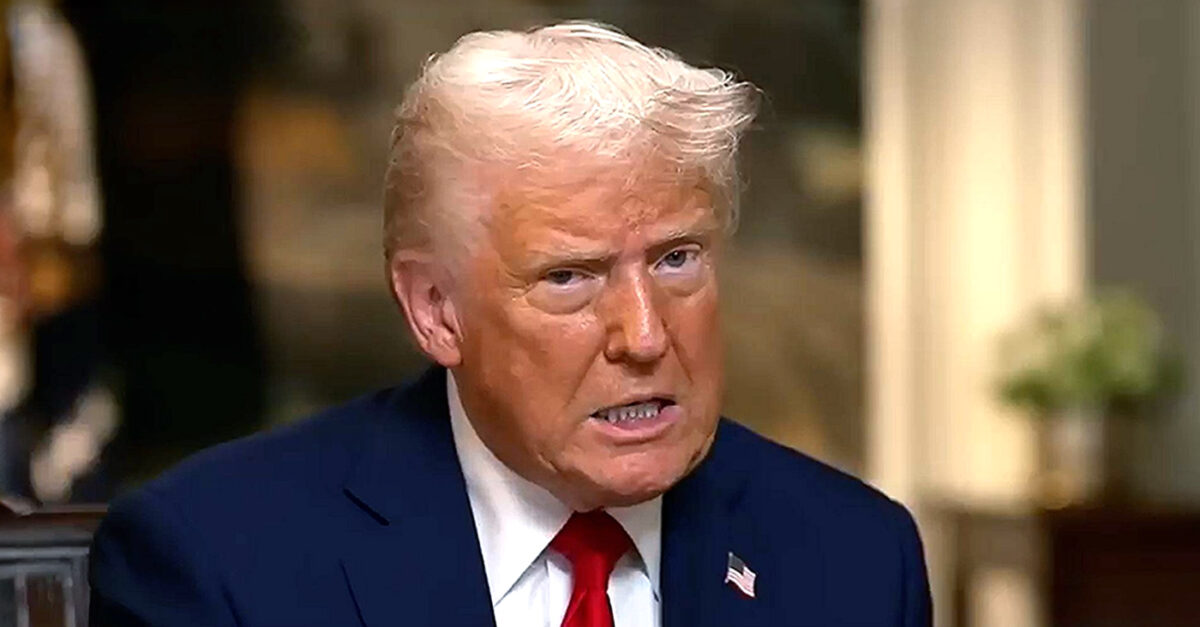 President Donald Trump threatened the annihilation of an entire civilization on Truth Social Tuesday morning.
“A whole civilization will die tonight, never to be brought back again.”
That sentence was written by the commander-in-chief of the most powerful military in the history of the world, directed at a nation of 90 million people. Understandably, the political media world spent the morning in full alarm, yet still managed to overlook the more damning story inside the noise.
While Trump’s comments are those of a genocidal monster, that’s also a partial misread, and a consequential one. A president negotiating from a position of genuine strength doesn’t resort to existential threats. A president with real options on the table doesn’t compose an elegy for a civilization on social media on the morning of his own self-imposed deadline. He doesn’t invoke God, history, and 47 years of grievance in one breathless, unpunctuated paragraph.
He doesn’t need to.
What Trump posted Tuesday is the literary equivalent of flipping the table because you’re losing the game. Iran has ignored every deadline and every ceasefire proposal. Every bluff Iran has called and watched dissolve without consequence. The Strait of Hormuz remains closed, American military assets have been lost, and the president’s most recent diplomatic communiqué dropped an f-bomb at Iranian leadership and signed off with “Praise be to Allah.” And now this.
Here’s the paradox nobody in the triumphalist coverage is grappling with. Iran has been battered militarily. Its air defenses are degraded, its proxies weakened, its infrastructure targeted with the kind of precision that should, by any conventional measure, constitute a decisive American victory. And yet Iran finds itself in a politically stronger position than before the war started. The reason is the Strait of Hormuz.
By closing it and charging roughly two million dollars per passage, Iran isn’t just disrupting global shipping. It’s holding a gun to the global economy, spiking gas prices in ways that are already registering as a domestic political problem for Trump, and threatening the kind of economic damage that elite military hardware cannot undo. Iran doesn’t need to win this war. It needs a draw. And a draw, given where things stand, feels like a win for them and a loss for us.
Trump once notoriously told Ukrainian President Volodymyr Zelensky that Vladimir Putin was holding all the cards. The Iranian mullahs appear to have studied that lesson carefully. Because while this tense situation is complex, one could argue that Iran is holding all the cards now, and the only card Trump has left to play is catastrophic destruction. That is an embarrassingly losing hand, and Tuesday’s Truth Social post is what it looks like when the president finally has to show it.
There’s a name for what Trump appears to be attempting. Richard Nixon called it the Madman Theory, the strategic calculation that if your adversary believes you’re genuinely unhinged, genuinely capable of anything, they’ll back down rather than test you. Henry Kissinger helped architect it. The idea was to make Hanoi believe Nixon was unstable enough to do the unthinkable. But Nixon ran the play through back channels and classified back-rooms. The madman performance was carefully stage-managed precisely because its power depended on ambiguity.
Trump is running the same play on Truth Social, which is a demolition of the theory rather than a refinement of it. The whole concept depends on the adversary being unable to distinguish performance from intent. The moment you’re posting your unhinged ultimatum to a platform with a share button, the madman effectively has a publicist. Iran’s leadership reads the same posts the rest of us do. They’ve watched this president blow through deadlines before. The unpredictability that Nixon’s team cultivated in darkness, Trump is broadcasting in daylight, and Iran has had weeks to calibrate exactly what that means.
Strip away the invocation of history and the capitalized “WHO KNOWS,” and what you’re left with is a man telling you, in plain sight, that he has run out of ideas.
There’s something specific buried in the post that nobody seems to be noting. “I don’t want that to happen, but it probably will.” That sentence is doing enormous work. It serves both as confession and preemptive absolution, Trump getting his excuse on the record before the bombs fall so that whatever happens, he can point to this moment and say he tried, he warned, he mourned. But it reads like something more unnerving than spin. It reads like a man who genuinely doesn’t know how to stop what he’s set in motion.
Nixon’s madman was a performance with an off switch. The question this post raises, and refuses to answer, is whether this one does.
Yesterday I argued that the ambiguity surrounding Trump’s Easter Sunday post was itself the story, that we had lost the ability to distinguish bluff from intention, performance from plan, pressure tactic from genuine threat. This morning’s post doesn’t resolve that ambiguity. It gives us something different, and arguably more damning. A window into what American foreign policy looks like when the performance runs out of road.
The most powerful man in the world, on the morning of his self-imposed deadline, asking God to bless the people he’s about to bomb. At some point the question stops being whether Trump is performing and starts being whether it matters.
This is an opinion piece. The views expressed in this article are those of just the author.
New: The Mediaite One-Sheet "Newsletter of Newsletters"
Your daily summary and analysis of what the many, many media newsletters are saying and reporting. Subscribe now!






Comments
↓ Scroll down for comments ↓