White House Response to the Susie Wiles Story Made It Much Worse

(AP Photo/Evan Vucci)
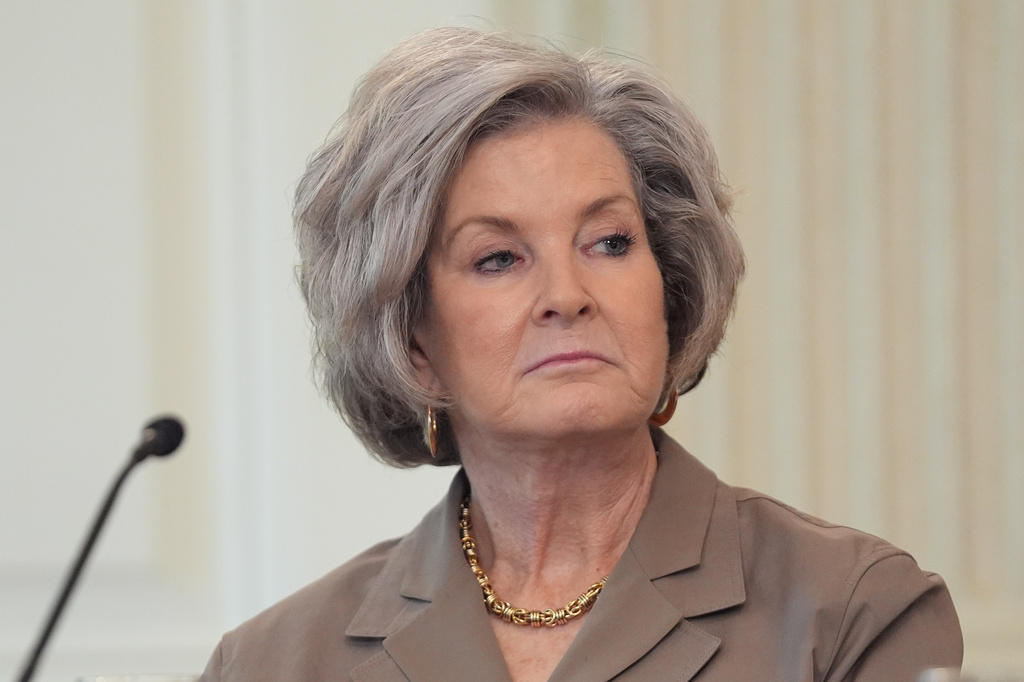
Perhaps the most revealing part of the Vanity Fair profile of Susie Wiles was not all the bonkers things she said. It was what happened next.
Within hours of the article’s publication on December 16, Wiles posted a statement on X, calling it a “disingenuously framed hit piece” that stripped her remarks of context to manufacture a negative narrative about President Donald Trump and his team. Almost immediately, senior officials and Trump allies responded with such force that it conveyed the unmistakable impression of a fierce, coordinated effort.
White House press secretary Karoline Leavitt wrote that “President Trump has no greater or more loyal advisor than Susie,” adding that the administration “united fully behind her.” Donald Trump Jr. posted a lengthy defense calling Wiles “by far the most effective and trustworthy Chief of Staff that my father has ever had,” insisting, “There is no one on Earth more equipped to serve my father as Chief of Staff than Susie.”
Defense Secretary Pete Hegseth framed the article as political warfare rather than journalism. “This is what the Left does,” he wrote. “Trash & smear our best & most effective people. They do it to President Trump daily — and now to Chief Susie Wiles.” Hegseth’s characterization of a story featuring on-the-record comments from the White House chief of staff — gathered over the course of 11(!) meetings — as a left-wing hit job says far more about the man in charge of the Pentagon than it does writer Chris Whipple.
Others followed the same script, Pam Bondi, Kash Patel, Scott Bessent, Sean Duffy… the list goes on — each portraying the profile not as reporting to be answered, but as an attack to be repelled — in a manner that strongly felt like compulsion.
The intended audience, however, was not for nattering nabobs or even Trump supporters — it was internal. In Trump World, loyalty is demonstrated publicly and on cue. The cost of silence is higher than the cost of amplifying a message you may not fully endorse. When a central figure like Wiles comes under fire, allies are expected to choose a side quickly and in public.
That expectation explains the orchestration. Statements arrived almost simultaneously and emphasized unity, effectiveness, and devotion. Not one denied a single quote. No senior official disputed what Wiles actually said, despite the fact that the Vanity Fair article was based on 11 on-the-record interviews with her.
That omission matters. Denying the quotes would have triggered a factual fight the White House could not easily control. Casting the article as a smear allowed defenders to avoid the substance entirely. The issue was exposure.
This is where the episode moves beyond palace intrigue. It reveals a governing culture that prioritizes loyalty performance over governing competence. Enforced unity does not merely suppress dissent; it makes honest assessment risky. When reflexive defense matters more than confronting uncomfortable facts, institutional judgment degrades.
The irony is structural. Wiles built her reputation on control, professionalizing Trump’s operation and imposing order after years of chaos. She has been credited with bringing discipline to a White House once defined by volatility. The reaction to this profile exposed something else: an administration so reactive that it could not resist turning a damaging article into a loyalty exercise.
The Vanity Fair profile was damaging. The response was more revealing. In Trump’s White House, loyalty is measured by how fast you defend what you may not believe.
This is an opinion piece. The views expressed in this article are those of just the author.
New: The Mediaite One-Sheet "Newsletter of Newsletters"
Your daily summary and analysis of what the many, many media newsletters are saying and reporting. Subscribe now!







Comments
↓ Scroll down for comments ↓