You Cannot Exonerate Ashli Babbitt and Blame Renee Good—But That’s Exactly What Trump Is Doing

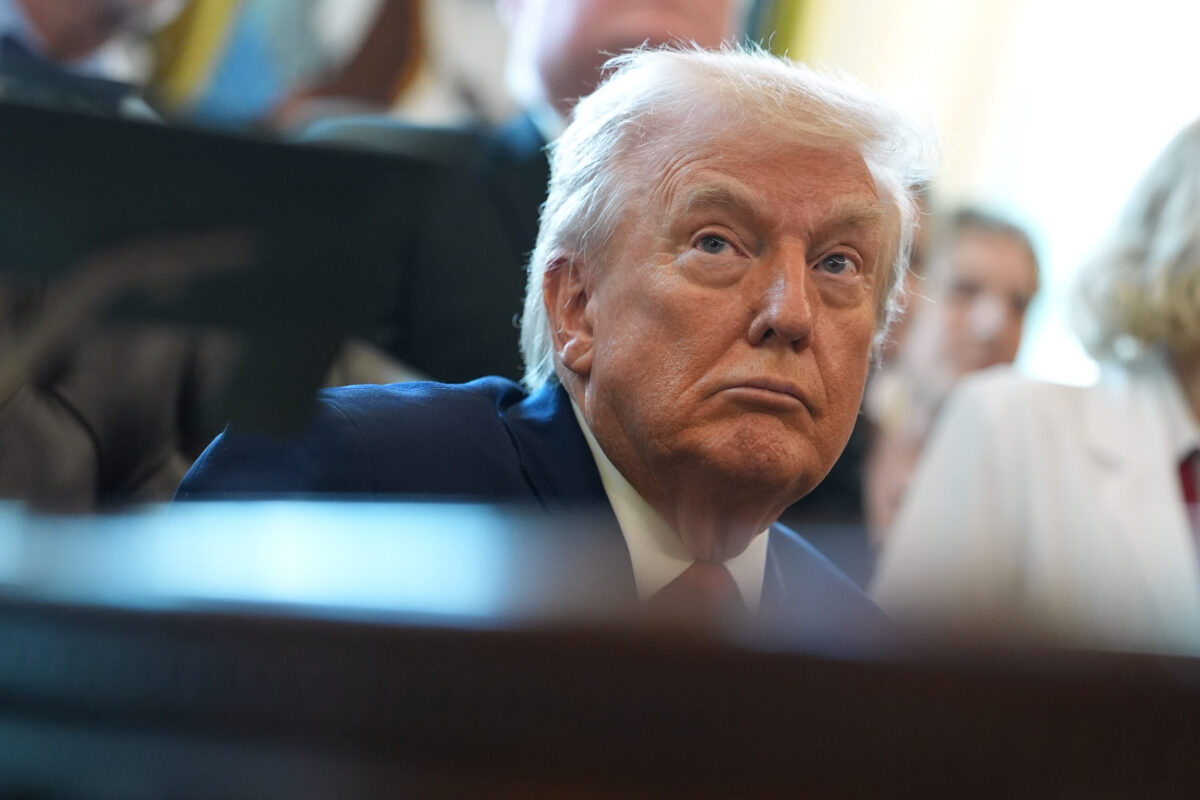
(AP Photo/Evan Vucci)
President Donald Trump has blamed one woman for her own killing and absolved another who died while attacking police. The difference had nothing to do with facts.
Ashli Babbitt, shot while breaching a barricaded doorway during the January 6 attack, is framed by Trump as a victim of unjust state violence. Her conduct is treated as incidental. Context is stripped away.
The asymmetry did not stop at rhetoric. Trump and his White House publicly identified the Capitol Police officer who shot Babbitt, despite longstanding norms protecting officers involved in use-of-force incidents. His name was circulated by political actors and media allies, effectively placing a target on a line officer who acted to protect members of Congress.
No such exposure would be tolerated in the Renee Good case. The masked ICE agent who killed her remains unidentified, and any attempt to name or dox that officer would trigger instant conservative outrage. The principle is not transparency. It is protection for those aligned with Trump’s narrative and punishment for those who are not.
On the five year anniversary of a dark day in US history, the Trump White House published government-sanctioned falsehoods about January 6 on WhiteHouse.gov, claiming many defendants were guilty of “nothing more than peacefully walking through the Capitol” and that nine people “lost their lives” for peaceful protest. Courts found hundreds guilty of assaulting officers, obstructing Congress, and coordinating violent breaches—verdicts based on hours of video showing officers beaten with flagpoles and lawmakers fleeing. The White House elevated a contested minority House report over jury verdicts and sworn testimony. Babbitt is collapsed into this false narrative: she becomes a martyr persecuted for peaceful dissent rather than a participant shot while breaching the final barrier protecting members of Congress.
Renee Good, killed in an ICE facility shooting, received the opposite treatment. Trump blamed her directly, asserting she provoked her own death. Police statements contradicted his account. The contradiction did not slow the accusation. Good existed outside the circle of political protection, so culpability attached automatically.
The operating framework is explicit: innocence is assigned through allegiance. Facts are curated to support the assignment. Evidence that disrupts the frame is dismissed as hostile. The same use of lethal force produced opposite moral judgments because the victims occupied different political identities.
This framework explains why J.D. Vance accused critics of “gaslighting” when video evidence contradicted political claims in the ICE shooting. The dispute was not about what the footage showed. It was about defending the moral starting point. Once loyalty defines innocence, contradictory evidence becomes illegitimate by definition.
This instinct does not belong to one party. After January 6, Democrats rightly praised the Capitol Police for defending Congress from a violent mob. Vice President Kamala Harris called their actions heroic and affirmed their judgment under extreme pressure. Months later, when images emerged of Border Patrol agents on horseback confronting migrants in Del Rio, Harris and other Democrats condemned the officers before investigations were complete, invoking moral certainty that later findings did not support. The presumption of good faith applied in one case disappeared in another. The standard shifted with the political narrative.
These examples are in no way equivalent to Trump’s conduct but they illustrate the same partisan vulnerability.
Trump’s distinction lies in power. He does not merely shape narrative. He routes loyalty-based morality through the machinery of government—executive statements, federal agencies, enforcement priorities, and pardons. The framework becomes operational.
A democracy cannot sustain a system where state violence is judged by affiliation rather than action. Accountability requires a single starting point. The state must justify lethal force. Citizens must be evaluated based on conduct and evidence.
Trump rejects that premise. He replaces it with loyalty as the governing rule.
That is how Ashli Babbitt is rendered innocent and Renee Good is rendered culpable. The difference is not what they did. It is where they belonged.
This is an opinion piece. The views expressed in this article are those of just the author.
New: The Mediaite One-Sheet "Newsletter of Newsletters"
Your daily summary and analysis of what the many, many media newsletters are saying and reporting. Subscribe now!







Comments
↓ Scroll down for comments ↓