Last U.S. Missile Strike in Afghanistan War Killed 7 Children, 3 Adults, and Didn’t Destroy ISIS Bomb As Officials Had Claimed: NYT

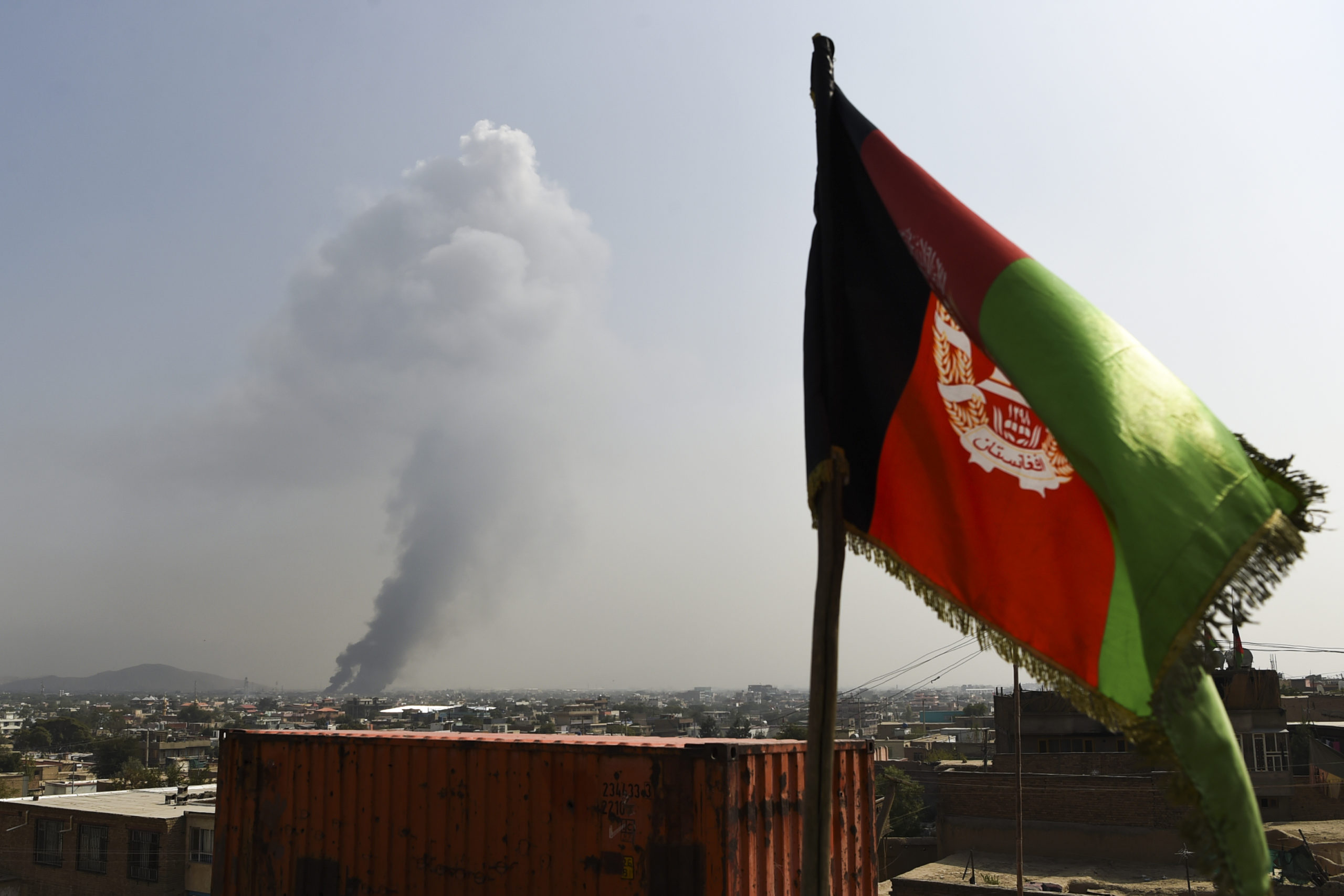
Wakil Kohsar/Getty Images
On August 29, a U.S. drone carried out the last known missile strike of the war in Afghanistan. American officials at the time called it a “righteous strike” on a vehicle whose driver they said had been acting suspiciously based on his movements that day. The strike in Kabul occurred two days after a suicide bomber killed more than 100 Afghans and 13 U.S. service members.
Officials claimed there were secondary explosions after the missile hit its target, thereby indicating the presence of explosives. The military also said the vehicle was seen leaving a suspected ISIS safe house a few miles from Hamid Karzai International Airport. The driver’s family vehemently denied he had any association with the group.
However, a New York Times investigation published on Friday has cast serious doubt on the military’s account.
The driver of the vehicle, whose identity officials said they knew little about, was Zemari Ahmadi. The Times report describes him as “a longtime worker for a U.S. aid group,” Nutrition and Education International, based in Pasadena, California. Ahmadi was an electrical engineer for the organization. He had applied for refugee status in the U.S.
The Times describes Ahmadi’s last day:
After stopping to pick up breakfast, Mr. Ahmadi and his two passengers arrived at N.E.I.’s office, where security camera footage obtained by The Times recorded their arrival at 9:35 a.m. Later that morning Mr. Ahmadi drove some co-workers to a Taliban-occupied police station downtown, where they said they requested permission to distribute food to refugees in a nearby park. Mr. Ahmadi and his three passengers returned to the office around 2 p.m.
As seen on camera footage, Mr. Ahmadi came out a half-hour later with a hose that was streaming water. With the help of a guard, he filled several empty plastic containers. According to his co-workers, water deliveries had stopped in his neighborhood after the collapse of the government and Mr. Ahmadi had been bringing home water from the office.
Those empty containers may have been mistaken by the U.S. military as canisters containing explosives, the Times says.
The Times had previously reported that the man’s family claimed 10 people were killed in the strike, including seven children. This new investigation appears to support that claim.
Later that day, Ahmadi dropped off three passengers after work and drove home. When he entered the driveway, some of his children came out to greet him. That’s when the missile struck.
U.S. officials had claimed they had “reasonable certainty” that no women, children, or other civilians would be killed.
Of the explosion, Chairman of the Joint Chiefs of Staff Gen. Mark Milley said, “Because there were secondary explosions, there is a reasonable conclusion to be made that there is explosives in that vehicle.”
However, the investigation didn’t find evidence of this.
“[A]n examination of the scene of the strike, conducted by the Times visual investigations team and a Times reporter the morning afterward, and followed up with a second visit four days later, found no evidence of a second, more powerful explosion.”
So far, the U.S. has only acknowledged three civilian casualties. But according to the Times, “Ahmadi’s relatives said that 10 members of their family, including seven children, were killed in the strike: Mr. Ahmadi and three of his children, Zamir, 20, Faisal, 16, and Farzad, 10; Mr. Ahmadi’s cousin Naser, 30; three of Romal’s children, Arwin, 7, Benyamin, 6, and Hayat, 2; and two 3-year-old girls, Malika and Somaya.”
New: The Mediaite One-Sheet "Newsletter of Newsletters"
Your daily summary and analysis of what the many, many media newsletters are saying and reporting. Subscribe now!







Comments
↓ Scroll down for comments ↓