ONE SHEET: Bondi’s Out, Hot Takes Are In! Fake Ratings Surge, and Trump’s Speech Only Moved Oil Prices

The Big Picture
The media-watching set woke up this morning sorting through the wreckage of President Donald Trump‘s primetime address on Iran — and came to very different conclusions about what they saw. Was it a reassuring pivot or an incoherent escalation? A “two to three weeks” promise or a placeholder that means nothing? Pam Bondi‘s firing as attorney general landed mid-afternoon and generated three distinct verdicts from three very different corners of the media world. OpenAI dropped a bombshell of its own, buying tech talk show TBPN and raising pointed questions about whether Silicon Valley is simply buying its own press corps. And the war crimes question nobody in this stack wants to ask keeps hanging in the air.
Today’s sources: CNN Reliable Sources | Status | Poynter | CJR | Charlie Sykes | Press Watch | The Bulwark | The Free Press | Barrett Media | Mediaite | Breaker | The Ankler | Page Six Hollywood | Feed Me
Programming note: The One Sheet is taking a holiday break on Monday and will return to regular programming on Tuesday.
Top Story
TRUMP’S IRAN SPEECH MOVED NOTHING — EXCEPT OIL PRICES.
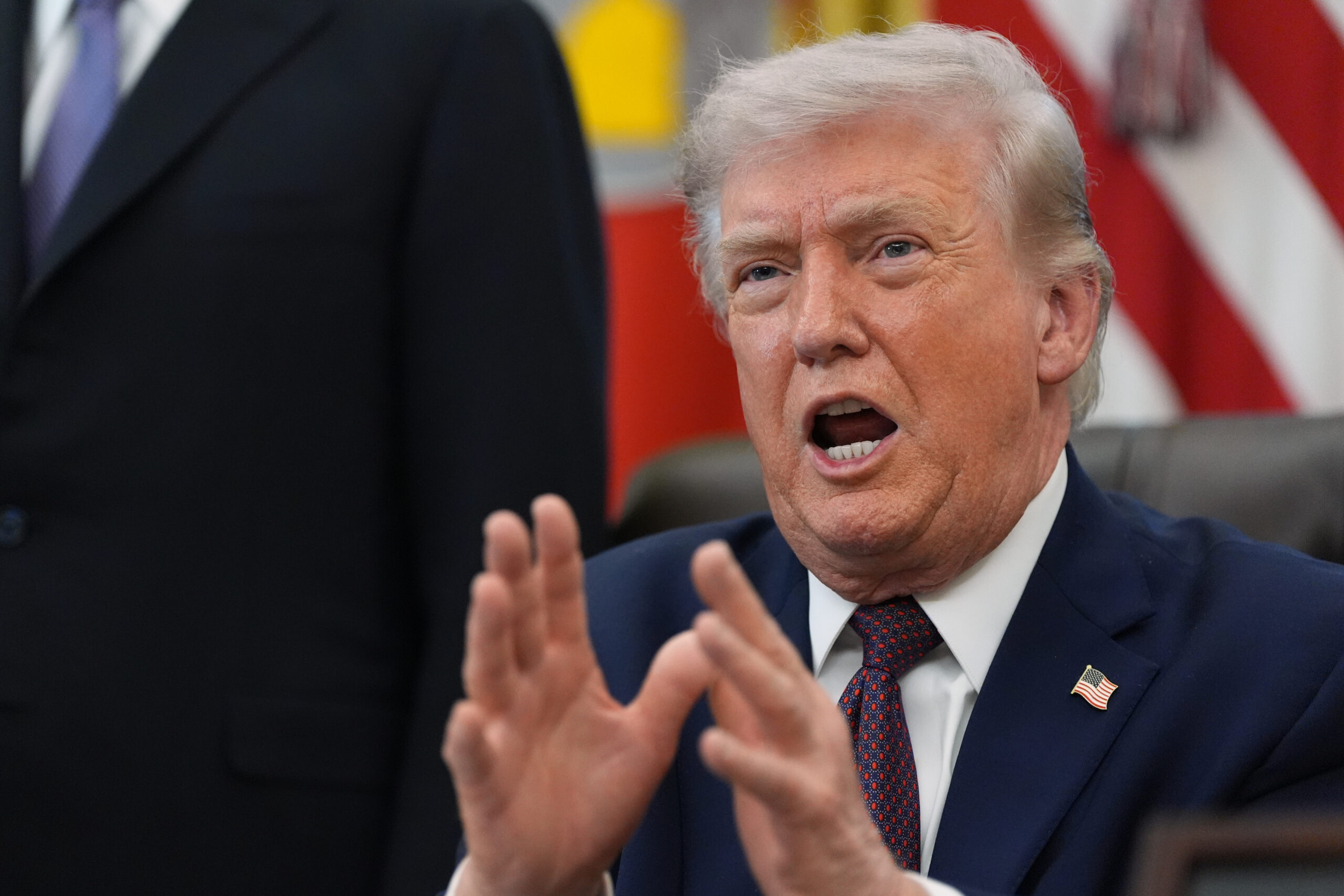
Charlie Sykes at To the Contrary didn’t cover Trump’s Iran speech so much as autopsy an entire presidency in a single day. His “Day in the Life” dispatch walked readers through April 1 hour by hour: Trump crashing the Supreme Court’s oral arguments on birthright citizenship, walking out halfway through when the justices — including his own appointees — expressed open skepticism. Then a Holy Week lunch at which faith advisor Paula White-Cain compared Trump to Jesus Christ while Catholic Bishop Robert Barron sat silently nearby. Then the speech itself — which Sykes characterized as “slurred and low energy,” a mash of recent Truth Social posts that left markets rattled and allies baffled. Oil prices spiked as Trump spoke. Sykes, citing geopolitical analyst Ian Bremmer on X, noted that the address was “rambling, unmoored and unserious.”
Brian Stelter at CNN Reliable Sources zoomed in on the specific phrase doing the most work: “two to three weeks.” Stelter dug up a New York Times archival piece by Shawn McCreesh establishing that “two weeks” has been one of Trump’s favorite units of time for nearly a decade — a “placeholder” that “simply means later. But later can also mean never. Sometimes.” Daily Wire managing editor Dylan Housman did the math on X: day 32 of the conflict, originally projected at four to six weeks, with the White House claiming last week they were “ahead of schedule.” The arithmetic doesn’t work.
On Fox, Stelter noted, Sean Hannity and guests took Trump entirely at his word, with “two to three weeks” appearing nearly a dozen times in post-speech analysis. That credulity stood in sharp contrast to the conservative skepticism emerging elsewhere.
Bill O’Reilly, characteristically, landed somewhere different from both. The speech was designed to reassure, and it probably did what it could, he wrote — but the problem isn’t the message, it’s the audience. “Millions of people don’t care about nukes or terrorism or Hormuz,” O’Reilly argued. “They are concerned primarily about themselves.” Nothing Trump says will move them, he suggested. The real story is weakness spreading globally, and Putin and China are watching.
The economic fallout angle belonged to Catherine Rampell at The Bulwark, who noted that crude oil futures closed around 10 percent higher after the speech, with Brent spot prices hitting $141 a barrel — the highest since the 2008 financial crisis. Goldman Sachs, she reported, estimates the war is costing roughly 10,000 jobs a month. Her frame: Trump has practically giftwrapped affordability-based opposition research for Democrats ahead of the midterms.
And Dan Froomkin at Press Watch was the loudest voice asking the question almost everyone else in the chattering class avoided entirely — which we’ll address below.
TAKEAWAY: The newsletters sorted Trump’s Iran address into at least five different stories: a credibility audit, a Fox loyalty test, a conservative realpolitik shrug, an economic disaster in progress, and an unasked war crimes question. Five outlets, five mutually exclusive framings of the same 20 minutes — and not one of them noticed the others weren’t covering the same event.
Three Takes
PAM BONDI IS OUT. NOW WHAT?
Pam Bondi‘s tenure as attorney general ended Thursday afternoon with a Truth Social post and a vague promise of “a much needed and important new job in the private sector.” She lasted 14 months. The newsletters sorted her exit into three distinct verdicts.
Eli Lake, The Free Press — Lake offered the sharpest analytical frame: Bondi didn’t fail because she defied Trump — she failed because she was too obedient. Bondi “did what Trump wanted, not what he needed,” Lake wrote, walking through the wreckage: flawed lawsuits against universities, improperly appointed prosecutors removed by judges, and the Epstein files debacle that became the defining scandal of her tenure. The loyalist trap, Lake argued, is that doing exactly what the boss says isn’t the same as doing what actually works. Bondi sprang into action on Trump’s enemies list — filing charges against James Comey and Letitia James in just over a month — but the execution kept falling apart in court.
Tom Jones, Poynter — Jones took a different angle entirely — not a verdict on Bondi but a dissection of how different outlets covered the same firing. Fox’s Peter Doocy, reporting live outside the White House, never used the word “fired,” described Bondi as getting “a different job within the administration,” and said there was “no bad blood” between her and Trump. Meanwhile, the Wall Street Journal‘s Josh Dawsey and colleagues were simultaneously reporting that Trump had privately called her “weak and ineffective” for months. The New York Times reported she had “tried desperately to appease a boss who demanded unimpeded control of the Justice Department.” Two outlets, one firing, two completely different events. Jones noted it was International Fact-Checking Day.
Oliver Darcy, Status — Darcy focused on the institutional consequences for David Ellison and what Bondi’s exit reveals about the impossible standard for Trump’s AG. Her core failure, Darcy reported, was that Trump wanted the DOJ used as both “a shield from legal scrutiny and a sword against his political enemies” — and Bondi couldn’t deliver either convincingly. Acting AG Todd Blanche, Trump’s former personal defense attorney, now inherits that mandate. Whether he can meet it is a different question.
TAKEAWAY: Lake says she was too loyal. Jones shows Fox and everyone else covered two different firings. Darcy says the job itself is designed to be impossible. Together they’re not just three takes on Bondi — they’re three takes on how the media decides what a story is.
📰 Top Reads 📰
Status | Oliver Darcy
SHELL SHOCK: PARAMOUNT’S HANDPICKED PRESIDENT IS NEGOTIATING HIS EXIT — AND IT’S EMBARRASSING FOR ELLISON: Less than a year into the job, Jeff Shell is on his way out of Paramount after being ensnared in a lawsuit filed by high-stakes gambler R.J. Cipriani, who accused Shell of leaking confidential company information. The internal probe is expected to wrap next week. Darcy reports Shell had no direct reports despite holding the title of company president, and was widely suspected inside the company of leaking to the media — suspicions the Cipriani suit only amplified. For David Ellison, who is simultaneously trying to convince regulators his proposed WBD takeover should be trusted, the timing is brutal. …QUOTE: “As he makes the case in Washington that he can responsibly steward one of the most important media portfolios in the world, he is now dealing with headlines about having to push out his own handpicked president over allegations involving leaked corporate secrets and a high-stakes gambler.” — Oliver Darcy, Status …QUICK TAKE: A president with no direct reports, suspected of leaking, ousted over a gambling lawsuit — and Ellison has to sell regulators on his WBD takeover while this is the front page.
Breaker | Lachlan Cartwright
THE SCOOP THAT CAME WITH A SIDE OF ACCUSATIONS: Cartwright reports that when Status went to Paramount for comment on the Shell exit story Thursday afternoon, the company declined — and then, roughly 90 minutes later, the news appeared on X via Puck’s Matt Belloni. Darcy is pointedly noting the sequence and inviting readers to draw their own conclusions. It’s an allegation, not a proven fact — but it’s the kind of allegation that lands. Cartwright flags this is not the first time Status has gone to a Paramount-adjacent entity for comment only to see news surface elsewhere shortly after. … QUOTE: “Draw your own conclusions, but it’s not the first time we’ve gone to an arm of the company for comment, only to see the news miraculously appear soon after in another outlet.” — Oliver Darcy, as reported by Lachlan Cartwright, Breaker … QUICK TAKE: Darcy isn’t just reporting the story — he’s putting Paramount and Belloni on notice in print. That’s a different kind of media feud.
Press Watch | Dan Froomkin
THE WORDS NOBODY WILL SAY: While the press spent Thursday dissecting Trump’s Iran speech from every angle — credibility, markets, Fox credulity, conservative skepticism — Froomkin was the loudest voice pointing out what almost no one in mainstream coverage said plainly: Trump’s stated plan to hit Iranian power plants and oil facilities would constitute war crimes under international law. “Major news organizations are not covering this with the appropriate level of alarm or urgency,” he wrote, noting that the AP and the NYT quoted Trump’s “Stone Ages” threat without mentioning moral or legal concerns. He praised NBC’s Garrett Haake for asking the question directly at a White House briefing; press secretary Karoline Leavitt ducked it. … QUOTE: “Trump is openly threatening a war crime. And people aren’t saying anything because they’re numb to it.” — Kenneth Roth, former executive director of Human Rights Watch, as quoted by Dan Froomkin, Press Watch … QUICK TAKE: When the most important question of the day gets asked once — at a briefing, by one reporter — and then dropped, that’s not a coverage gap. That’s a coverage choice.
CJR | Susie Banikarim
CNN’S CREW GOT CHOKED IN THE WEST BANK. ALMOST NOBODY NOTICED: CJR’s Susie Banikarim surfaced an extraordinary press freedom story that landed with almost no noise in the broader newsletter stack. CNN Jerusalem correspondent Jeremy Diamond and his crew traveled to Tayasir, a Palestinian village in the West Bank, to cover the aftermath of a settler attack. When the Israeli military arrived, soldiers pointed rifles at the journalists, and a soldier put CNN photojournalist Cyril Theophilos in a chokehold, pushing him to the ground and damaging his equipment. The team was detained for two hours. The Israeli military subsequently suspended the battalion involved — an unprecedented move that drew immediate backlash from Israeli National Security Minister Itamar Ben Gvir, who called it a “grave mistake that harms our fighters.” Diamond kept reporting through the detention, questioning soldiers who described all Palestinians as terrorists. … QUOTE: “What followed was an extraordinary scene caught on camera. Within seconds, soldiers pointed their rifles at the journalists, demanding they stop filming.” — Susie Banikarim, CJR … QUICK TAKE: A CNN crew got choked on camera in the West Bank, the Israeli military took unprecedented action in response, and the newsletter stack was busy parsing Trump’s speech. This one deserved more.
The Free Press | Niall Ferguson
IS THIS THE AMERICAN SUEZ?: Historian Niall Ferguson offers the week’s most sweeping analytical frame, arguing that Trump’s Iran adventure maps onto Britain’s 1956 Suez Crisis with uncomfortable precision — a military operation that succeeds on its own terms while failing economically, politically, and geopolitically, ending in humiliating withdrawal. The parallel is pointed: VP J.D. Vance said last year that Eisenhower was wrong not to back Britain at Suez. Now Vance’s own administration has put America in precisely Britain’s role. Ferguson notes that Iran — like Egypt’s Nasser — may have lost the military battle while winning the economic war, with the Strait closure doing damage the bombs cannot undo. … QUOTE: “Everyone knew after 1956 that Great Britain was finished as a top-tier power. After Suez, there was no making Britain great again.” — Niall Ferguson, The Free Press … QUICK TAKE: The Suez frame is the one that will age best or worst depending on what Trump does in the next three weeks. Ferguson wrote the definitive version either way.
Barrett Media | BNM Staff
FOX DOMINATES A WAR-FUELED Q1 RATINGS SURGE — BUT THE REAL STORY IS CNN’S COMEBACK: Fox News averaged 2.7 million primetime viewers in Q1 2026 — its 97th consecutive quarter atop cable news — with The Five pulling 4 million viewers per episode. But the more telling number belongs to CNN, which posted a 54% primetime increase over Q4 2025, its best quarter since Q1 2022. Barrett Media notes that quarter was also driven by military action — Russia’s invasion of Ukraine. MS NOW saw a 25% primetime bump, and NewsNation posted triple-digit growth in March. War is, apparently, very good for cable news. … QUOTE: “Between military action in Venezuela and Iran, as well as President Trump’s State of the Union address, cable news ratings were up during the months of January, February, and March.” — BNM Staff, Barrett Media … QUICK TAKE: The Iran war has done more for cable news ratings than any programming strategy in years. Nobody in the industry wants to say that out loud.
Mediaite | Colby Hall
THE CABLE NEWS COMEBACK THAT ISN’T — AND THE NIELSEN CHANGE NOBODY MENTIONED: (Full disclosure: this one’s mine — this is just as weird for me as it is for you.) I published a column Friday morning arguing that the industry-wide gains dominating this week’s trades are largely an artifact of Nielsen’s rollout of its new “Big Data + Panel” measurement system, not a genuine audience renaissance. The tell: every network surged simultaneously, which isn’t how real competitive audience growth works. One network’s crisis bump has historically been another’s drain. Synchronized double-digit gains across an entire industry is a methodology story, not a comeback story. NewsNation’s headline “85 percent primetime growth” looks less impressive when you learn its primetime base is roughly 191,000 viewers. Fox still dominates. CNN and MSNBC still trail by wide margins. Nielsen changed how it counts — and suddenly everyone has a press release. …QUOTE: “What is being presented as a sweeping cable news comeback is, in fact, a story about a company changing how it counts.” — Colby Hall, Mediaite … QUICK TAKE: Barrett Media ran the numbers. Mediaite asked what the numbers actually mean. Read both, and you’ve just witnessed how a ratings myth gets made in real time.
Breaker | Lachlan Cartwright
THE GRAY LADY NEEDS A NEW T: New York Times style magazine T is hunting for a replacement for outgoing editor Hanya Yanagihara — and Breaker has the runners and riders. Former NYT executive editor Dean Baquet has been brought in to assist the external search, working with deputy managing editors Sam Dolnick and Monica Drake to develop a candidate list for executive editor Joe Kahn. Internal candidates include deputy editor Kurt Soller, women’s style director Kate Lanphear, and editor-at-large Nick Haramis. External names in circulation: former WSJ Magazine editor Kristina O’Neill, Harper’s Bazaar editor-in-chief Samira Nasr, and Town and Country editor-in-chief Stellene Volandes. Interview magazine editor Mel Ottenberg told Breaker he’s out: “I’m happy where I am. May the best one win.” … QUOTE: “T magazine has always held a very unique position within The New York Times, in its own universe, sequestered from the newsroom or any real overlord.” — Lachlan Cartwright, Breaker … QUICK TAKE: When the Times brings in a former executive editor to find a magazine editor, it’s not really a magazine search. It’s a revenue protection operation.
Status | Oliver Darcy
JOE ROGAN AND THEO VON BREAK WITH TRUMP ON IRAN: Two of Trump’s most prominent podcast endorsers in 2024 are having loud second thoughts. Joe Rogan on his latest episode said flatly: “I can’t believe we went to this war. When we started bombing Iran, I was like, ‘This can’t be true.'” Theo Von went further, delivering a direct challenge to the war’s stated rationale: “You’re the f*cking terrorists! If you wanna stop them, f*cking stand in front of the f*cking mirror and start there.” Megyn Kelly said on her show that Trump was drawn into the war because “he watches too much Fox News” and “got persuaded by the messaging that’s there.” The defections landed within hours of Trump’s primetime address. … QUOTE: “One thing, in the past, that leaders have used to cover up problems at home is a f*cking war.” — Joe Rogan, as reported by Oliver Darcy, Status … QUICK TAKE: When the guys who podcasted Trump into the White House are using the word “terrorists,” the 2028 map just got a lot more complicated.
Feed Me | Emily Sundberg
SAM ALTMAN BUYS HIS OWN PRESS CORPS: OpenAI acquired TBPN — the freewheeling live tech talk show hosted by John Coogan and Jordi Hays — for what the Financial Times reported as “low hundreds of millions of dollars,” marking the Sam Altman-led company’s first entry into media. Sundberg, who emerged from a two-and-a-half hour lunch to twenty texts about the deal, offered the sharpest frame: “You cannot compete with people who are having more fun than you.” OpenAI says TBPN will remain editorially independent and shutter its ad business. The Information founder Jessica Lessin — who runs TBPN rival TITV — put it plainly, as reported by Status: “Elon Musk has X. Now Altman has TBPN. Not quite the same thing, but this is what we are talking about in companies and moguls looking for their mouthpieces.” … QUOTE: “You cannot compete with people who are having more fun than you.” — Emily Sundberg, Feed Me … QUICK TAKE: OpenAI says TBPN stays editorially independent. That’s exactly what you’d say when you just paid $200 million for a show that might cover you.
🎬 SHOWBIZ 🎬
The Ankler | Manori Ravindran
HBO MAX BETS BRITAIN DOESN’T NEED LOCAL SHOWS: HBO Max has finally launched in the UK — and made the unorthodox decision not to commission local content, betting instead on global IP (Harry Potter), U.S.-driven productions, and a minimal on-the-ground presence. Every other major streamer — Netflix, Amazon, Disney — has built its British footprint on local originals. The Crown. Adolescence. Baby Reindeer. HBO Max is wagering it can skip that playbook entirely. British producers are not amused. … QUOTE: “We’re not invited to the biggest party of the year.” — Anonymous producer, as reported by Manori Ravindran, The Ankler …QUICK TAKE:Every other streamer bet on local content to win local audiences. HBO Max is betting the brand is enough. One of them is about to be very wrong.
Status | Oliver Darcy
LOUIS C.K. IS BACK ON NETFLIX — AND THE STREAMER IS JUST DOING IT: Netflix announced Louis C.K. will return to the platform with a new special, years after being exiled following #MeToo allegations. Darcy noted the news with no accompanying statement from Netflix, no rehabilitation campaign, no explanation — just an announcement in Variety. The quiet matter-of-factness of it was the story. … QUICK TAKE: “The reinstatement era” isn’t a think-piece premise anymore. Netflix just made it a release strategy.
The Ankler | Sean McNulty
WME EXITS THE SPORTS MARKETING BUSINESS FOR $500 MILLION: WME has sold its sports marketing and creative agency 160/90 to Publicis for more than $500 million — roughly 2.5x what Endeavor paid for it in 2018. The 670-employee shop will fold into Publicis Sports, while WME retains a collaboration arrangement for client brand deals. WME president Robbie Henchman stays at WME to oversee the new structure. The sale is the latest asset shed since Silver Lake took Endeavor private, following exits of WME’s basketball and football representation arms due to conflicts with Silver Lake principal Egon Durban‘s ownership stake in the Las Vegas Raiders. … QUICK TAKE: Silver Lake has been quietly dismantling the Endeavor empire piece by piece. At $500 million for a sports marketing shop, the math is good — the question is what’s left when they’re done.
👀 What Got Missed? 👀
The stack spent Thursday wall-to-wall on Trump’s Iran speech — credibility gaps, market reaction, Fox cheerleading, conservative skepticism. What it almost entirely failed to ask: Are we watching a president publicly plan war crimes in real time?
Press Watch’s Froomkin was the exception. Trump said explicitly he intends to hit Iranian power plants and oil facilities. International humanitarian law is unambiguous on this point. Froomkin cited a NYT piece — written by military reporters, not political reporters — headlined “Power Grid Hit Would Be War Crime, Experts Say.” The political team then covered Trump’s subsequent threats as if that piece never existed. The Suez frame got traction. The “two weeks” frame got traction. The war crimes frame? Almost nothing.
The question the chattering class failed to ask itself: Why does “war crime” feel like a step too far when the president is saying the quiet part in primetime?
🏆 Newsletter of the Day 🏆
Breaker | Lachlan Cartwright — Cartwright didn’t just report the Shell story — he caught the meta-media moment hiding inside it. When Status went to Paramount for comment and the story landed on Puck 90 minutes later, everyone else moved on. Cartwright surfaced Darcy’s pointed accusation about the timing, named the players, and let readers sit with the implication. Media reporter feuds are an old and underappreciated genre — low stakes, high drama, nobody gets hurt — and Cartwright is one of the few newsletter writers still working that beat with relish.
The Bottom Line
Trump’s Iran speech generated almost no actual news. By most accounts, it was a repackaging of Truth Social posts and press gaggle lines, delivered in primetime with a dark camera angle and a Fox pool feed. And yet these newsletters — this one included — spent Thursday treating it as a major event, sorting its framings, auditing its credibility, mapping its economic fallout, and arguing about what it revealed. Which raises the uncomfortable question: At what point does covering the absence of news become its own kind of news-making?
This isn’t just a newsletter problem. Turn on Fox, CNN, or MS NOW on any given night and the ratio of hot takes to actual reporting is not close. The ecosystem has drifted — gradually, then all at once — from breaking news to narrating news to narrating the narration of news. Neil Postman saw it coming. In Amusing Ourselves to Death, he warned that when entertainment becomes the vehicle for public discourse, the result isn’t just distraction — it’s decay. Politics becomes theater. News becomes content. The line between serious and spectacle disappears.
Trump’s speech was spectacle. The coverage was content. And the most honest thing the media world could have done Thursday was say so — and then ask why it kept typing anyway.
Get full access to premium content with a Mediaite+ subscription.


Comments
↓ Scroll down for comments ↓