Epstein Had ‘Fraying Mental State’ Before His Death, NYT Reports From ‘Previously Unseen’ Documents and New Interviews

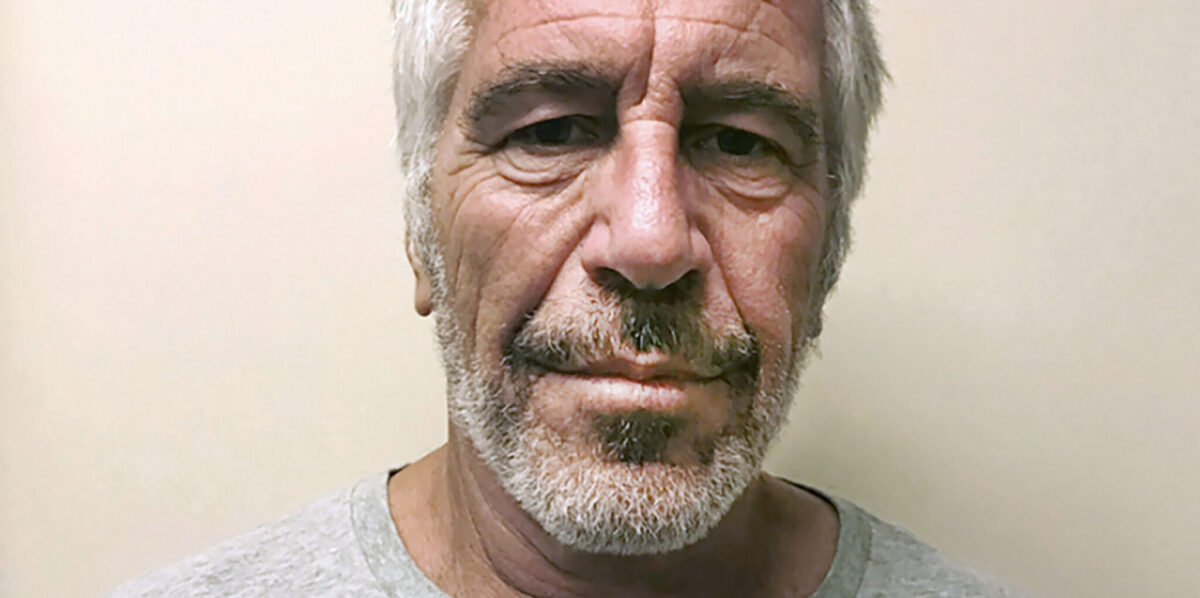
New York State Sex Offender Registry via AP, File
The New York Times published an in-depth report on the last weeks of Jeffrey Epstein’s life on Tuesday, reviewing “previously unseen” documents and conducting new interviews to find that he exhibited a “fraying mental state” before his death.
The child sex predator and his former girlfriend and accomplice, Ghislaine Maxwell, conducted a years-long scheme to recruit young women and underage girls to have sex with Epstein and other older men, and sometimes be abused by Maxwell too. Maxwell is currently serving a 20-year prison sentence after she was convicted of one count of sex trafficking a minor, one count of transporting a minor with the intent to engage in criminal sexual activity, and three counts of conspiracy.
Epstein died in prison on August 10, 2019, in what authorities said was a suicide, but questions and conspiracy theories have proliferated, in no small part because of his ties to President Donald Trump and many other rich and powerful people.
The Times article lists four reporters on the byline — Charles Homans, Steve Eder, Jan Ransom, and Michael Rothfeld — and is titled “The Untold Story of Jeffrey Epstein’s Death.”
The report detailed how the Times reviewed the voluminous documents released by Congress from the Epstein files, as well as additional documents the paper obtained after court fights, plus numerous interviews conducted with “as many people as possible who interacted with Epstein during his arrest and incarceration or participated in the inquiries into his death,” including his brother Mark Epstein, a pathologist Mark Epstein hired to attend his brother’s autopsy, “more than 40 inmates, jail employees, lawyers, federal officials and law enforcement officers connected with the case — many of whom had not been previously interviewed by reporters” and many who “had also never been interviewed by investigators.”
The new documents the Times obtained are described as “a document that had been described as a suicide note written by Epstein in jail before an earlier apparent attempt to take his own life, which was hidden from the public and investigators for years” and “about a dozen pages of other notes handwritten by Epstein in jail that were also previously unseen — including some in which he tried and failed to come up with significant information he might have on Donald Trump to offer to prosecutors.”
The Times also deployed some of its own staff “who specialize in open-source visual investigations to analyze photographs and video footage from the unit where Epstein was housed and create a 3-D model of it” as the reporters sought to consider “every plausible theory of Epstein’s death, both official and otherwise, seeking out the most persuasive arguments and evidence for each.”
The reporters’ findings about Epstein’s state of mind during his final weeks include multiple examples of depressed or suicidal moods and actions. “Some important questions about Epstein’s death remain unanswered and likely unanswerable,” they wrote. “Nevertheless, our reporting establishes that Epstein showed a clear pattern of behavior in the weeks before his death, suggesting an intent to kill himself. The apparent suicide note memorialized Epstein’s despair and desire to ‘say goodbye’ on his own terms. Other writings from his final days presented a picture of a fraying mental state that sharply contrasted with the upbeat picture he presented to jail psychologists, including another note in which he hinted at ending his life.”
Elba Torres, an employee at the Metropolitan Correctional Center (MCC) when Epstein first arrived, described him in an email to staff as appearing “distraught, sad and a little confused.” She asked him if he was OK, and he said he was, but she wrote that she was “not convinced because he seems dazed and withdrawn…[s]o just to be on the safe side and prevent any suicidal thoughts, can someone from Psychology come and talk with him.”
His first night in jail, he was initially placed in the MCC’s general inmate population and was recognized by another inmate, Peter Bright, who described Epstein as “not very communicative” and “seemed a bit shellshocked.”
Epstein was transferred to the “special housing unit” (“the SHU”), which meant having to be in his cell 23 hours a day with extremely limited contact with the outside world, isolated conditions which research has shown “can exacerbate mental illness and increase the risk of self-harm and suicide.”
His first cellmate, Nicholas Tartaglione, had been convicted of multiple homicides, a fact that alarmed Epstein when he learned it, causing him to “pound[] on the door, shouting for the guards.”
He was moved to a special cell the next morning and put under a temporary psychological observation by the jail’s chief psychologist Elissa Miller, citing “multiple risk factors for suicidality” because of the serious nature of the charges he was facing.
Miller reported that Epstein initially showed signs of hope and optimism about his legal defense, but his mood soured as the judge denied him bail. Tartaglione told the Times that he asked, “How do you make a noose?” when he got back from court after hearing that disappointing ruling.
Tartaglione also described Epstein making suicide preparations:
In the days that followed, Tartaglione said, he caught Epstein preparing for suicide twice — an account that the inmate Peter Bright also recalled hearing from Tartaglione shortly after Epstein’s death. Once, Tartaglione said, he noticed Epstein trying to tie a sheet to the grate over the cell window. Another time, he woke up to Epstein standing in the dark looking “a little suspicious” and discovered a noose hidden under his mattress.
Tartaglione told us he reported both attempts to guards, but they did not seem to take them seriously, laughing him off. (We could find no mention of these attempts in the jail records released in the Epstein files.)
Epstein and Tartaglione’s stories diverged sharply about what happened during what has been reported as Epstein’s first suicide attempt in late July 2019, with Tartaglione saying it was a suicide attempt, Epstein initially saying his cellmate tried to kill him and then claiming to not remember what happened, and then claiming it was a “prank” of some sort.
Tartaglione also reported picking up a novel Epstein had been reading and finding what looked like a suicide note in Epstein’s handwriting tucked inside.
“They investigated me for month — Found NOTHING!!!” Epstein wrote, angry about “15 year old charges” resurfacing to put him behind bars. “It is a treat to be able to choose one’s time to say goodbye,” he continued. “Watcha want me to do — Bust out cryin!! NO FUN — NOT WORTH IT!!”
However, Tartaglione gave the note to his attorneys, viewing it as potentially helpful evidence he did not try to harm Epstein, and did not report it to MCC officials. The note remained sealed in Tartaglione’s court filings until the Times successfully petitioned the court to unseal it.
In another note found in Epstein’s handwriting, he wrote, “ONLY PAIN TO ME & Others in the future. NOT very much fun! Why should people I Lov suffer for my problem. So … Watcha want me to-do? …. Bust out cryin!! Best for all.”
Another inmate, William Mersey, described Epstein as looking “defeated” because he was “thinking about how he is going to spend the rest of his life in prison.” The Times reported that Mersey said Epstein would sometimes “drift off despairingly” during their conversations.
Epstein’s second cellmate, Efrain Reyes, told the Times Epstein frequently made demands of the guards and was able to circumvent several MCC rules, including getting extra bedding and pens that are normally prohibited for inmates, especially if there is any worry about suicide risk. Reyes also said he once woke up to find Epstein playing with a clothesline Reyes had fashioned out of a piece of bedsheet. Alarmed, Reyes took the clothesline from Epstein and flushed it down the toilet. Reyes further said that Epstein had told him prison was “no way to live” and he believed he would never get out again.
On July 31, the U.S. Marshals Service, which had escorted Epstein to and from court, filed an “alert notice” to flag that he was exhibiting “suicidal tendencies.”
The day before Epstein died, Reyes was transferred to another jail and no new cellmate was assigned, in violation of orders from the MCC psychologist that he was to be housed with another inmate.
Epstein was alone when he was returned to his cell the last day before he died. An inmate in an adjoining cell, Chad Brown, told the Times he heard a noise that sounded like sheets being ripped coming from Epstein’s cell that evening, for about ten minutes.
Epstein was discovered by a guard delivering breakfast shortly after 6:30 am on August 10, 2019, “hanging by a fabric noose tied about four feet up the frame of the bunk bed, his body suspended an inch or so off the cell floor,” the Times reported.
The Times report goes into great detail, including 3-D models and video simulations, of the timeline of Epstein’s final hours, changes in the MCC officers’ schedules, security camera angles and problems, and other physical logistic issues.
New: The Mediaite One-Sheet "Newsletter of Newsletters"
Your daily summary and analysis of what the many, many media newsletters are saying and reporting. Subscribe now!












Comments
↓ Scroll down for comments ↓