Judge Rules Tiger Woods Must Turn Over His Prescription Records to Prosecutors

AP Photo/Jason Oteri
Prosecutors will be able to obtain Tiger Woods’s prescription drug records in his criminal case related to a rollover car wreck he had in Jupiter Island, Florida, a judge ruled Tuesday, but they will remain under seal for now.
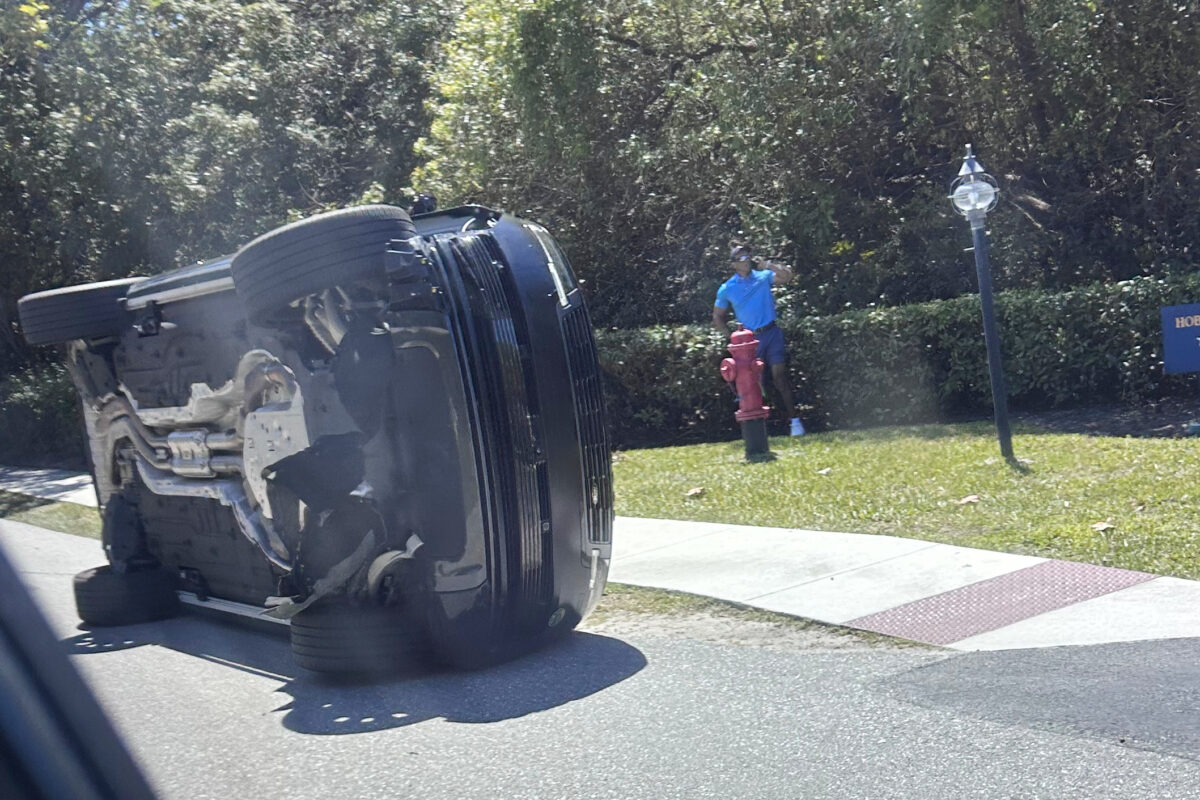
The 50-year-old golf legend was driving his black Range Rover near his home in the area on March 27 when he was involved in an accident with another car that left his vehicle on its side in the middle of the road. The Martin County Sheriff’s Office said that Woods’s vehicle was traveling at a high rate of speed in excess of the 30 mph speed limit in the residential neighborhood when he clipped a pickup truck towing a small trailer near a sharp curve in the road.
There were no serious injuries. Police officers responding to the scene administered roadside sobriety tests to Woods. A breathalyzer test showed no signs of alcohol but he showed other signs of impairment, police said. Woods was arrested and taken to the Martin County Jail, where he refused to submit to a urine test. He has been charged with driving under the influence with property damage and failure to submit to testing.
The arrest report said that the police observed Woods as showing “severe signs of impairment,” including “lethargic and slow” movements, “bloodshot and glassy” eyes, and pupils that were “extremely dilated.”
The golfer was questioned if he took any prescription medicines and responded, “I take a few,” according to the report. Police found two white pills inside Woods’s pants pocket that were later determined to be hydrocodone, a prescription opioid for severe pain.
In 2021, Woods was seriously injured in a car accident in California that left him hospitalized for multiple major leg injuries. Police said that single-car accident was attributed to excessive speed.
On Tuesday morning, Judge Darren Steele of the Martin County Circuit Court presided over a hearing regarding Woods’s prescription drug records.
Prosecutors had obtained a subpoena for “[a]ny and all prescription medication on file” for Woods, “to include date and time prescription was filled, type of prescription, number of pills in each prescription, the dosage amount, all special instructions on how to take the medication, date of next refill, all warnings including but not limited to operating a motor vehicle while taking the prescription from January 1, 2026 – March 27, 2026,” from his local pharmacy.
In a short two-page order, Steele noted that Woods had asserted his constitutional right to privacy in his medical records, but acknowledged this right was not absolute and he had “acknowledged that…the State would be able to show a compelling need and relevance to obtaining the prescription records.” (Specifically in this case, the pills found in Woods’s pocket and signs of impairment police allege he was showing after the accident, plus his refusal to submit to a urinalysis test, make what medicines he was prescribed relevant evidence.)
To balance the two, the judge ruled that Woods’s prescription records would be turned over subject to a Protective Order that would exempt them from the public court records and restrict access to the State Attorney’s Office, law enforcement, any experts the SAO hired for the case, and Woods’s legal defense team.
Steele’s order added that if either party wished to use any information in the prescription records at trial, “the party shall provide notice to opposing counsel and allow time for an objection to be made.”
New: The Mediaite One-Sheet "Newsletter of Newsletters"
Your daily summary and analysis of what the many, many media newsletters are saying and reporting. Subscribe now!









Comments
↓ Scroll down for comments ↓