Judge Tosses Out RFK Jr’s ‘Arbitrary and Capricious’ Changes to Childhood Vaccine Schedule

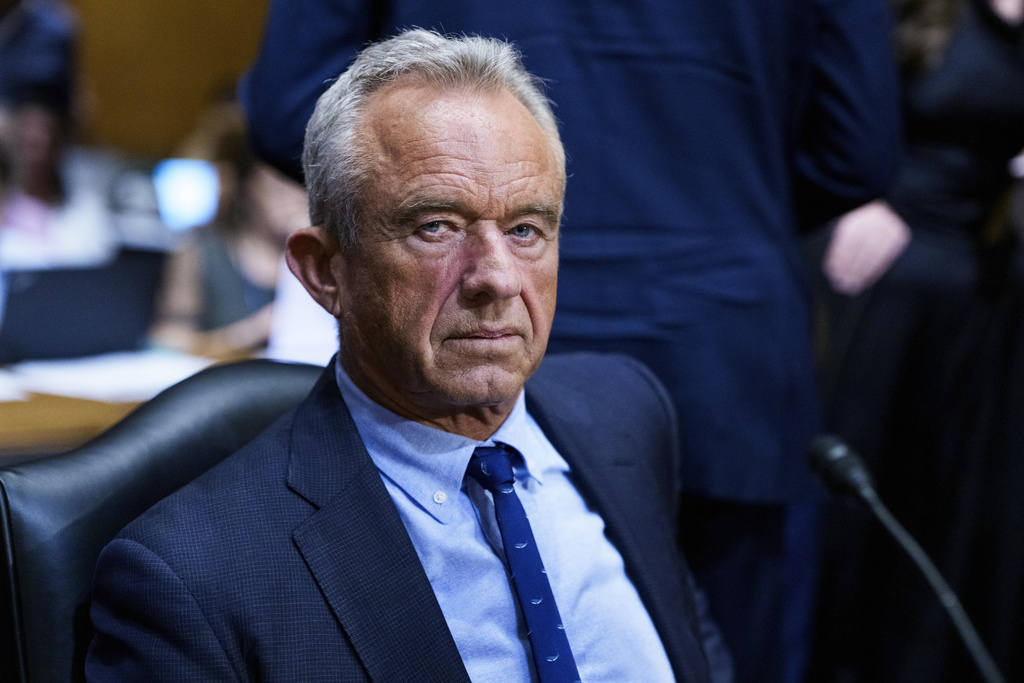
(Photo by Aaron Schwartz/Sipa USA)(Sipa via AP Images)
The radical changes to America’s vaccine policies made by Health and Human Services Secretary Robert F. Kennedy Jr. were blocked on Monday by a federal judge in Massachusetts, according to a report by The New York Times that called it a “severe blow” to the effort by President Donald Trump’s administration to reshape U.S. health policy.
Trump’s decision to nominate the namesake of Robert F. Kennedy to lead HHS was loudly criticized because of Kennedy’s long history of controversial comments and anti-vaccine activism. Kennedy insisted to Senators weighing his confirmation that he was not anti-vaccine, but his critics pointed to years and years of him saying things like “there’s no vaccine that is safe and effective.” Nonetheless, he squeaked by in a 52-48 vote mostly along party lines; former Senate GOP Leader Mitch McConnell (R-KY) was the sole Republican to vote against him.
Despite his promises during his confirmation hearings, Kennedy’s tenure at HHS has been a multi-front assault on vaccines — cancelling funding for research, appointing other anti-vaccine activists to key positions, and messaging that is a marked departure from decades of recommendations from doctors and scientists, even as measles outbreaks began popping up across the country.
The ruling by Judge Brian Murphy of the U.S. District Court for the District of Massachusetts, a Biden appointee, blocks the implementation of all decisions made by HHS’ Advisory Committee for Immunization Practices, according to Times science and health reporter Apoorva Mandavilli, who described those decisions as “upending national vaccine policy.”
The committee had previously made its decisions about vaccination schedules through “a method scientific in nature and codified into law through procedural requirements,” but “unfortunately, the government has disregarded those methods and thereby undermined the integrity of its actions,” wrote Murphy in his opinion.
The specific changes Kennedy’s appointees had made included “making sweeping revisions to the recommendations for what shots are given and when,” including “cutting down the number of diseases covered by routine immunization, and restricting access to Covid vaccines.” Among the vaccines they rescinded recommendations were Covid shots for pregnant women and children, and vaccinating newborns for hepatitis B, which is extremely contagious and can induce severe liver damage.
The lawsuit that led to Monday’s ruling was filed by six medical organizations that called the changes to the childhood vaccine schedule launched by Kennedy and his appointees “arbitrary and capricious,” objected to the committee appointees as lacking the experience and qualifications to make recommendations about vaccines, and thereby endangering public health.
Last June, Kennedy fired all members of the committee and replaced them with his own appointees, a departure from past practices.
Only six of the 15 people he appointed “appear to have any meaningful experience in vaccines — the very focus” of their duties, the judge wrote in his ruling.
The Times report noted multiple examples of Kennedy’s appointees departing from longstanding “scientific consensus” by suggesting that Covid vaccines are deadly and should be banned. The committee’s chair is a pediatric cardiologist named Dr. Kirk Milhoan who pushed for all childhood vaccines to be optional — even polio and measles — “because the diseases no longer pose the dangers they once did — a position most public health experts immediately denounced as dangerous,” wrote Mandavilli.
Other committee members have suggested, contrary to the scientific consensus, that Covid shots are deadly, and should be taken off the market.
Kennedy’s appointee as the acting director of the Centers for Disease Control and Prevention, Jim O’Neill, separately rolled back the number of recommended childhood vaccines from 17 to 11, and offered more limited recommendations for other long-used vaccines.
The administration’s attorneys had attempted to argue that HHS had discretion to make these decisions, even going so far as to argue that Kennedy’s agency had “unreviewable” authority to set vaccine policy, “even if that included recommending that people become infected with measles instead of getting vaccinated,” wrote Mandavilli, referencing comments made by a government attorney at a hearing earlier this month.
“Suffice it to say that the Court disagrees,” the judge bluntly responded to that argument.
States do set their own vaccine policies, but HHS’ recommendations carry a lot of weight with what vaccine requirements the states impose on day cares and schools, and what will be covered by insurance.
HHS is expected to appeal, the Times noted. Numerous pediatric medicine and other health organizations, including the American Medical Association, have issued their own vaccine recommendations that reject those issued by Kennedy’s appointees and instead reflect previous ones released by the CDC.
New: The Mediaite One-Sheet "Newsletter of Newsletters"
Your daily summary and analysis of what the many, many media newsletters are saying and reporting. Subscribe now!









Comments
↓ Scroll down for comments ↓