35 Former Federal Judges File Motion to Reopen Trump’s Lawsuit Against IRS to Block $1.8B Slush Fund

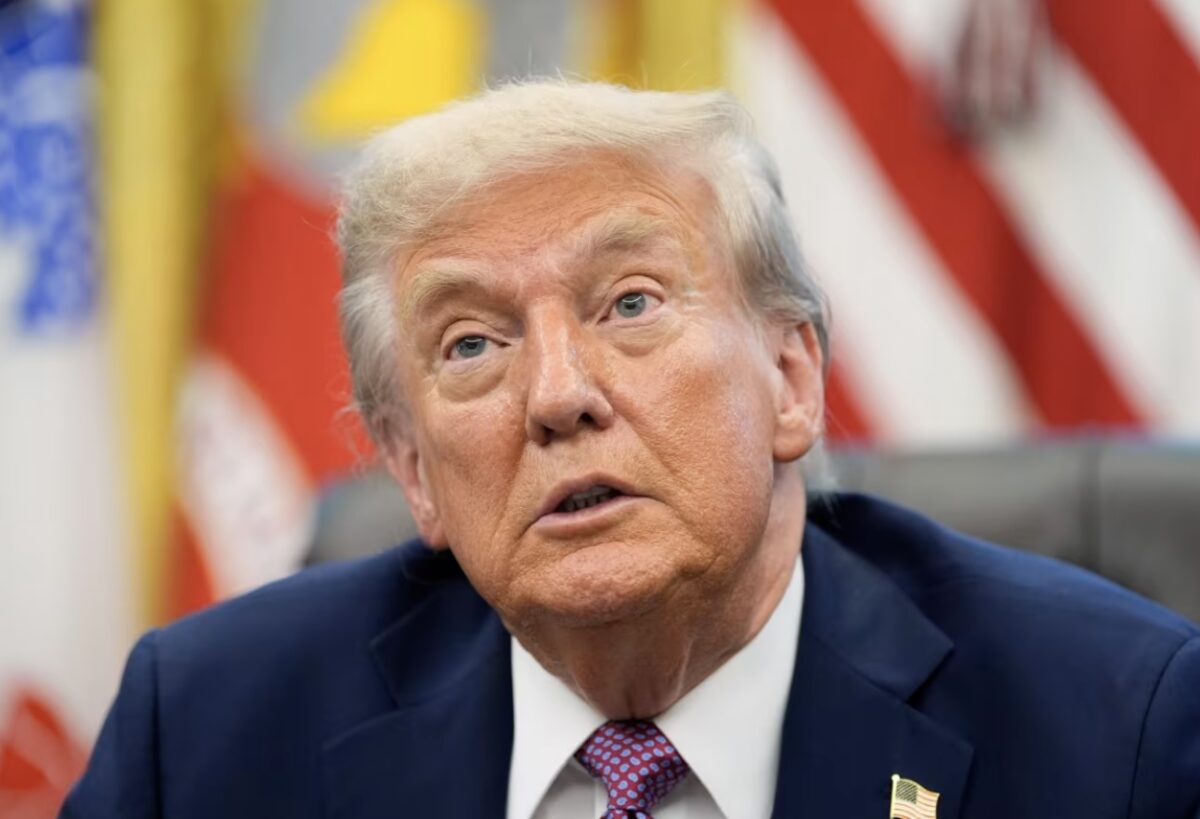
Photo: Alex Brandon/AP
A group of thirty-five former federal judges filed a motion in the U.S. District Court for the Southern District of Florida Wednesday, seeking to reopen President Donald Trump’s lawsuit against the IRS in order to block the $1.776 billion “slush fund” that the Department of Justice announced it was creating in order to settle the case.
Earlier this month, the Department of Justice announced it had agreed to settle a lawsuit Trump, his sons, and the Trump Organization had filed against the IRS for leaking their tax returns by creating an “Anti-Weaponization Fund,”saying it was intended to compensate people who were targeted with investigations or prosecution for political reasons. This has been a highly controversial move for multiple reasons: Trump as president is now in the role of both the plaintiff in his lawsuit and in charge of the defendant government agencies, the fund purports to allow distribution of funds without congressional approval, and January 6 rioters who were pardoned by Trump are seeking a share of the funds — even those who assaulted law enforcement officers.
Even GOP members of Congress have been critical of this fund, with multiple Republicans willing to bash it on the record, and several prominent Trump critics have said they should qualify for compensate because of the way the president had targeted them.
In a 24-page motion filed Wednesday, the group of judges wrote they were pursuing this motion “because they have dedicated their professional lives to the administration of justice,” and “[t]he purported ‘settlement’ that the parties never placed before this Court raises profound questions about the parties’ candor toward the Court and manipulation of the judicial system, which threatens to undermine confidence in the administration of justice.”
The motion seeks relief under “Rule 60 of the Federal Rules of Civil Procedure, which allows the Court to set aside the judgment and reopen the case,” or in the alternative, to request leave to file as amici curiae, a legal Latin phrase meaning “friends of the court,” individuals who are not parties to the legal case but are permitted to get involved in order to provide the court with information, specialized expertise, or insight relevant to the issues being litigated.
The motion cites case law precedent that has held that “a non-party may raise a challenge of fraud on the court through Rule 60 even when the non-party’s interests are not directly affected by the judgment,” and ask the Court ” to exercise its authority under Rule 60 to set aside the judgment in this lawsuit, allowing the Court to resume its inquiry into whether there is an actual underlying case or controversy, or whether, to the contrary, this ‘case’ that the parties purport to have ‘settled’ is itself a fraud on the Court.”
The judges’ motion goes on to flat-out accuse the Trump plaintiffs of having “deceived” the court by signing onto a Notice of Voluntary Dismissal that did not reference or submit any settlement but then the DOJ announced the “Anti-Weaponization Fund” right afterwards, which “commandeers the contrived sum of $1.776 billion from the United States Treasury, to be handed out to recipients chosen by a commission effectively controlled by the President.”
Furthermore, the judges argue, the day after it revealed the “Anti-Weaponization Fund,” DOJ then announced it had “agreed to release ‘any and all claims…whether presently known or unknown,” continuing with an “extremely broad provision” that covered any IRS audits of the Plaintiffs’ tax returns or any other action the U.S. federal government might have against Plaintiffs, “extraordinary benefits for which no consideration was provided to the government.”
According to the judges, “this ‘settlement’ is a product of collusion and is itself a fraud on the Court,” but legal precedent states that the court does not have to go so far as to reach that conclusion in order to reopen the case. In a Supreme Court case last year, the nation’s highest court (which currently includes three Trump appointees, two George W. Bush appointees, and one George H.W. Bush appointee) unanimously held that a Rule 60 review was still permissible even if a voluntary dismissal had been filed, and that the court was not deprived of jurisdiction over the case.
The court also has the power to issue sua sponte (self-initiated action) relief in order to investigate whether a fraud on the court has been committed and to set aside a judgment where there has been such fraud, the motion argued, and thereby set aside the voluntary dismissal filed by the Trump plaintiffs and the IRS.
There was “clear and convincing evidence” that fraud on the court had occurred, the judges argued, where it was “undisputed that the court was not informed of the settlement agreement and it was “neither announced nor publicly released until after the case had been dismissed.”
This was a “collusive settlement” and a “corruption of the judicial process,” the judges continued, with the parties using this lawsuit “as a means to allow a ‘commission’ controlled by the President to dole out $1.776 billion in taxpayer dollars without constitutional or congressional authority to do so, and to confer unlawful private benefits to the President and his family by purportedly prohibiting the United States from prosecuting any and all claims against them.”
The 35 former federal judges who filed the motion are listed below. The first name on the list, J. Michael Luttig, traveled in conservative legal circles for years, serving as an associate with the White House Counsel for President Ronald Reagan, clerking for Antonin Scalia when he was on the U.S. District Court of Appeals for the District of Columbia and for Chief Justice Warren Burger on the Supreme Court. Luttig served in multiple DOJ positions for President George W. Bush, including helping guide David Souter and Clarence Thomas through the Supreme Court confirmation process, before being appointed to the federal bench by Bush. More recently, Luttig has become a vocal Trump critic, advising then-Vice President Mike Pence that he did not have the constitutional authority to reject or change the Electoral College votes for the 2020 presidential election, testifying before the House Select Committee investigating January 6, and writing multiple op-eds criticizing the president. Luttig endorsed then-Vice President Kamala Harris in the 2024 election, citing Trump’s “continued denial of that appalling day [on January 6, 2021],” his “knowingly false claims,” and his “defiance of America’s Democracy.”
Judge Michael Luttig, U.S. Circuit Judge, U.S. Court of Appeals for the Fourth Circuit (Ret.)
Judge Nancy Gertner, U.S. District Judge, District of Massachusetts (Ret.)
Chief Judge John W. Bissell, U.S. District Judge, District of New Jersey (Ret.)
Judge Geraldine Soat Brown, U.S. Magistrate Judge, Northern District of Illinois (Ret.)
Chief Judge Rubén Castillo, U.S. District Judge, Northern District of Illinois (Ret.)
Chief Judge U.W. Clemon, U.S. District Judge, Northern District of Alabama (Ret.)
Judge Susan E. Cox, U.S. Magistrate Judge, Northern District of Illinois (Ret.)
Judge Morton Denlow, U.S. Magistrate Judge, Northern District of Illinois (Ret.)
Judge David K. Duncan, U.S. Magistrate Judge, District of Arizona (Ret.)
Chief Judge Sheila Finnegan, U.S. Magistrate Judge, Northern District of Illinois (Ret.)
Judge Jeremy Fogel, U.S. District Judge, Northern District of California (Ret.)
Judge James C. Francis IV, U.S. Magistrate Judge, Southern District of New York (Ret.)
Judge Steven M. Gold, U.S. Magistrate Judge, Eastern District of New York (Ret.)
Judge A. Benjamin Goldgar, U.S. Bankruptcy Judge, Northern District of Illinois (Ret.)
Judge Paul W. Grimm, U.S. District Judge, District of Maryland (Ret.)
Chief Judge Robert Harlan Henry, U.S. Circuit Judge, U.S. Court of Appeals for the Tenth Circuit (Ret.)
Judge Thelton Henderson, U.S. District Judge, Northern District of California (Ret.)
Judge Richard J. Holwell, U.S. District Judge, Southern District of New York (Ret.)
Judge Ellen Segal Huvelle, U.S. District Judge, District of Columbia (Ret.)
Judge John E. Jones III, U.S. District Judge, Middle District of Pennsylvania (Ret.)
Judge Barbara M. G. Lynn, U.S. District Judge, Northern District of Texas (Ret.)
Judge Roanne L. Mann, U.S. Magistrate Judge, Eastern District of New York (Ret.)
Judge A. Howard Matz, U.S. District Judge, Central District of California (Ret.)
Chief Judge Paul Michel, U.S. Circuit Judge, U.S. Court of Appeals for the Federal Circuit (Ret.)
Judge Kathleen O’Malley, U.S. Circuit Judge, U.S. Court of Appeals for the Federal Circuit (Ret.)
Judge Brian Owsley, U.S. Magistrate Judge, Southern District of Texas (Ret.)
Judge Philip M. Pro, U.S. District Judge, District of Nevada (Ret.)
Judge Victoria A. Roberts, U.S. District Judge, Eastern District of Michigan (Ret.)
Judge Shira A. Scheindlin, U.S. District Judge, Southern District of New York (Ret.)
Judge Fern M. Smith, U.S. District Judge, Northern District of California (Ret.)
Judge John D. Tinder, U.S. Circuit Judge, U.S. Court of Appeals for the Seventh Circuit (Ret.)
Judge Ursula Ungaro, U.S. District Judge, Southern District of Florida (Ret.)
Judge T. John Ward, U.S. District Judge, Eastern District of Texas (Ret.)
Judge Mark L. Wolf, U.S. District Judge, District of Massachusetts (Ret.)
New: The Mediaite One-Sheet "Newsletter of Newsletters"
Your daily summary and analysis of what the many, many media newsletters are saying and reporting. Subscribe now!






Comments
↓ Scroll down for comments ↓