Trump Will Gaslight a Nation Before Owning ICE’s Brutal Overreach

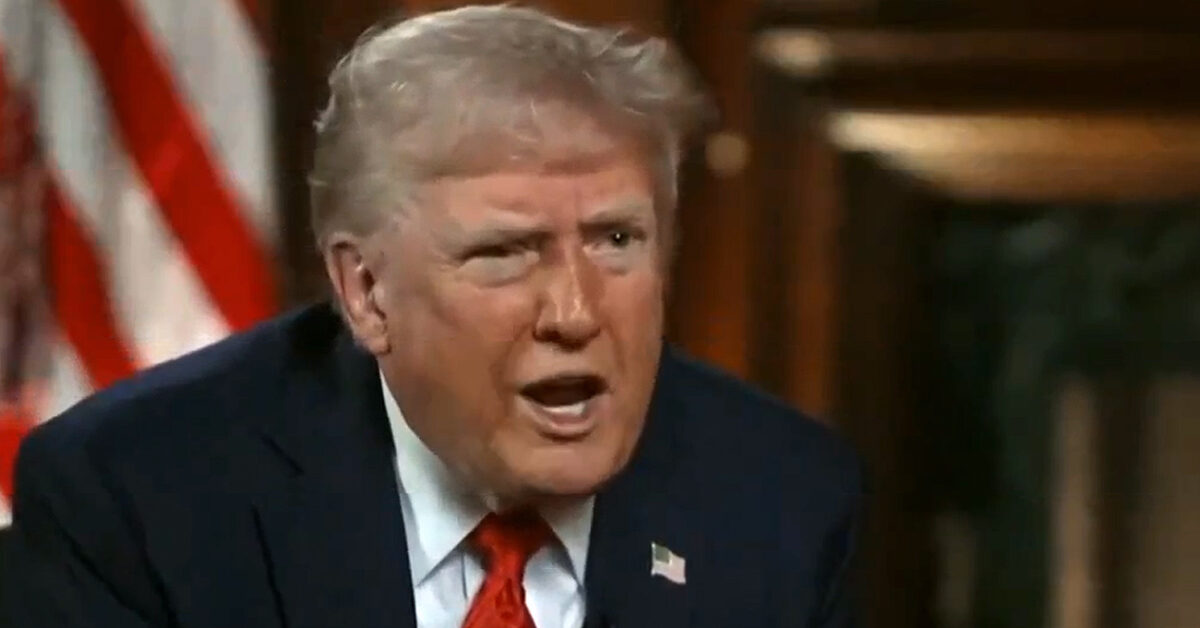
The Trump administration rushed to brand the victim of the latest ICE shooting a domestic terrorist before the public had access to the footage. That response reflects a system so hostile to admitting error that it treats accountability as a threat and reality as something to be managed.
That should terrify people.
Federal agents killed a man, and the government’s first instinct was not to wait, not to clarify, and not to acknowledge uncertainty. It was to slap a label on him so damning that it would foreclose sympathy, shut down questions, and put the burden of proof on the dead. The speed of that decision matters because it makes clear this was never about learning what happened. It was about controlling the consequences.
What’s happening here goes beyond narrative control. It is a quiet inversion of due process. By labeling the dead a terrorist before evidence is public, the government is not explaining a killing so much as closing the case. The burden shifts instantly—from the state justifying lethal force to the victim disproving it. Except the victim is no longer alive to do so.
In practice, this tests whether the government can kill first and try the victim later.
What we are seeing in the aftermath of the Minneapolis ICE shooting is the natural outcome of a political identity that cannot tolerate error. Once a claim is made, it must be defended. Revision is treated as weakness. Retraction is treated as humiliation. That logic may function in partisan combat. When it governs the response to lethal force, it becomes deeply dangerous.
President Donald Trump does not admit mistakes. He does not correct himself. He does not concede uncertainty. This is not incidental to his politics. It is the organizing principle of them. When that principle governs how the federal government explains the killing of a civilian, the result is predictable. The first version of events hardens immediately, and every fact that follows is treated not as information but as an obstacle.
That is why the word “terrorist” appeared so quickly in this case. It was not the endpoint of an investigation. It was the opening move in a narrative that could not be allowed to evolve. Once that label was applied, the administration committed itself to defending it regardless of what evidence emerged. From there, escalation followed almost automatically. “Terrorist” became “assassin.” A fatal shooting became a narrowly avoided massacre. Anyone asking questions was cast as siding with the enemy.
This is not an isolated episode. The same script played out after the killing of Renée Good weeks earlier, when federal officials rushed to assert a morally sealed account and then reacted defensively as video complicated that story. The repetition matters because it reveals a governing reflex rather than a case-by-case assessment. When doubt appears, it is treated as disloyalty. When evidence emerges, it is treated as a threat.
What makes this moment especially unsettling is how plainly visible it all is. Video now appears almost instantly when force is used, circulating widely before official explanations have time to settle. People no longer need to rely on authority to form a basic understanding of events. They can watch, replay, and compare. In Minneapolis, footage surfaced quickly showing a sequence that raised serious questions about the certainty coming from Washington. The details are being examined elsewhere. What matters here is that the evidence exists and does not neatly support the claims being made on the public’s behalf.
A system capable of self-correction would slow down at that point. It would acknowledge uncertainty and allow facts to shape conclusions. A government built around never admitting error has no mechanism for recalibration. It can only press forward, raising the volume and broadening the claims in the hope that certainty will overwhelm contradiction.
That is why the response feels so strained. The administration is not explaining what happened. It is protecting an initial claim that cannot be revised without violating its core rule. Each new statement is forced to reinforce the first one, because allowing doubt to enter would collapse the entire posture.
The stakes here are human. When the federal government uses lethal force, credibility determines whether accountability exists at all. A system that responds to evidence by escalating rhetoric is not defending public safety. It is defending itself.
More evidence may yet emerge in Minneapolis, and if it does, it should be released promptly and in full. But the damage is already visible. A government that rushes to condemn the dead before the record is established is sending a clear message: truth is secondary to authority.
Trump’s refusal to admit error has long been treated as political strength. In moments like this, it curdles into something far darker. Facts do not bend. Video does not disappear. And when power chooses denial over reckoning after taking a life, the cost is not just narrative control.
It is trust in the state itself.
New: The Mediaite One-Sheet "Newsletter of Newsletters"
Your daily summary and analysis of what the many, many media newsletters are saying and reporting. Subscribe now!





Comments
↓ Scroll down for comments ↓