Tulsi Gabbard Fires Two Top National Security Officials Over Intel Assessment That Contradicted Trump Claims

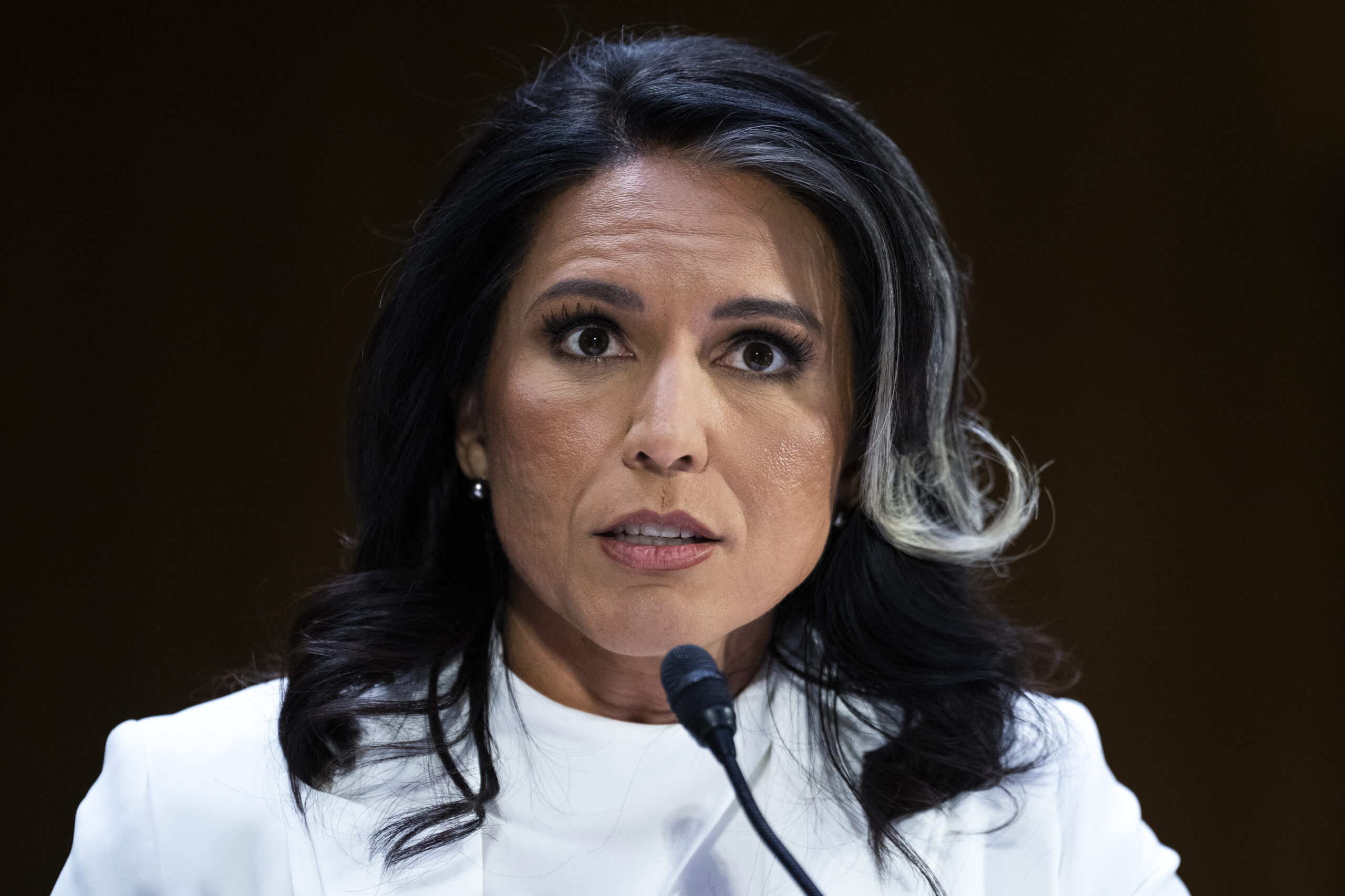
(Tom Williams/CQ Roll Call via AP Images)
President Donald Trump’s Director of National Intelligence, Tulsi Gabbard, fired two top national security officials this week over a data-based assessment that contradicted Trump’s reasoning for invoking the Alien Enemies Act to deport Venezuelans.
Gabbard’s office announced on Wednesday that she fired Michael Collins, the acting chair of the National Intelligence Council, and his deputy, Maria Langan-Riekhof. Collins and Langan-Riekhof were fired after an April 7th memo titled, “Venezuela Examining Regime Ties to Tren de Aragua,” was recently declassified and made headlines for pouring cold water on Trump’s claims that Venezuela’s government was behind gang activity in the U.S.
“While Venezuela’s permissive environment enables TDA to operate, the Maduro regime probably does not have a policy of cooperating with TDA and is not directing TDA movement to and operations in the United States,” read the memo.
Jonathan Panikoff, former deputy national intelligence officer, reacted to the firings on X, writing, “Having spent five years working at the NIC, I can personally attest the org is the heartbeat of apolitical US all-source analysis, traditionally drawing the best of the IC’s analysts together to tackle and produce assessments on the hardest issues.”
“Anything that reduces its independence because policymakers don’t like the independent conclusions it reaches, is the definition of politicization they are decrying. Mike and Maria are unbelievable leaders and IC professionals, not political actors,” Panikoff concluded.
Trump has declared emergency powers under the Alien Enemies Act in order to deport migrants his administration has claimed are gang members without any kind of due process.
In early May, a Trump-appointed federal judge ruled that the Trump administration unlawfully used the Alien Enemies Act in deporting alleged migrant gang members to an El Salvadoran mega prison.
U.S. District Judge Fernando Rodriguez, Jr. wrote, “Allowing the President to unilaterally define the conditions when he may invoke the AEA, and then summarily declare that those conditions exist, would remove all limitations to the Executive Branch’s authority under the AEA.”
Rodriguez’s ruling added that the administration using the 18th-century wartime law would “strip the courts of their traditional role of interpreting Congressional statutes to determine whether a government official has exceeded the statute’s scope. The law does not support such a position.”
The judge also took issue with Trump claiming that gang members illegally entering the United States constitutes a “predatory incursion,” the standard set in the AEA for its use.
“In the significant majority of the records, the use of ‘invasion’ and ‘predatory incursion’ referred to an attack by military forces,” Judge Rodriguez noted, and argued such an attack would “involve an organized, armed force entering the United States to engage in conduct destructive of property and human life in a specific geographical area.”
Trump has used several emergency measures to govern since taking office, including to levy his massive tariffs on foreign countries.
Trump deporting alleged gang members to El Salvador’s notorious megaprison has created weeks of controversy in the U.S. and resulted in court cases going all the way up to the Supreme Court.
The case of Kilmar Abrego Garcia, who was arrested and detained by U.S. authorities, accused of being an MS-13 gang member, and quickly shipped off to El Salvador for indefinite imprisonment without any kind of hearing or due process, has grabbed headlines and resulted in an outcry amid critics of the move. The U.S. government entered into a contract with the government of El Salvador and is paying $6 million a year to keep some 200 prisoners locked up – many of whom investigative journalists found had no known criminal record.
New: The Mediaite One-Sheet "Newsletter of Newsletters"
Your daily summary and analysis of what the many, many media newsletters are saying and reporting. Subscribe now!








Comments
↓ Scroll down for comments ↓