CNN Legal Analyst Says Trump Just Gave Comey’s Lawyers a Gift: ‘That’s an Acquittal’

CNN Senior Legal Analyst Elie Honig said President Donald Trump may have jeopardized his administration’s case against former FBI Director James Comey.
Comey was indicted on two counts by a federal grand jury in the Eastern District of North Carolina: making a threat against the president and transmitting a threat across state lines.
The charges stem from a May 2025 Instagram post featuring a photo of seashells arranged to say “86 47.”
“Cool shell formation on my beach walk,” Comey wrote. Conservatives expressed outrage and claimed he was issuing a threat to kill the 47th president. In slang, “86” typically means to refuse service to someone or to throw a person out of an establishment. Comey deleted the post and apologized, but said at the time that it was “crazy” to think he was threatening the president.
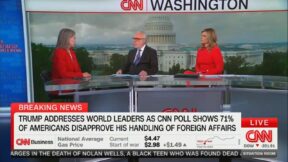
Honig appeared on Wednesday’s edition of The Source, where host Kaitlan Collins played a clip of herself in the Oval Office earlier in the day, when she asked Trump, “Do you really think that he was endangering your life or threatening your life with that?”
“Well, if anybody knows anything about crime, they know 86,” the president replied. “It’s a mob term for ‘kill him.'”
“But do you really think your life was in danger?” Collins asked.
“Probably, I don’t know,” Trump responded. “Based on what I’m seeing out there, yeah. People like Comey have created tremendous danger, I think, for politicians and others.”
Honig said that in his years as an assistant U.S. Attorney who prosecuted members of all five New York crime families, he had never come across an occasion where someone used the term “86” to convey a hit.
“Never, ever, not once did I hear any real-world gangster use the term ’86’ to refer to a murder or anything,” he said, before pointing to Collins’ second question to the president:
The other piece of the interview you did, Kaitlan, with the president in the Oval Office, that I found really interesting, when you asked that follow-up, “Did you truly believe your life was in danger?” The first thing he said was “probably, I don’t know.” And then he sort of eventually said, well, I guess so. “Yeah.” “Probably, I don’t know.” Right there, that’s an acquittal because prosecutors have to prove beyond a reasonable doubt that the victim believed that his life was in jeopardy. And if the jury comes back at “probably, I don’t know,” that’s a not guilty right there. I thought that was a really important moment.
“So you think that could be used if this makes it to trial?” Collins asked.
Honig, who is already on the record as saying the Comey case is “fatally flawed,” said a creative defense attorney might try to find a way to get Trump’s remarks into the trial:
It would be an interesting tack, right? If you’re the if you’re the defense, would you try to call Donald Trump to the stand? The thing is, it doesn’t actually legally depend on what the victim’s state of mind was. It’s more about what would a reasonable person believe. But hey, I’d argue, “Look, the guy who was targeted told you ‘probably, I don’t know.'” So, I don’t think it’ll ever get to a trial. I think it’ll be tossed out before that on other grounds, but I’d be fascinated to see how that played out.
This is the second time Comey has been indicted. In September, he was charged with lying to, and obstructing Congress in 2020. A judge tossed the case after ruling the U.S. Attorney who signed the indictment was illegally appointed.
Watch above via CNN.
New: The Mediaite One-Sheet "Newsletter of Newsletters"
Your daily summary and analysis of what the many, many media newsletters are saying and reporting. Subscribe now!





Comments
↓ Scroll down for comments ↓