Four National Security Officials Immediately Raised ‘Alarm Bells’ About Trump’s Ukraine Call: WaPo

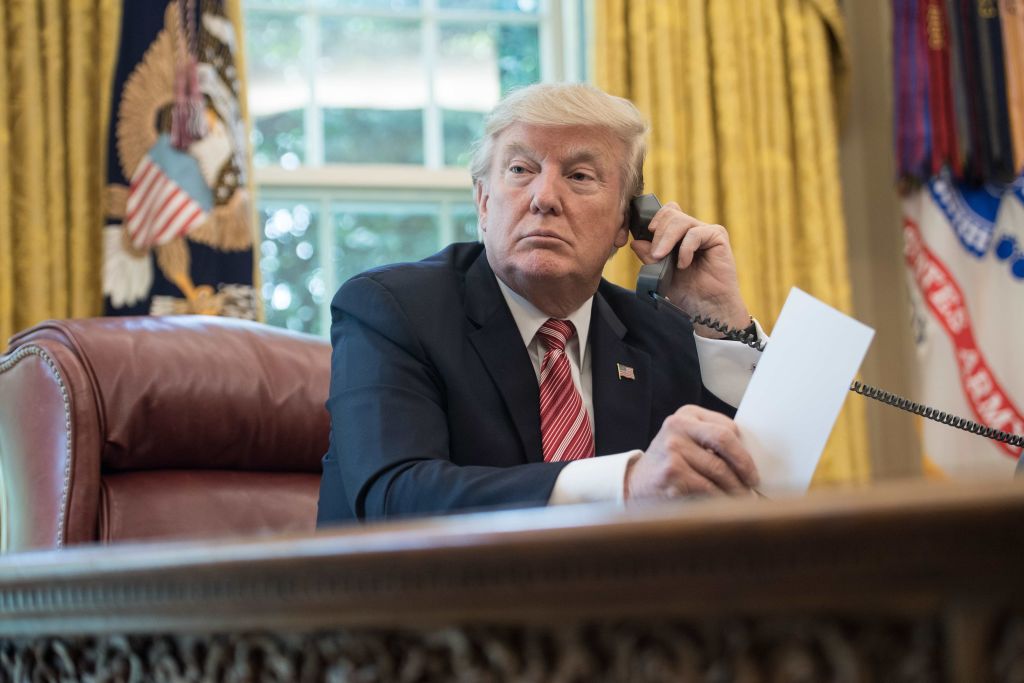
Nicholas Kamm, AFP/Getty Images.
Four national security officials immediately raised “alarm bells” after President Donald Trump’s July 25 phone call with Ukrainian President Volodomyr Zelensky where he solicited that country’s help in investigating his potential 2020 rival, Joe Biden.
According to the Washington Post, these national security officials, who had first-hand knowledge of the conversation, took their concerns to National Security Council legal adviser John Eisenberg almost as soon as the call ended, setting off a scramble to have the transcript summary “locked down” in a highly secret, codeword classification system. This real-time concern by officials in the White House directly contradicts Trump’s repeated claim that the call was considered “perfect,” and precede by more than two weeks the whistleblower’s official complaint.
“Within minutes,” administration officials told the Post, “senior officials including national security adviser John Bolton were being pinged by subordinates about problems with what the president had said to his Ukrainian counterpart, Volodymyr Zelensky. Bolton and others scrambled to obtain a rough transcript that was already being ‘locked down’ on a highly classified computer network.”
“When people were listening to this in real time there were significant concerns about what was going on — alarm bells were kind of ringing,” one official recounted to the Post. “People were trying to figure out what to do, how to get a grasp on the situation.”
White House officials did not comment for the story.
The Post‘s report does not shed any light on whether any of these four national security officials were a source for the first whistleblower, now known to be a CIA official assigned to the White House. However, their contemporaneous alarm over Trump’s conduct on the call would undermine the relevance of questioning the 18-day gap between the call and the whistleblower complaint by the president’s defenders.
In fact, Eisenberg, who promised to “follow up” on these concerns according to the Post, might be a reason for the delay between the call and the official complaint.
“The absence of any clear action by Eisenberg or others may have contributed to decisions by White House insiders to relay their concerns to a CIA employee who assembled the information they supplied into a whistleblower complaint that he submitted Aug. 12 to the U.S. intelligence community’s inspector general,” the Post explains.
New: The Mediaite One-Sheet "Newsletter of Newsletters"
Your daily summary and analysis of what the many, many media newsletters are saying and reporting. Subscribe now!




Comments
↓ Scroll down for comments ↓