Gaza-Based Photojournalist Describes Life Under Israeli Bombardment: ‘A Painful Nightmare’

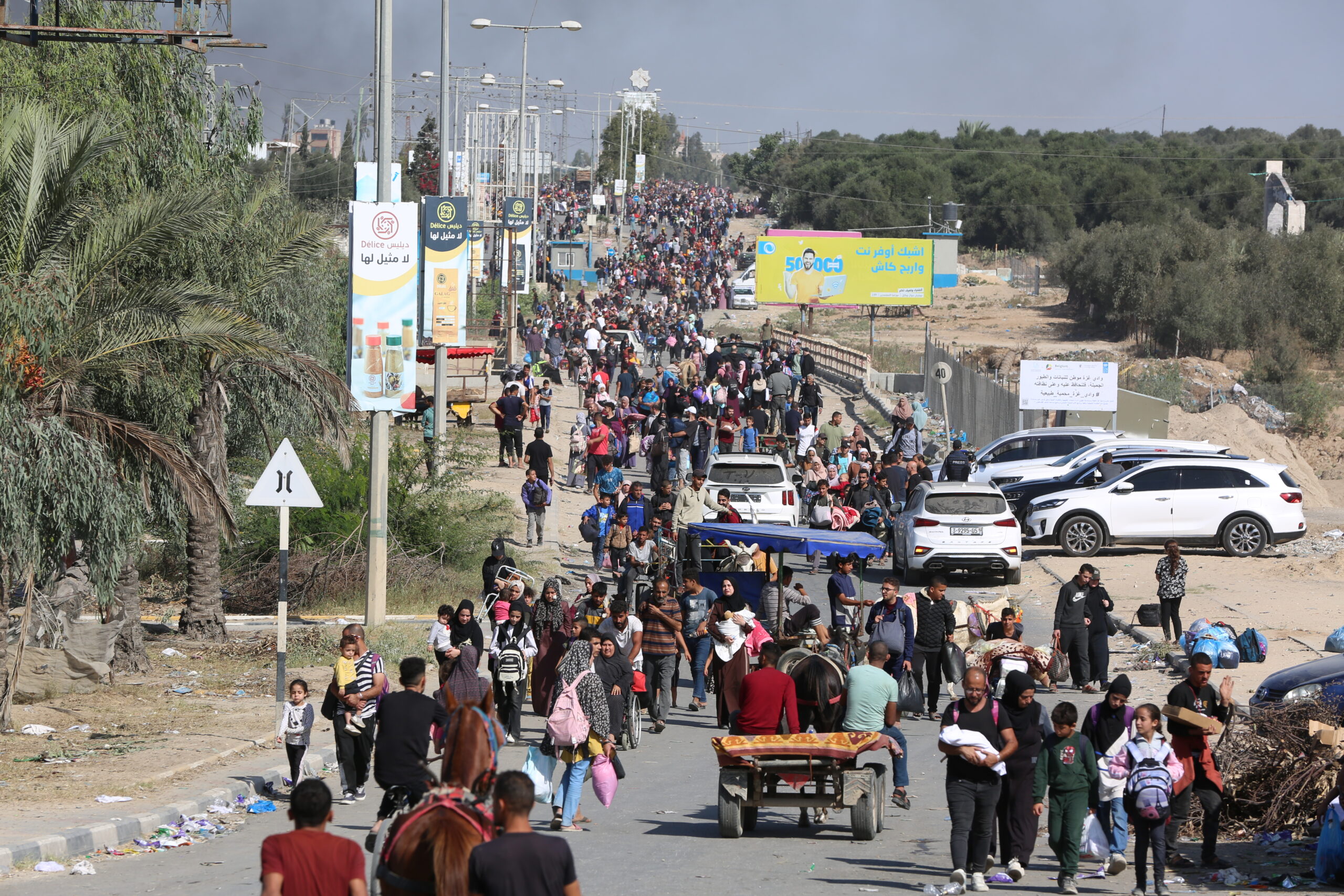
Photo by Fadel Mghari
“The bombing is more active at night,” Fadel Mghari says. The Gaza-based photojournalist is sheltering in his family’s home at the Bureij refugee camp in central Gaza as the densely-populated enclave has faced a fierce Israeli bombing campaign.
Last month, Mghari shared horrific images he captured of the devastation at al-Aqsa Hospital in Gaza with Mediaite. The photos showed babies who appeared to be dead as doctors desperately worked to revive them; children covered in ash and blood lined up on the hospital floor; a group of women weeping over body-bags.
This week, Mediaite managed to make contact with Mghari again during a rare moment of connectivity for an update on what life is like for Palestinians in Gaza now.
“In the Bureij camp, in my family’s home, everything is completely cut off,” he said. “Water, electricity, internet, and communications are very weak. There is continuous, intermittent bombing.”
Israel declared war soon after the Oct. 7 terror attack by Hamas that killed more than 1,200 people and took hundreds more hostage. While the Israeli military initially told residents of northern Gaza to move south, its military offensive has repeatedly targeted areas of the enclave that residents were told were “safer” to flee to.
Mghari said there is nowhere to go in Gaza.
“There is no safe place. All places are targeted by warplanes. Every moment there are bombings,” he explained. The bombings, he said, have resulted in “large massacres.”
The Palestinian Health Ministry in Gaza, which is run by Hamas, said more than 11,000 people have been killed since Oct. 7, including more than 4,500 children.
Mghari shared a series of photos he took on Nov. 11 of Palestinians — families of men, women the elderly and children — fleeing to south Gaza by foot.
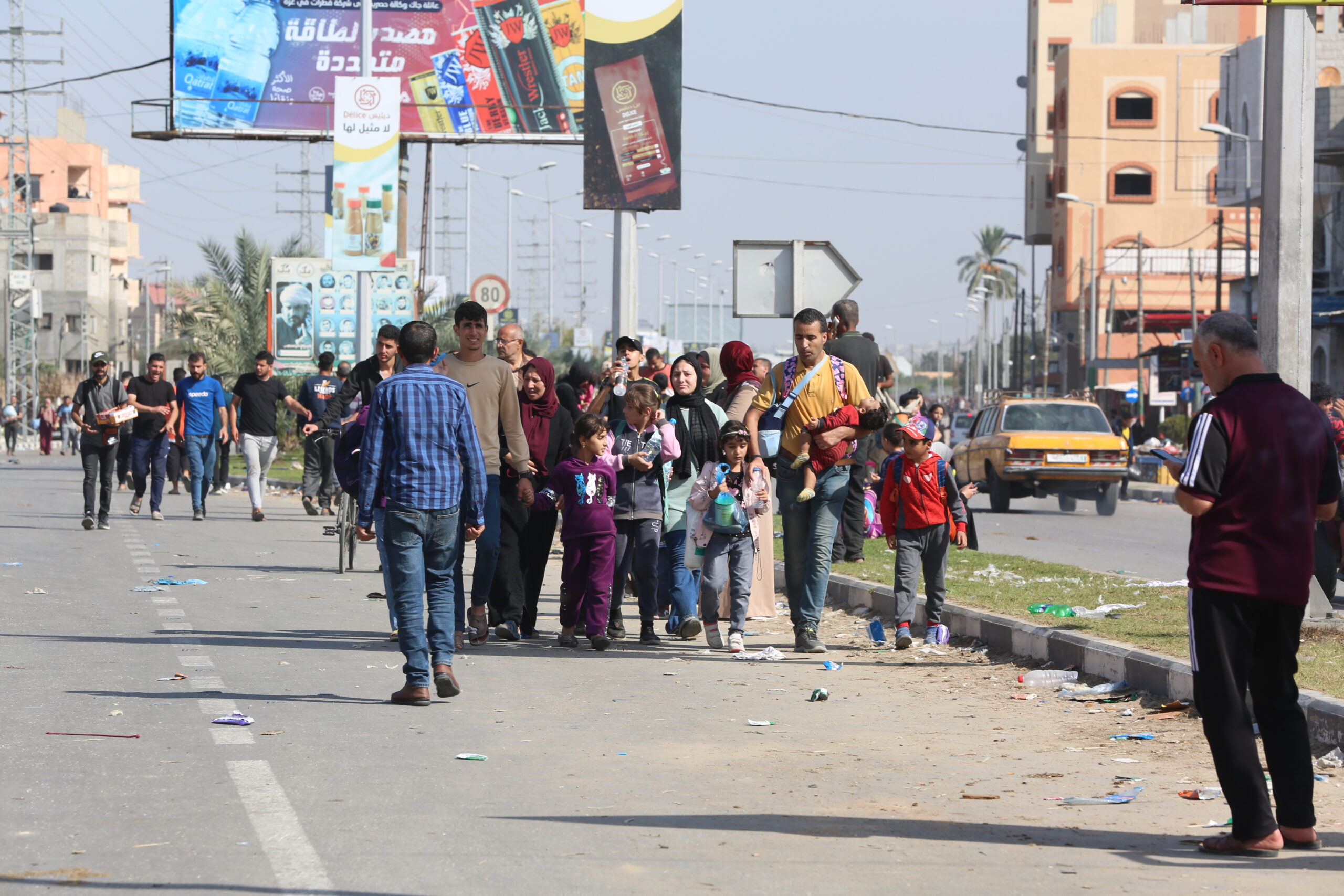
Photo by Fadel Mghari
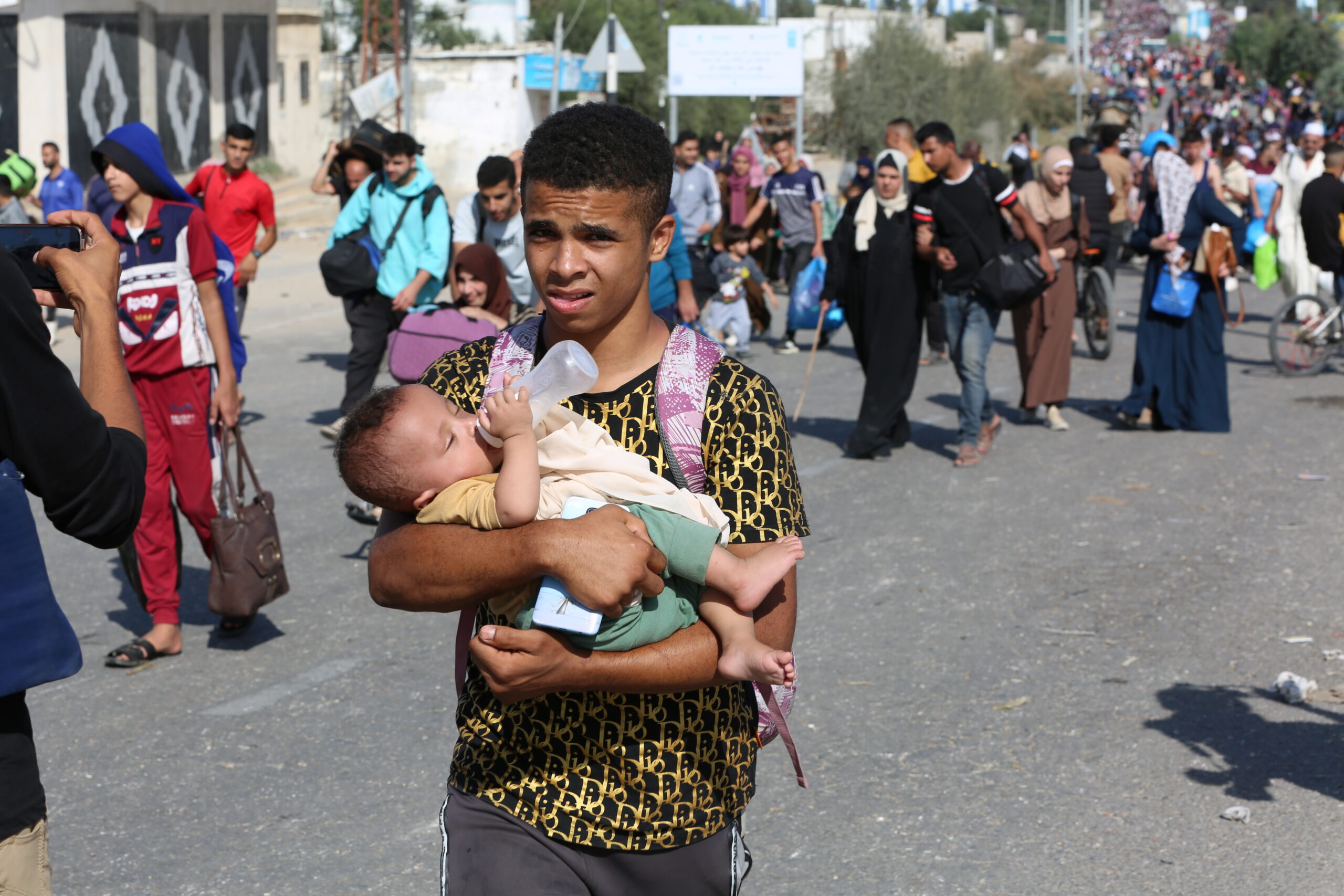
Photo by Fadel Mghari
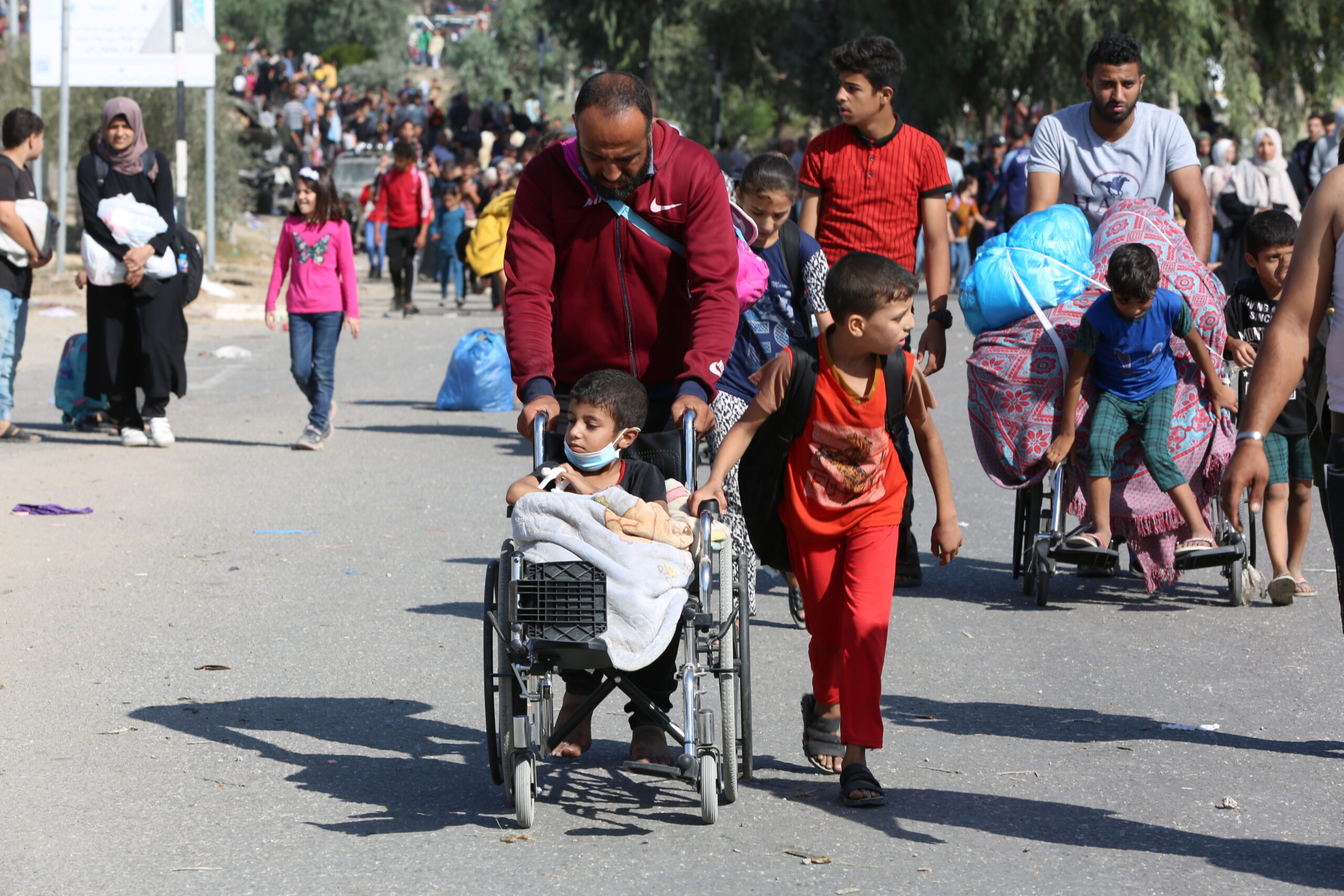
Photo by Fadel Mghari
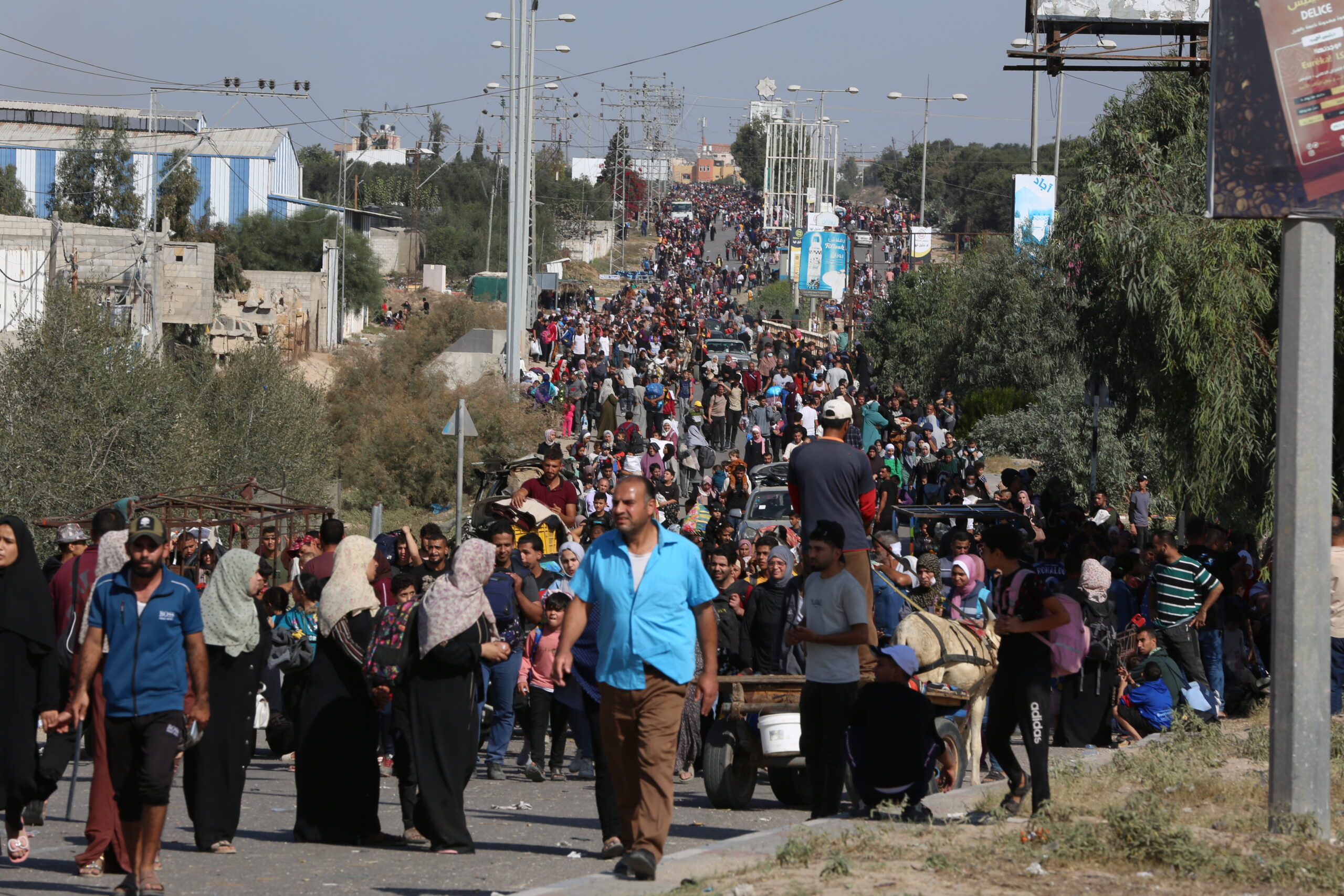
Photo by Fadel Mghari
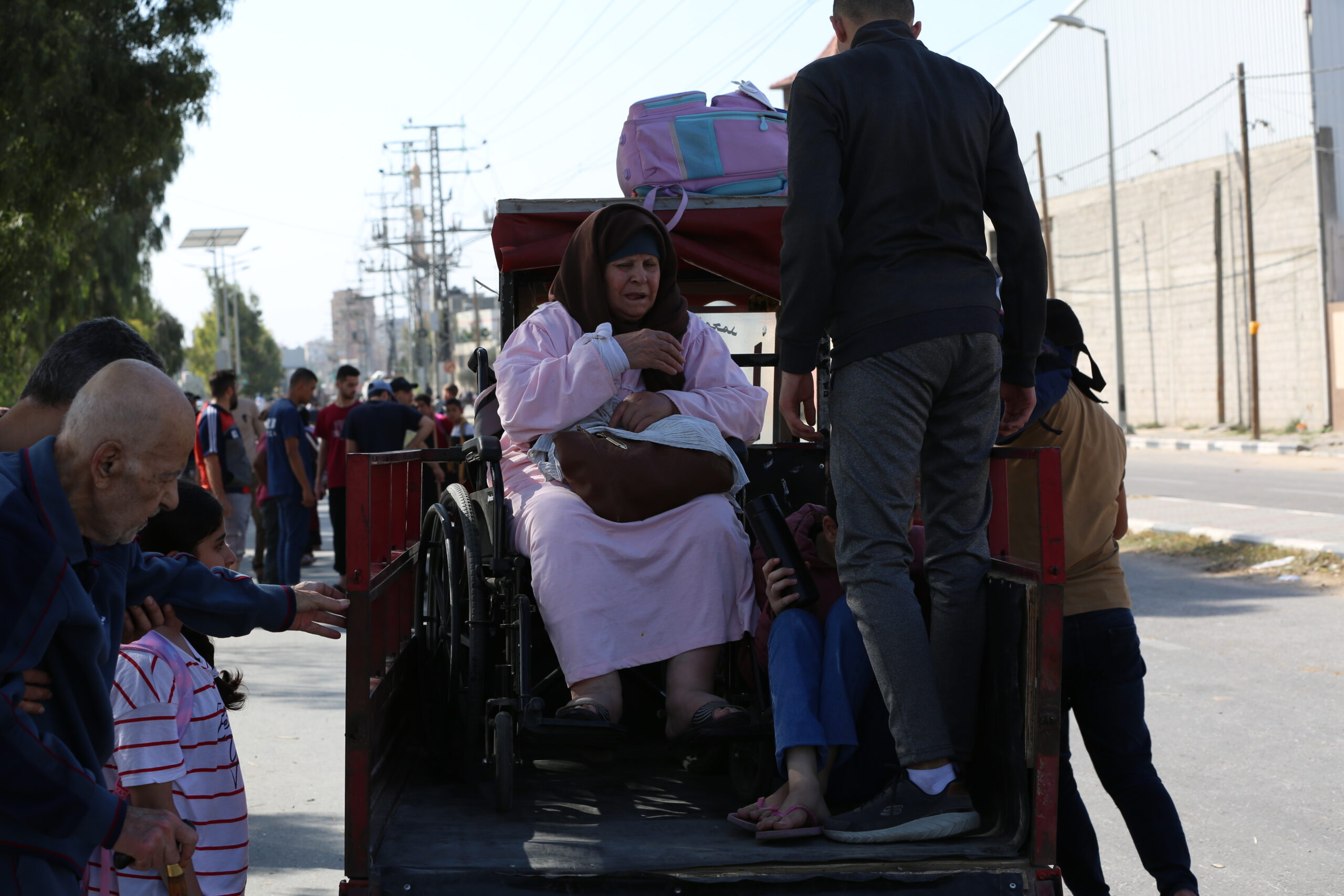
Photo by Fadel Mghari
Mghari provided a video to Mediaite that captured the sound of missiles going off in the night sky. A faint baby’s cry is heard in the background as the strikes become more intensified.
“Do you want to know how the night passes us amidst the sounds of missiles while we wait for our turn to die at every moment?” he asked.
The photographer has endured tremendous loss this month. On November 18, two of his friends, Sari Mansour, director of the Hamas-affiliated Quds News Network, and Hassouneh Salim, a Palestinian freelance photojournalist, were killed in a private residence by an Israeli airstrike, according to the Committee to Protect Journalists.
The CPJ reported that as of November 22, more than 50 journalists have been killed in the Israel-Hamas war, making it the deadliest conflict for journalists since it started tracking those statistics.
“Sari was not just a colleague, he was a brother and friend of mine,” Mghari said. “We lived through times of joy and fear together. His passing broke my heart in a very big way.”
He said Mansour was just 32 years old and leaves behind a wife and young children, including Daniel, a two-year-old child and “a little girl who is not more than seven weeks old.”
“The occupation bombed his house,” Mghari said. “They killed his brothers and nephews and our journalist friend Hassouna Salim. The house was completely destroyed.”
Mghari said the loss, at a time of extreme desperation in Gaza, has been hard to handle.
“I don’t know if we were in a dream or not, but it is a very, very bad and painful nightmare.”
New: The Mediaite One-Sheet "Newsletter of Newsletters"
Your daily summary and analysis of what the many, many media newsletters are saying and reporting. Subscribe now!








Comments
↓ Scroll down for comments ↓