CNN Isn’t About to Go MAGA. But It Does Need Fresh Ideas

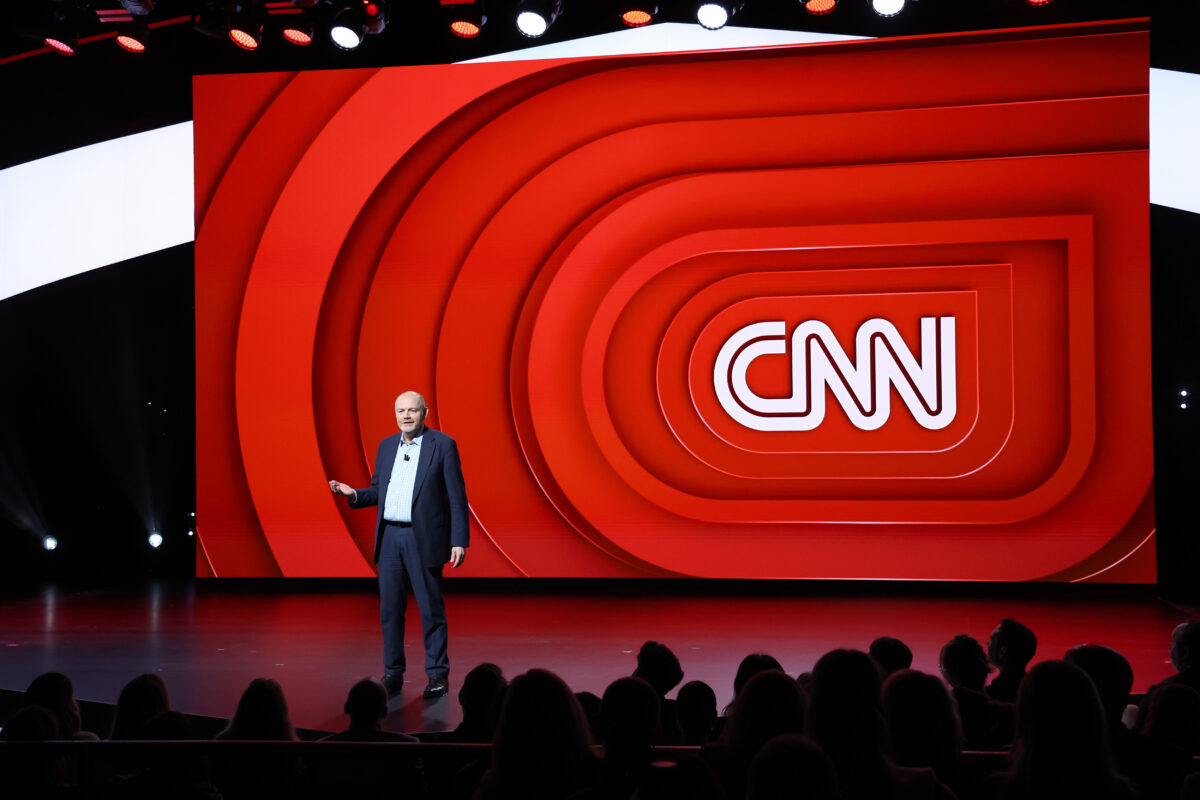
Courtesy of CNN
The leap from political pressure to ideological transformation has been instantaneous.
A sitting president publicly signaling that he wants CNN sold is corrosive. It is abnormal for the White House to treat the ownership of a major news network as a matter of personal interest. When regulatory atmospherics appear to align with presidential preference, that warrants scrutiny. The spectacle alone underscores how comfortable Donald Trump has become blurring lines that once felt sturdier.
That discomfort is justified.
On Thursday, Netflix walked away from its bid to acquire Warner Bros. Discovery, ceding the fight to David Ellison’s Paramount, which already controls CBS News. The deal, pending regulatory approval, would hand Ellison a portfolio that includes CNN, HBO, and Warner Bros. Pictures. It came the same day Netflix co-CEO Ted Sarandos visited the White House, and after weeks of public signals from Trump that he preferred Paramount’s bid. Inside CNN, anxiety spiked. Outside the building, media critics began forecasting ideological upheaval.
Concerns about an editorial shift are legitimate. Yes, ownership matters, and incentives matter, and tone can change. But the more dramatic predictions circulating this week assume a level of instantaneous transformation that is difficult to square with how large news organizations actually function.
Ownership influence is real and often cumulative. Editorial posture can evolve over time, sometimes subtly, sometimes more assertively. Newsrooms reflect the priorities of those who control them. At the same time, those shifts tend to operate within the gravitational pull of brand identity, audience expectation, and commercial reality. Transforming CNN into a partisan replica of another network would require a sudden rupture more than a gradual adjustment.
If Ellison intends to preserve the long-term value of what he just acquired, he will have to balance any ideological instincts against the economic logic of the asset. CNN’s worth lies in its global bureaus, its institutional credibility, and its advertiser-safe reputation as a straight news organization with world-class reporting. Even owners who have nudged tone over time have typically respected the distinction between an opinion engine and a legacy news brand. Influence accumulates over time and rarely detonates overnight.
That does not mean the network will look the same a year from now. Leadership turnover is likely. Prime time could be reshaped. Guest booking may widen ideologically. On-air language may become more studiously calibrated. An overt emphasis on viewpoint diversity could become more visible in both coverage and staffing. Those are meaningful recalibrations. They are also consistent with how large institutions evolve under new ownership. CNN runs on thousands of reporters, producers, editors, control-room staff, lawyers, and field crews who make the journalism happen every day. Replacing that infrastructure wholesale would mean dismantling the very product that gives the network value.
The Bari Weiss factor has intensified the panic. In some media circles, her name has become shorthand for MAGA adjacency. In others, it represents heterodoxy and resistance to progressive orthodoxy. The lived reality at CBS News under her leadership has been less dramatic than either caricature suggests. The network did not morph into a partisan mouthpiece. It shifted tone, widened ideological representation, and at times overcorrected in ways that drew reasonable criticism for specific mistakes that deserved scrutiny. It remains recognizably CBS. The reaction to her role says as much about the industry’s ideological anxiety as it does about her editorial stewardship.
CNN’s vulnerability also predates this week. Since Jeff Zucker’s departure, the network has endured leadership turbulence, the ill-fated CNN+ rollout, the bruising Chris Licht experiment, and a prime-time identity that never quite settled. The network’s ratings declined when its anti-MAGA tone softened amid executives’ efforts to navigate relentless and often unfair attacks from Trump and his surrogates. The internal debate over how adversarial to be, how much to platform Trump, and how to signal fairness without dulling scrutiny has lingered unresolved. Institutions navigating strategic drift rarely project invulnerability when ownership shifts.
And candidly, this is where the camera pans back inside the building. Mark Thompson’s decision to retain top lieutenants from previous eras — Virginia Moseley, Amy Entelis, Eric Sherling — signaled continuity at a moment that arguably demanded sharper reinvention. The pivot toward a digital subscription strategy makes conceptual sense in an industry moving away from linear television. Yet it raises a difficult question: how does a venerable institution persuade audiences to pay for a digital product when the linear product, available on millions of cable boxes, is struggling to command attention? Ownership drama did not create that tension. It exposed it.
There is also an audience reality that rarely enters the moral panic. Cable news viewership has aged and narrowed across the board. CNN’s median viewer is in their late sixties. Its strongest markets are concentrated in coastal metropolitan areas. Its most replayed segments frequently feature Beltway panels dissecting political tactics rather than sustained reporting from communities outside the New York–Washington corridor. A recalibration that seeks to broaden that aperture will be interpreted in some quarters as ideological retreat. It may also reflect the arithmetic of building relevance in a country that does not live inside the Acela corridor.
None of this diminishes how unusual Trump’s posture has been. A president openly celebrating a preferred ownership outcome for a news network marks a cultural shift that should concern anyone invested in press independence. Treating fair but critical coverage as illegitimate and rooting for friendlier proprietors erodes norms that once felt stable.
It is also worth noticing how quickly the industry assumed total transformation. The speed of that conclusion reveals a deeper insecurity about institutional resilience. Newsrooms with confidence in their standards and culture do not disintegrate at the first sign of ownership change. They adapt. They argue internally. They continue reporting.
For CNN staffers, the anxiety is understandable. Corporate transitions are destabilizing, and the political rhetoric surrounding this deal has been unusually explicit. Yet the journalism inside the building will still be produced by the same correspondents, producers, editors, and crews who have covered wars, impeachments, hurricanes, and elections. Professional norms do not evaporate because the cap table changes.
The handwringing suggests regime change. The more plausible outcome is a period of recalibration shaped by market incentives, internal debate, and a political climate that has grown comfortable testing boundaries. CNN is unlikely to suddenly wake up as Fox News. It may wake up sounding somewhat different, perhaps more self-consciously national in tone, and more attentive to audiences beyond the familiar media echo chambers.
Whether that shift strengthens or dilutes the journalism will depend less on the owner’s preferences than on the steadiness, creativity, and confidence of the newsroom itself. In a moment when presidential behavior often feels untethered from older norms, institutional confidence is not complacency. It is ballast.
This is an opinion piece. The views expressed in this article are those of just the author.
New: The Mediaite One-Sheet "Newsletter of Newsletters"
Your daily summary and analysis of what the many, many media newsletters are saying and reporting. Subscribe now!






Comments
↓ Scroll down for comments ↓