Mamdani’s ‘Collectivism’ Line Sparked a Panic — That Proved His Point

(Kyodo via AP Images)
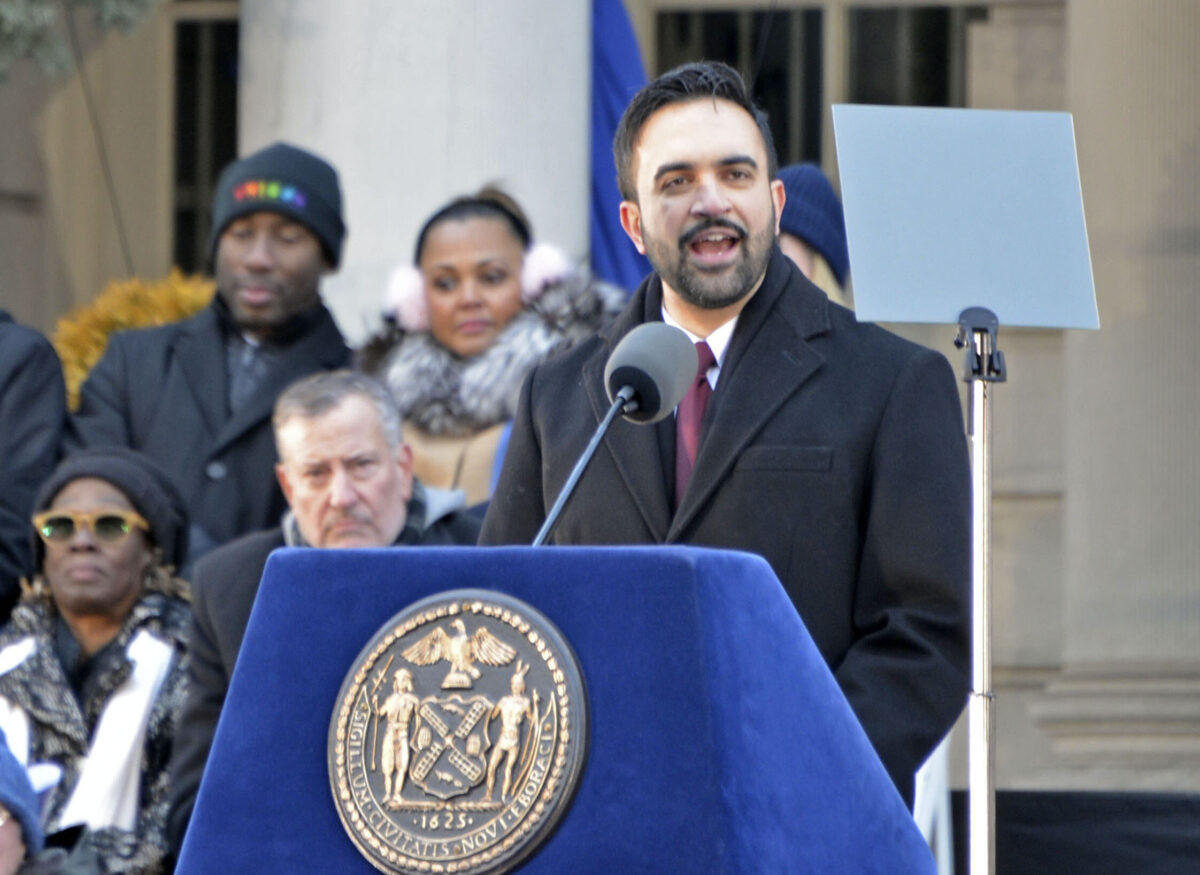
Zohran Mamdani did not misspeak at his inauguration. When he said he wanted to replace the “frigidity of rugged individualism with the warmth of collectivism,” he knew exactly what he was doing. The line was a deliberate challenge to one of the most sanctified phrases in American politics, and the reaction that followed confirmed its potency.
Within hours, the right responded with Soviet breadline memes, gulag jokes, and warnings about socialism descending on New York City. The imagery arrived fast and fully formed. It treated a rhetorical provocation as a confession of intent and collapsed every form of collectivism into a Cold War morality play. The pile-on spread far enough that even a close ally of Vladimir Putin joined in, mocking Mamdani’s remark with a Simpsons meme, a detail that reveals how reflexive and unserious the moment had become.
The response functioned as cultural reflex rather than political analysis, a performance designed to defend an identity rather than engage an argument.
Mamdani knew precisely what he was doing. The collectivism line translated the affordability crisis that drove his campaign—and now dominates American politics—into moral vocabulary. President Donald Trump has attempted the same repositioning, claiming the mantle of affordability populist precisely because voters are exhausted by wealth inequality and cost-of-living pressure. Mamdani’s provocation worked because it named what both campaigns understand: rugged individualism no longer explains how people actually live.
“Collectivism” drew the clicks because it reliably generates Cold War–era outrage. The sharper edge of the sentence landed elsewhere. “Rugged individualism” carries its own mythology, one deeply embedded in American political culture and rarely subjected to scrutiny. Mamdani’s provocation worked because it named that mythology directly and stripped it of its automatic reverence.
That mythology continues to exert enormous force as a moral claim. “Rugged individualism” operates less as a description of American life than as a badge of virtue. It reassures people that they stand alone even while they move through systems built collectively and maintained publicly. Roads, courts, policing, zoning, public schools, tax policy, and emergency services fade into the background. Self-reliance takes center stage.
The figures who embody this ideal remain instantly recognizable.Wall Street’s Gordon Gekko declaring that “greed is good.” Ayn Rand’s Howard Roark dynamiting a housing project in the name of personal purity. Elon Musk framed as the singular genius bending markets to will. And most prominently, Trump, the avatar of inherited wealth recast as solitary brilliance, the strongman entrepreneur who claims to answer to no one and need nothing from anyone. New Yorkers know this character well. He is one of their own, and they are tired of him.
These figures belong to a world that was already vanishing when they appeared. They emerged as nostalgia dressed as triumph, performing self-sufficiency in an era when the ladders behind them were being pulled up. The mythology endured even as the conditions it celebrated slipped further out of reach.
Mamdani’s line unsettled that arrangement. It pulled interdependence into view and disrupted a story that functions best when it remains unspoken. The backlash followed a familiar script. Soviet imagery rushed in to restore order, replacing reflection with fear and flattening distinctions that might complicate the narrative.
The simplicity of the criticism strengthened its effectiveness. Caricature travels quickly. Breadlines and gulags end conversations efficiently. The move requires no engagement with present conditions and no acknowledgment of how American society actually operates.
That reflex explains why this moment resonated beyond one speech. American life runs on collective arrangements, while political language continues to sanctify individualism as moral identity. When someone challenges that hierarchy directly, mockery fills the gap where argument might otherwise live.
That is why this episode matters. The noise that followed Mamdani’s speech did not clarify policy or sharpen debate. It preserved a myth under pressure. The intensity of the response measured the fragility of what rushed to defend itself.
This is an opinion piece. The views expressed in this article are those of just the author.
New: The Mediaite One-Sheet "Newsletter of Newsletters"
Your daily summary and analysis of what the many, many media newsletters are saying and reporting. Subscribe now!









Comments
↓ Scroll down for comments ↓