
‘Pedophile Protector!’ Trump Flipping Off a Ford Factory Heckler Is a Gift to Democrats

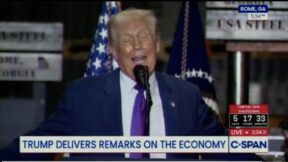
Screenshot
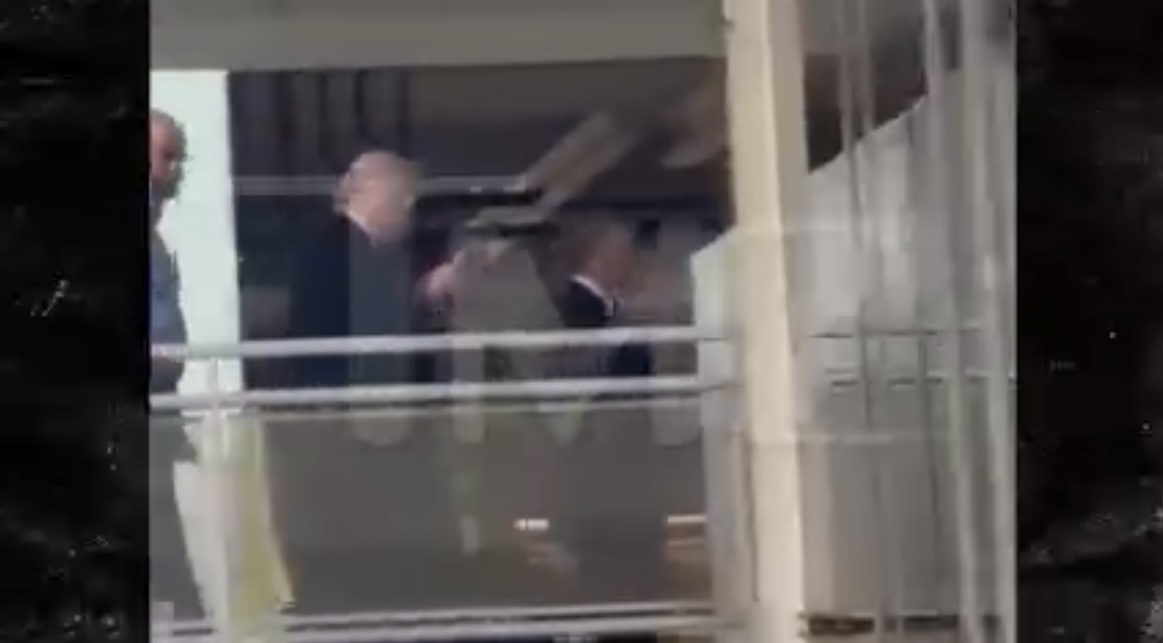
The most revealing political moment of President Donald Trump’s week did not come from a courtroom filing or a press briefing. It came on the floor of a Ford factory in Dearborn, Michigan, when a line worker shouted two words that stopped the president cold.
“Pedophile protector.”
Trump responded by pointing at the worker, mouthing “f*ck you,” and flipping him off. The exchange was caught on video and quickly went viral. It also handed Democrats something they have spent years searching for: an attack that visibly rattles Trump and requires no explanation.
For a president who built his career on public insult and humiliation, the reaction stood out. Trump rarely loses composure over hecklers. He usually dominates them. This time, he didn’t.
What made the moment more politically potent was who delivered the accusation. This was not a campus protester or partisan activist. It was a Midwestern, blue-collar factory worker on the floor of a union plant, drawn from the very demographic Trump has cultivated as the backbone of his nationalist appeal. For nearly a decade, Trump has styled himself as the champion of industrial workers ignored by elites. When an insult this blunt comes from inside that coalition, it carries a different weight.
The reason is simple. The Epstein scandal has become Trump’s most persistent political liability, not because of a specific criminal allegation against him, but because of a growing belief that he helped cover something up. The factory worker’s shout gave voice to a narrative that has been building for months, and Trump’s reaction showed how deeply it has landed.
This is not about accusing Trump of personal criminal conduct. It is about the perception that he used power to shield others, delay transparency, and obstruct disclosure. That distinction matters. Protectors act deliberately. They choose silence. They choose delay.
There is evidence that feeds this belief. In November 2025, Trump signed the Epstein Files Transparency Act, requiring the Justice Department to release all unclassified Epstein-related materials within 30 days. That deadline passed in December. What followed was a limited release that amounted to only a small fraction of the total records. Many of the pages that were released were heavily redacted, with hundreds blacked out entirely.
Trump portrayed the signing as a commitment to transparency. The reality looked different. Deadlines slipped. Releases were piecemeal. Files were briefly posted, then pulled back for “review.” The result was not clarity. It was suspicion.
That suspicion deepened when Marjorie Taylor Greene, one of Trump’s most loyal defenders, recounted a private conversation during a 60 Minutes interview. Greene said Trump was furious about pressure to release the Epstein files because doing so would “hurt people.” The remark mattered not because it proved criminality, but because it revealed Trump’s instincts. A president eager to expose wrongdoing does not speak that way.
Trump’s defenders insist the files were released, that delays were bureaucratic, and that critics are manufacturing scandal out of routine redactions meant to protect victims. That defense would carry more weight if Trump behaved like a man confident in it. Presidents who want transparency lean into exposure. They do not lash out when the subject is raised.
The Epstein issue has also unsettled Trump’s base. For years, supporters were promised a reckoning. Epstein was supposed to be proof of elite depravity followed by mass disclosure. Instead, they got delays and caveats. Right-wing commentators and online forums that once demanded names now openly question why it has not happened. That resentment has grown harder to contain.
This is why Democrats should stop overthinking the moment. They reach for nuance when politics rewards clarity. Trump did not rise by litigating complexity. He succeeded by branding opponents with insults that stuck. “Crooked Hillary” endured because it was simple and relentless, not because it was fair.
“Pedophile protector” works the same way. It is blunt. It is morally charged. It connects directly to a scandal voters already find disturbing. Most importantly, Trump visibly hates it.
Trump has flooded the zone with distractions before. Epstein keeps resurfacing anyway.
Politics turns on trust and character more than process. The Epstein scandal hurts Trump because it contradicts the central promise of his political identity. He ran as a man who would expose corruption, not manage it. Epstein was his chance to prove that claim.
Instead, he looks like someone who chose the cover-up.
The question now is whether Democrats recognize what they have. The factory worker did their messaging work for them. He tested the line in public, on video, in front of a working-class audience—and Trump’s reaction proved it lands. The only thing left is repetition. Here’s a million thousand-dollar idea: Sell red caps that look like MAGA but instead feature ‘Pedophile Protector’ instead.
Democrats have fumbled these moments before, reaching for complexity when simplicity was sitting in front of them. This one is not complicated. A union worker called the president a pedophile protector. The president lost his composure. That is the ad. That is the chant. That is the bumper sticker.
“Pedophile protector” fits on a sign. It fits in a chant. It captures a belief spreading well beyond Trump’s critics.
And judging by his reaction on that factory floor, it hit a nerve.
This is an opinion piece. The views expressed in this article are those of just the author.
New: The Mediaite One-Sheet "Newsletter of Newsletters"
Your daily summary and analysis of what the many, many media newsletters are saying and reporting. Subscribe now!





Comments
↓ Scroll down for comments ↓