Superb NCAA Title Game Nearly Ruined By Tedious Reviews Of Easy Calls — Here’s How to Make Sure This Never Happens Again

Screenshot
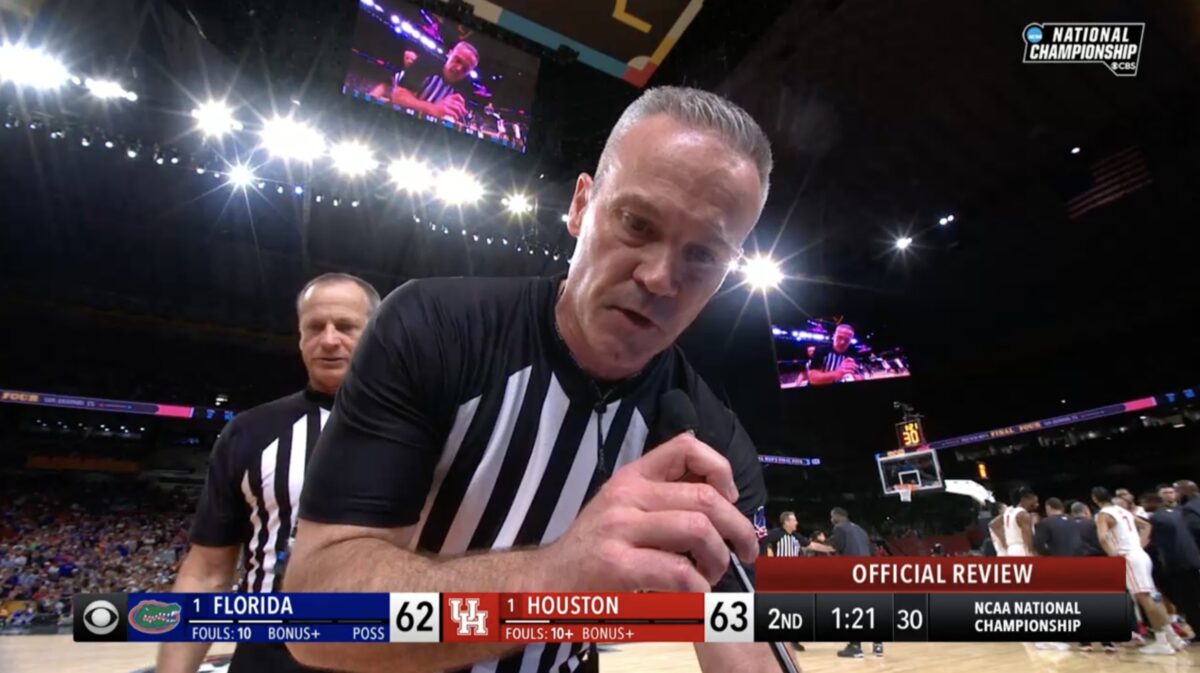
The University of Florida Gators completed a stunning comeback to defeat the Houston Cougars Monday night to become NCAA Men’s champions in what everyone recognized as an instant classic. Unfortunately for viewers, the last few minutes of the game, like nearly every Final Four game and most of the very close tournament games I watched, were delayed by often unnecessary reviews of rather obvious calls by on-court referees. It nearly ruined a great game.
The introduction of video review to ensure the correct calls are made is one that nearly everyone can get behind — but the execution of these reviews is maddening for viewers of college basketball, the NBA, and even the Premier League’s VAR system, which might be the biggest joke of them all. It’s long past time that the system for checking calls got changed to improve the game flow and viewing experience. However, the additional ad revenue these interruptions bring suggests that nothing will change anytime soon.
The concept behind the video review is clear — close calls regarding goal interference, flagrant fouls and who last touched the ball before it went out of bounds can be easily checked via high definition and super slow motion video that, 95% of the time at least, reveals what actually happened when the official understandably missed it in a bang-bang play occurring in real time. The goal is to get the call right, which, given the high stakes of these sorts of competitions, is an admirable one that nearly everyone gets behind.
But the on-court referees often reveal themselves as the worst people to do the check. Why? Because they do not have the luxury of watching the game unfold on the very same high-definition broadcast from the luxury of their living room. They are incredibly busy running up and down the court, trying to catch every single nuance of world-class athletes’ moves with incredible pace, strength, and precision. When it’s time for them to check the video, they are often about two minutes behind the conclusions made by every viewer who has seen the video replay half a dozen times before they’ve settled into the scorers table to watch it for themselves.
One interruption like this isn’t such a big deal, but in our postmodern world, when we rarely trust our own eyes, combined with the unbelievable intensity of a national championship game or NBA playoff, referees understandably err on the side of caution and check every close play. Two-minute delays start to pile up, so the last two minutes of a close game can take as much 45 minutes to play out. This was the case Monday night, but the semifinal game between Duke and Houston was even worse.
At this point, we introduce Gene Steratore — a name immediately familiar to any sports-obsessed television viewer. He works for CBS Sports and is the guy that the game announcers turn to for a quick read on the play under review. He’s typically able to make the correct call within five seconds — he’s decided what will almost certainly happen before the referees start to huddle around the monitor. No fan is tuning in to watch referees watch a video they’ve already seen, and so any sense of anticipation and or drama immediately abates.
In a perfect world, we’d be able to clone Gene Steratore so he could provide his timely assessments for every broadcast game ever. Until ChatGTP rolls out the Steratore feature, we are left to come up with another solution, which I humbly propose: Every game needs a video referee at the scorer’s table who has the authority to make the call immediately. Maybe even allow him or her to cue up the video and show the on-court refs what he or she concluded, but with the agency and authority to make the call.
The NFL has already instituted something like this with their real-time referee assistance. The video assistant referees (VARs), also known as replay officials, review video footage to advise on-field crews in specific, limited game situations, aiming to correct clear and obvious errors and improve the accuracy of calls. When the call is super obvious, they don’t waste anyone’s time by making the ref watch the controversial play on the sideline monitor — the head ref is told what happened, calls are changed, and the game plays on. The correct call is made, players stay in the moment, and fans stay dialed into the game. Everyone wins, except broadcasters, because there is slightly less ad inventory.
I’m not so cynical to suggest that some video reviews are kept in games so that the broadcaster can run bonus advertisements and make significantly more money, but when you consider how much longer many televised games have gotten, you do the math.
There are other examples of VAR execution across the sports spectrum, from expert to buffoonery. Major League Baseball has done some innovative things that have made viewing their sport far more enjoyable to many. The Premier League’s VAR system seems to have accomplished the impossible — making the referees appear even more incompetent and/or corrupt, depending on who you support. A “clear and obvious error” standard seems to be used only to protect the on-field officials and not make the correct call.
Like many Americans, watching sports on television is an activity in which I consider myself to be an expert. I’ve long put in the 10,000 hours. That said, the tedious video reviews of games that are making me stay up too late makes me angry, not just because I’m sleep deprived, but because it seems unreasonable and unnecessary. Time to fix it.
This is an opinion piece. The views expressed in this article are those of just the author.
New: The Mediaite One-Sheet "Newsletter of Newsletters"
Your daily summary and analysis of what the many, many media newsletters are saying and reporting. Subscribe now!









Comments
↓ Scroll down for comments ↓