The Arrest of Don Lemon Is Not About Don Lemon

Screenshot
The arrest of Don Lemon is not about Don Lemon.
It is about whether the federal government can criminalize proximity to protest and describe it as law enforcement. It is about whether observation can be reclassified as participation after the fact. It is about how easily a workable First Amendment boundary can be blurred once prosecutors decide a journalist was too close, too embedded, or too visible.
I know Don Lemon well and consider him a friend. None of that matters more than the facts.
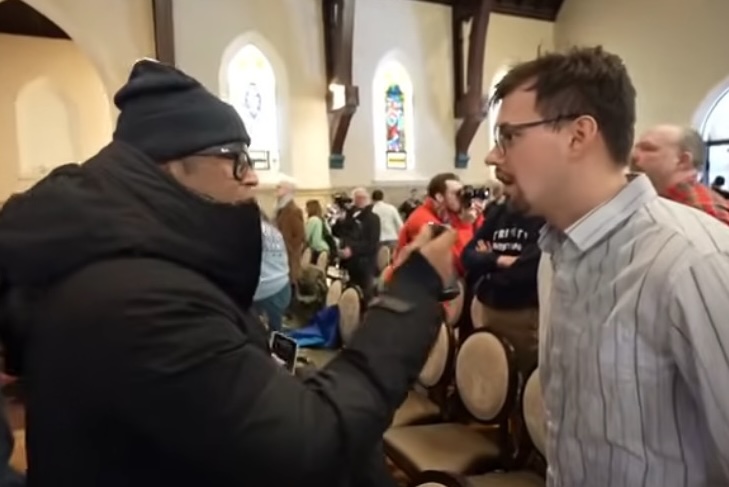
Thursday evening federal agents arrested Lemon in connection with a January protest at a Minneapolis-area church, where demonstrators disrupted a worship service to protest immigration enforcement. According to court filings, Lemon interviewed protest organizers, livestreamed events as they unfolded, and narrated the scene as congregants reacted with fear and confusion.
Prosecutors appear to be pursuing charges under the federal Freedom of Access to Clinic Entrances Act, a statute more commonly used to prosecute physical obstruction of reproductive health clinics but which also prohibits interference with religious worship. Lemon has said repeatedly that he was present solely to document and report on what he observed.
The closest legal comparison is January 6. Not because the conduct is analogous, but because the Trump Justice Department drew a line that was both clear and enforceable. Journalists lawfully covering events, even amid violence and disorder, were not prosecuted. Some were briefly detained during curfews or police sweeps and released once press status was established. Others who crossed police lines, entered restricted areas, or remained inside the Capitol were arrested and charged even when they claimed they were documenting history. The rule was consistent. Journalism was not immunity. Journalism was also not liability.
That distinction mattered because it preserved space for reporting while still enforcing the law. Once someone crossed from observation into interference, press credentials stopped helping. When someone stayed on the lawful side of the line, intent to report was not second-guessed. Courts accepted that framework. Prosecutors enforced it. The line held.
The Don Lemon case appears to depart from that model. The original criminal complaint and affidavit — which was presented to, and rejected by, a magistrate judge on Jan. 24 — did not allege unlawful entry, physical obstruction, or force by Lemon. It described interviews with organizers, livestreaming, embedding near demonstrators, and narrating events as parishioners reacted with fear. The affidavit even quoted Lemon saying explicitly that he was there to chronicle and report on what was happening. The legal theory seems to rely on the FACE Act, a statute most often used to prosecute physical blockades of reproductive health clinics, but which also prohibits interference with religious worship.
This is where the case stops being about Lemon and starts being about power. The administration has said it will not use the FACE Act to prosecute clinic obstruction while reviving it to police interference with religious services. That selective enforcement is not abstract. It is embedded in the charging choice itself. Same statute. Different targets. Different priorities.
More concerning is how Lemon’s own reporting language is treated. His descriptions of frightened parishioners, his narration of people crying and leaving the church, were cited in the original complaint as evidence that the protest placed congregants in fear. That move collapses description into causation. It treats the act of documenting fear as proof of creating it. Once that standard takes hold, journalists are no longer judged by what they did, but by what they witnessed and articulated.
There is a serious counterargument that deserves to be addressed. If evidence shows that Lemon coordinated with organizers in advance, encouraged entry into the church, or helped facilitate disruption beyond reporting, the analysis changes. Journalism does not include planning unlawful acts or assisting their execution. If prosecutors can demonstrate that kind of conduct, the First Amendment claim weakens considerably.
The problem is the prior affidavit (and to be clear, we have not yet seen any new charging documents that led to Lemon’s arrest late Thursday) did not make that case. It describes proximity, access, and narration. It relies on embedding as implication. It leans on language rather than conduct. That is a dangerous place to anchor criminal liability.
This is the model that hollowed out press freedom in Russia and Turkey — not bans, but expandable standards that made witnessing itself a risk. The lesson landed long before the courts finished deliberating.
Some on the right are celebrating Lemon’s arrest as overdue payback for a liberal media figure. What they are cheering is not neutrality or equal application of the law. It is discretionary power being used against an enemy. A freedom that depends on who is exercising it, or who is being targeted, is not a freedom that survives political cycles.
This case may collapse. The charges may never survive judicial scrutiny. The facts may ultimately show nothing more than a journalist doing his job in a volatile environment. The damage does not wait for verdicts. It arrives when reporters start asking whether standing close, embedding deeply, or narrating honestly is worth the risk.
Don Lemon is incidental. The precedent is not.
This is an opinion piece. The views expressed in this article are those of just the author.
New: The Mediaite One-Sheet "Newsletter of Newsletters"
Your daily summary and analysis of what the many, many media newsletters are saying and reporting. Subscribe now!




Comments
↓ Scroll down for comments ↓