The Foggiest of Wars: Iran Amid AI Fakes, Disinformation and Pentagon Spin

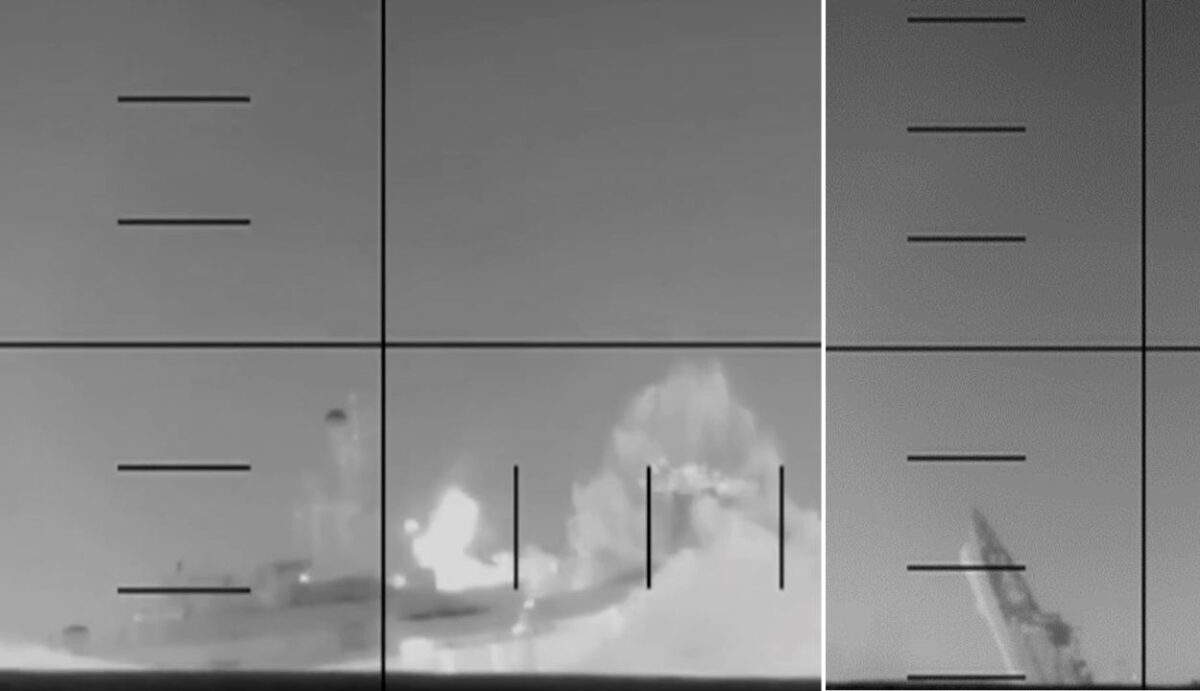
A week into the U.S.-Israel strikes on Iran, the Pentagon has released dramatic footage of ships sinking and targets destroyed, the Israeli military has issued detailed briefings on operational success, and the American public knows almost nothing about what is actually happening.
If that strikes you as a strange thing to say given how much coverage there has been, that strangeness is exactly the point.
The confusion most people feel about this war is not a failure of attention. It is the predictable result of an information environment that has never been more chaotic, more manipulated, or more structurally dependent on official sources — hitting a conflict that has never been less accessible to independent reporting.
The fog of war is an old problem. What is new is how many different machines are generating the fog at once.
Start with the basics. There are effectively no Western journalists operating freely inside Iran. The physical nature of the war — submarines launching torpedoes from beneath the ocean, carrier aircraft striking targets hundreds of miles away, drones operating in airspace no reporter can enter — means there is no battlefield in the traditional sense to reach, no aftermath to document, no witnesses to find the morning after a strike.
The information pipeline therefore runs almost entirely through the Pentagon and the Israeli military, both of which have strong institutional incentives to release footage and narratives that show the war going well. The images of precision strikes and sinking ships are real. So is the fact that they were selected, produced, and distributed by the people conducting the strikes.
The blurring isn’t always subtle. This week the White House released a video splicing actual Iran strike footage with scenes from the video game Call of Duty. The images of real military operations and simulated ones ran together seamlessly — which is either a crass marketing decision aimed at the gaming demographic, or a remarkably candid demonstration of exactly how the administration thinks about war imagery. Either way it landed as a preview of the problem: when the official source is mixing authentic footage with video game graphics and distributing it as a victory reel, the line between documentation and spectacle has already dissolved.
And that may be the point. The White House didn’t stumble into mixing game footage with real strikes — they understand that for a significant portion of the modern audience, the visual grammar of warfare and the visual grammar of gaming have been converging for decades. Pentagon weapons interfaces, drone operation consoles, and targeting systems have been designed to look like video games since the 1990s. The administration isn’t blurring a line so much as publicly acknowledging that the line was already gone — and governing accordingly. That is a far more unsettling observation than mere tastelessness as CNN covered the bizarre episode.
That would be a manageable problem in a different media environment. It is a compounding one in this one as social media distributes wartime imagery faster than anyone can verify it, with no meaningful friction between release and mass consumption. Algorithms do not reward verifiable content; they incentivize watch time and clicks. AI-generated video has reached the point where synthetic battlefield footage is visually indistinguishable from authentic footage to most viewers, and both travel through the same feeds. State-sponsored disinformation from multiple actors fills whatever vacuum independent reporting leaves behind. And the shared framework of trusted institutions that once gave audiences a way to sort the credible from the incredible has largely collapsed — in its place is a fractured landscape where every outlet is assumed to have an angle, making it trivially easy to dismiss any inconvenient reporting as bias rather than engage with it as evidence.
These forces do not simply add up. They multiply each other exponentially.
It is worth pausing on the Ukraine War that started just four years ago for a moment, because that conflict felt like an anachronistic counter-argument to all of this — the most documented war in modern history, with journalists operating across accessible territory, soldiers and civilians filming events in real time from their own phones, a flow of firsthand information that resembled the kind of immersive ground-level reporting the war in Vietnam once produced. But Ukraine was an exception, not a new model. It was a ground war with fixed front lines across territory reporters could physically reach, involving a combatant with strong incentives to share information widely with Western audiences. Almost none of those conditions exist in the current conflict. We mistook an anomaly for a baseline, and Iran is correcting that mistake in real time.
What makes this more than an interesting problem of media consumption and criticism is the scale of what is actually at stake.
Iran commands an extensive regional proxy network, a significant missile arsenal, and a nuclear program that has shaped international diplomacy for decades. The conflict has no declared end state, no clear exit condition, and a realistic escalation path that could draw American ground troops into a regional war. The public is being asked to process a fast-moving confrontation with enormous consequences while standing on informational ground that shifts beneath it — dependent on curated military footage, navigating a social media ecosystem saturated with synthetic and manipulated content, and doing all of it without a shared set of trusted institutions capable of producing a common account of events.
Iran may also be a preview of what future wars will look like for the public trying to understand them. Conflicts between technologically advanced states are increasingly fought at distances that keep journalists far from the action — submarines, long-range missiles, cyber operations, autonomous drones, air campaigns conducted hundreds of miles from their targets. At the same time the information ecosystem those wars unfold inside grows more saturated with synthetic media, state-sponsored disinformation, and fragmented audiences that no longer share a common set of trusted referees. The result is a paradox: wars are becoming more technologically visible than ever to the militaries fighting them, while becoming less observable than ever to the societies asked to understand them.
The media conversation this week mostly went somewhere else. The fight over Pete Hegseth’s attacks on casualty coverage was a real argument about a real principle, and the press was right to push back on it. But it also consumed the week’s available oxygen for a debate about press freedom in the abstract while the harder structural question about what the press is actually able to report went largely unexamined. Defending the right to cover the war is not the same thing as reckoning with whether the available information allows journalists to describe it accurately. Those are different problems, and right now only one of them is getting any attention.
The public’s disorientation about Iran is not confusion. It is a rational response to genuinely degraded conditions. We are flying blind into a conflict that could reshape the region, relying on instruments that no longer produce a shared map of reality, and the people whose job it is to notice that are busy arguing about something else.
This is an opinion piece. The views expressed in this article are those of just the author.
New: The Mediaite One-Sheet "Newsletter of Newsletters"
Your daily summary and analysis of what the many, many media newsletters are saying and reporting. Subscribe now!








Comments
↓ Scroll down for comments ↓