
The Trump White House’s Fight With CNN Over Fallen Soldiers Is No Accident — It’s a Tell

Screenshot
The most intense media argument of the week was not about the war with Iran. It was about whether journalists are allowed to report on it.
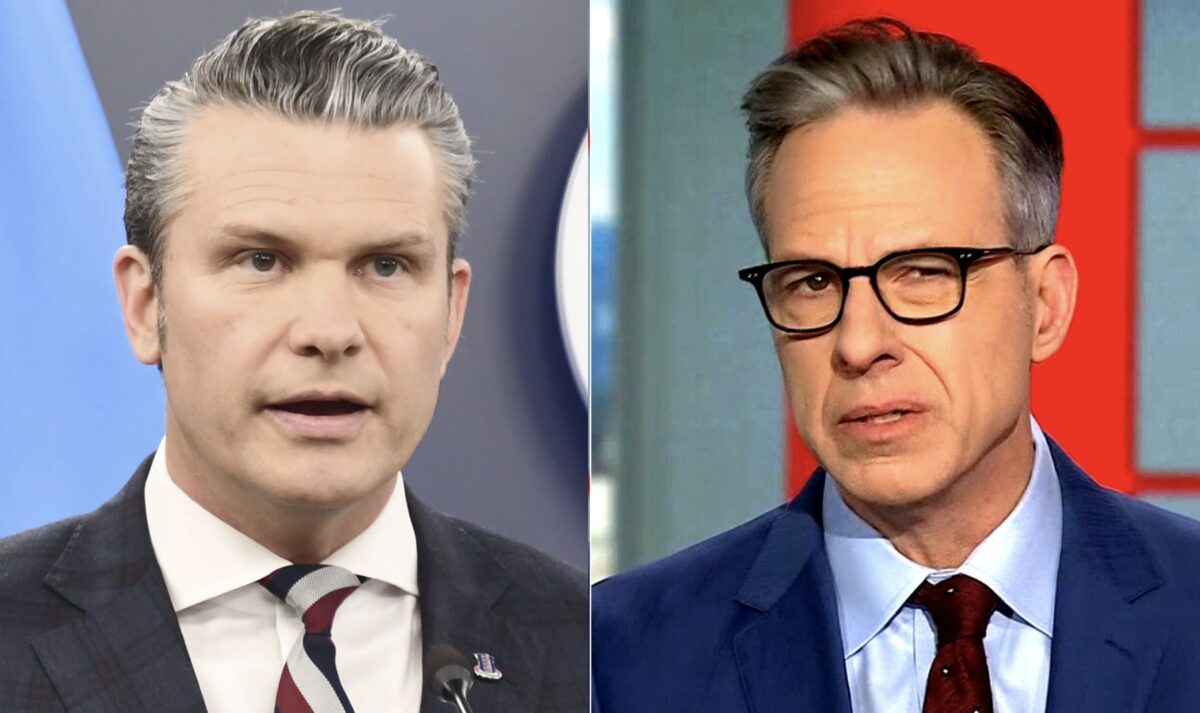
The clash began at the Pentagon, where Defense Secretary Pete Hegseth accused the press of emphasizing American casualties in order to make President Donald Trump look bad. This spawned sharp pushback from CNN anchor Jake Tapper, who effectively called out the absurdity of Hegseth’s claim.
Hours later, CNN’s Kaitlan Collins asked White House press secretary Karoline Leavitt whether the administration believed the deaths of U.S. service members should receive less prominence in coverage of the conflict. Leavitt rejected the premise in a rather spirited manner, and pivoted to a broader charge that CNN treats every development as an opportunity to damage the president. By evening, the dispute had moved onto television, where both CNN anchors pushed back sharply, and Pentagon reporters defended the longstanding practice of reporting on fallen troops.
Of course, they were right to do so. When Americans die in combat, the country learns their names. That principle has held through wars in Iraq and Afghanistan and through administrations of both parties. Casualty reporting connects the public to the human cost of decisions made in Washington and carried out on distant battlefields. It’s not only a time-honored tradition, but the right way to honor those who lost their lives.
But the fight over this story was in and of itself revealing. Whether it was a deliberate distraction or just a reflexive “blame the liberal media” swing, challenging the legitimacy of casualty coverage forced journalists into a defensive posture around the most unimpeachable thing they do — naming the dead. The press responded exactly as expected. Most anchors, reporters, and commentators that covered the story defended the practice and rejected the claim that honoring fallen service members is political. Fox News notably sat this one out.
Lost in that argument was a harder question about the war itself, and how the media covers it from afar.
For all the heat surrounding the White House clash with CNN, the conflict itself remains unusually opaque. Much of the information reaching American audiences flows through official channels — Pentagon statements, Israeli military briefings, and dramatic footage of missiles striking targets or ships sinking beneath the waterline. The images are compelling and the events depicted are real. The vantage point behind them belongs largely to the institutions conducting the war.
Reporters who cover the Pentagon describe an information environment thinner than in past conflicts. Requests for operational detail that once produced lengthy briefings in Iraq or Afghanistan now route back to the White House or go unanswered entirely. Journalists piece together a broader picture through background conversations and fragments that surface outside official channels, a slower and narrower process that shapes what ultimately reaches the public.
The result is war coverage that arrives in flashes rather than sustained reporting. A precision strike captured on video. A vessel destroyed at sea. A missile intercepted over a base. Each image shows something that happened. The surrounding context — the strategic rationale, the setbacks, the unintended consequences — remains difficult to verify from the outside.
There is a simpler question here. The administration has spent the week promoting the Iran strikes as a historic success — targets destroyed, objectives achieved, American strength restored. If that story is as strong as the White House claims, why spend political capital attacking CNN over casualty coverage? Winning wars don’t usually require suppressing the press.
The clash between the White House and CNN followed a script both sides know well. The administration framed the press as hostile. Journalists defended a core norm of their profession. The debate produced several days of argument about bias and press freedom — loud, familiar, and largely beside the point. Meanwhile the war continued largely outside that frame, its fuller picture obscured by the constrained information environment the fight left largely unexamined.
Journalists were right to reject the suggestion that covering fallen soldiers is partisan. Naming the dead is one of the oldest responsibilities of war reporting, owed to the families of the fallen and to a public that deserves to understand the human cost of military action carried out in its name.
But defending that principle and questioning the limits of current coverage belong to the same obligation. Americans are watching the war unfold every night on their screens. The harder task is understanding how much of it they are actually seeing.
This is an opinion piece. The views expressed in this article are those of just the author.
New: The Mediaite One-Sheet "Newsletter of Newsletters"
Your daily summary and analysis of what the many, many media newsletters are saying and reporting. Subscribe now!





Comments
↓ Scroll down for comments ↓