Trump’s Strait of Hormuz Blame Game Is Shameless. It’s Also Delusional.

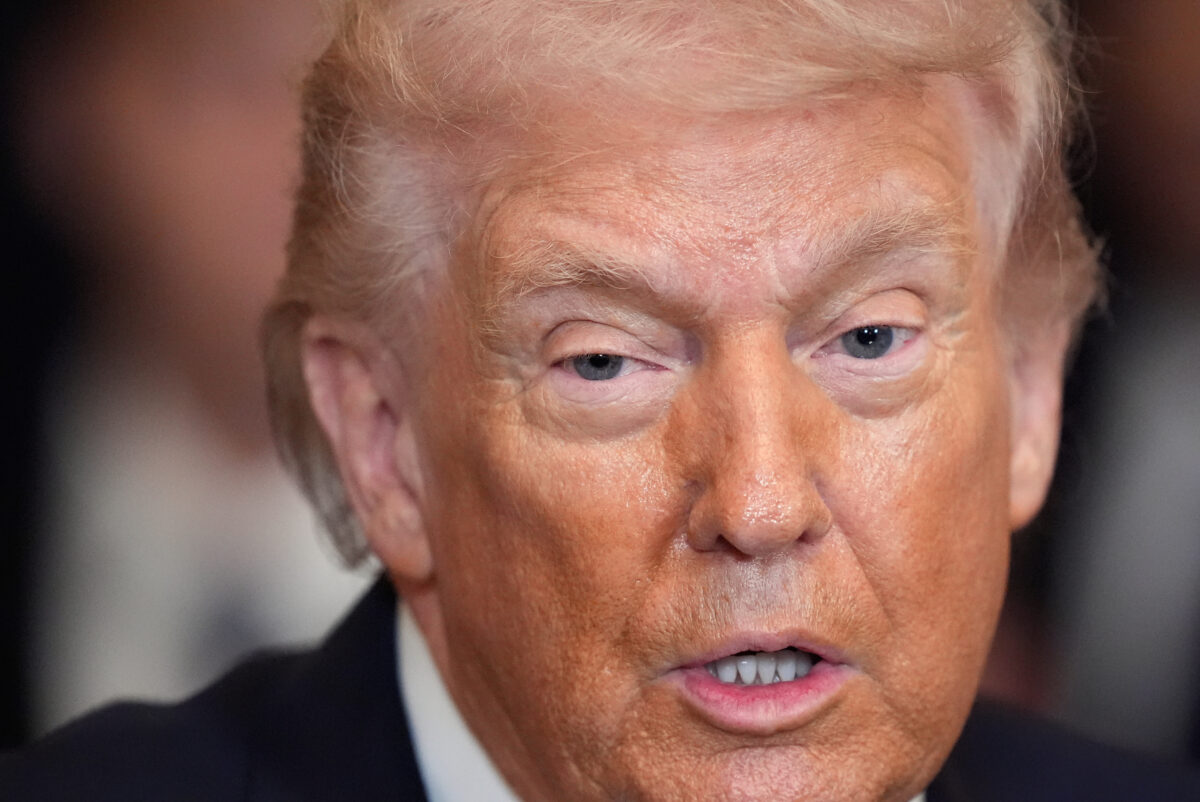
AP Photo/Alex Brandon
“Just TAKE IT.”
That’s how President Donald Trump responded to American allies struggling to secure jet fuel through a Strait of Hormuz that the United States and Israel helped shut down, while gas prices at home have climbed to over a dollar a gallon in a single month, and economists are warning that a prolonged closure could tip an already precarious global economy into recession.
The president who ordered the strikes that escalated a conflict now threatening one of the world’s most critical energy chokepoints — through which roughly a fifth of the world’s oil supply passes — is telling the countries absorbing the damage to figure it out themselves. Gas is approaching four dollars a gallon and climbing. Inflation, which the administration spent two years promising to vanquish, is about to get a second wind from an oil shock entirely of its own making. Global shipping is in chaos. And Trump’s contribution to the moment is a Truth Social post telling the United Kingdom to learn to fight.
This isn’t isolationism. It isn’t even transactionalism. It is something more specific and more bizarre: a government actively creating a crisis, watching the damage spread, and then publicly disclaiming responsibility for it — in real time, in writing, with apparent satisfaction.
Defense Secretary Pete Hegseth offered the same argument in more measured terms, describing the Strait of Hormuz as “not just a United States of America problem set.” That’s true in the narrowest possible sense. But it misses the more relevant point: not every country helped create the conditions that led to its disruption. In fact, no country bears more responsibility for what’s happening in that strait right now than the United States and Israel.
There has always been an implicit contract in American leadership of the global commons. The United States secures critical chokepoints and absorbs disproportionate responsibility. Allies align with U.S. policy and accept a system that, for all its imperfections, provides stability. That arrangement works because it’s credible — and because the party with the most leverage also accepts the most accountability.
What’s emerging now breaks that logic at both ends. The administration is simultaneously acting as instigator and bystander. Willing to shape events. Unwilling to own what follows.
And it isn’t breaking in a vacuum. More than a year of draconian tariffs, public insults, and loudly conditional commitments have already spent down the reservoir of allied goodwill. The United Kingdom — the country Trump called out by name Tuesday, the one that has fought alongside the United States in every significant military engagement of the past quarter century — knows exactly what that reservoir now holds.
When you tell partners to “take it,” after years of signaling that partnership is optional, you’re not exercising leverage. You’re just being contemptuous.
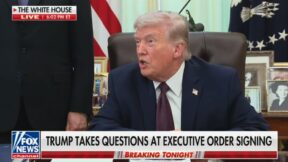
Even some of Trump’s most loyal media allies are feeling the contradiction without quite naming it.
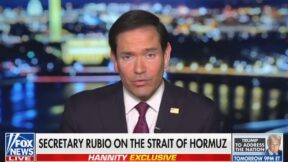
On Monday night, Laura Ingraham noted on her Fox News broadcast that barely 2% of U.S. oil imports pass through the Strait of Hormuz — while more than 80% of the EU’s liquefied natural gas does. She meant it as an indictment of feckless allies. But the numbers reveal something far more damning: the United States launched a war whose worst energy consequences land almost entirely on other countries, and is now telling those countries to sort it out.
Alliances don’t just turn on when they’re needed. They’re maintained, or they atrophy. I’ve been watching this dynamic long enough to know that the degradation is usually invisible until the moment it isn’t — and that moment tends to arrive at the worst possible time.
Which brings us to the logic problem the administration hasn’t resolved. If Iran has been “decimated” — Trump’s word — why is the world scrambling to secure energy flows through the strait? And if the United States still needs allies to step in and stabilize the situation, what exactly was accomplished?
The United States is responsible for this — with Israel, by choice, with full knowledge of what a Strait of Hormuz disruption would do to global energy markets. I taught my sons that you own what you break — that blaming someone else for the mess you made is the least acceptable move. Trump went on Truth Social and made exactly that move. In writing. On purpose. And apparently with a straight face.
This is an opinion piece. The views expressed in this article are those of just the author.
New: The Mediaite One-Sheet "Newsletter of Newsletters"
Your daily summary and analysis of what the many, many media newsletters are saying and reporting. Subscribe now!





Comments
↓ Scroll down for comments ↓