
Two Worlds Collide: Trump’s Tantrum and Kaitlan Collins’s Grace Sum Up the Current Moment

Screenshot
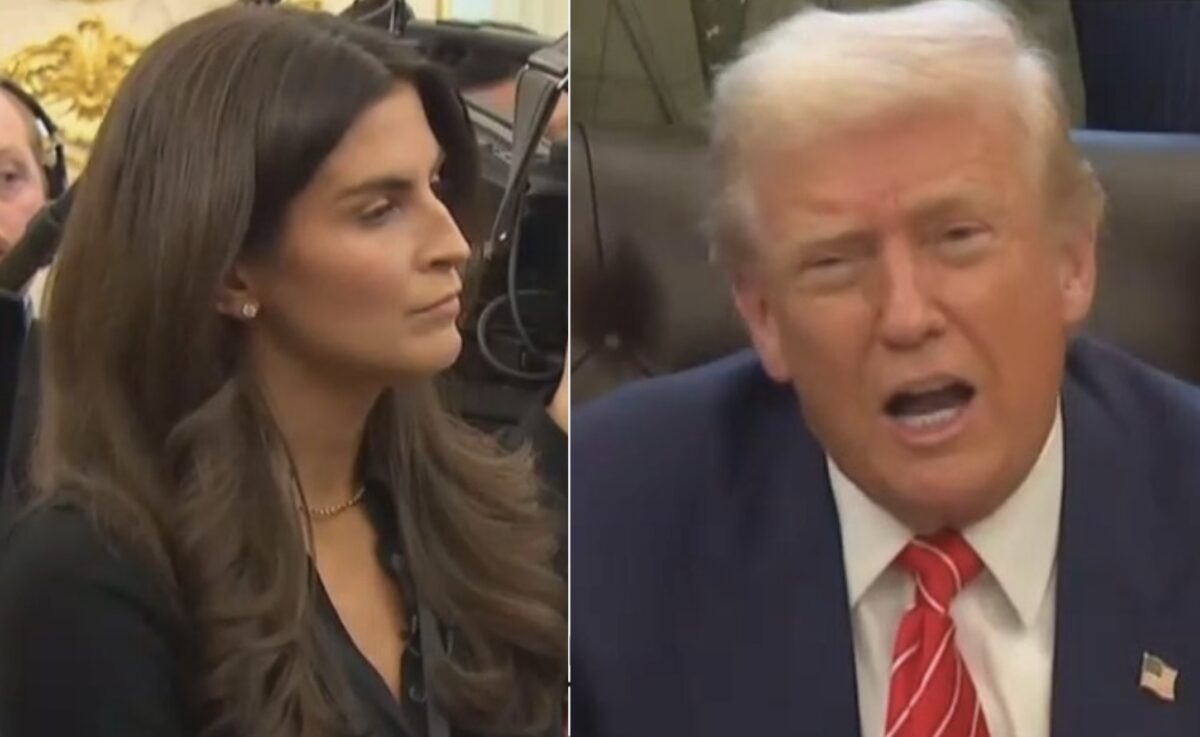
President Donald Trump has handled hostile questions for decades without losing his footing. He deflects, jokes, reframes, and moves on. Tuesday’s Oval Office exchange with CNN’s Kaitlan Collins was different. It cracked almost instantly.
The exchange took place during a press availability after Trump signed legislation ending the partial government shutdown. Collins asked about redactions in newly released Epstein files that survivors say obscure key testimony. It was a narrow, procedural question about transparency, directed at the administration overseeing the Justice Department. It did not allege wrongdoing. It did not accuse Trump of anything.
Trump brushed it aside, claimed the documents proved nothing about him, and urged the country to “get on to something else,” citing healthcare and other priorities. When Collins followed up and returned to the survivors, Trump cut her off and turned personal, mocking her demeanor, questioning her honesty, and attacking CNN.
For her part, Collins remained remarkably composed and professional, refusing to take the bait of Trump’s insults and instead stayed focused on her line of questioning.
That escalation came too fast to be explained by temperament alone. Trump has endured tough questioning without melting down before. This was not about bias, a narrative Trump clearly prefers. It was about unwanted scrutiny on an issue on which he has great political exposure if not liability. A calm and predictable follow-up on Epstein’s survivors pierced a reflex Trump has relied on for years: declare exhaustion, redirect attention, and close the subject.
Epstein makes that reflex brittle. The story is built on documents, redactions, institutional mistrust, and unresolved harm. Each release promises clarity and produces frustration. The system’s habitual response has been to move on. Collins’ question disrupted that pattern by centering survivors and transparency rather than allegation. Trump reacted by collapsing the exchange.
This is volatility as narrative erasure. By detonating the interaction with personal insults and unprofessional behavior, Trump ensured the question itself disappeared. He never answered it. The press availability moved forward. Coverage focused on the outburst. The substance fell out of frame.
Kaitlan Collins’ response exposed the tactic. She did not escalate. She did not spar. She did not perform outrage. She stayed on the question. Her restraint denied Trump the spectacle he usually converts into grievance and dominance, and it left a clear record of what he refused to address. Trump was so determined to get the spectacle that he continued prattling on about her as the reporters were leaving — while he knew the mics were still hot
That contrast tells you nearly everything you need to know about the current state of American political media. One side practiced journalism. The other relied on disruption. The system rewarded the disruption because it gets the clicks. Meanwhile the deeper narrative gets buried by screaming conflict.
Pro-Trump voices celebrated the exchange precisely because it worked. Conservative influencers praised Trump for “owning” Collins and mocked her professionalism as weakness. The point was not to answer the question. It was to punish the act of asking it and to signal to other reporters what persistence will cost them.
Trump has grown accustomed to a media ecosystem that treats access as reward and deference as the price of admission. Inside that ecosystem, compliance reads as respect and scrutiny reads as betrayal. When a reporter refuses that contract, the response is not engagement. It is annihilation of the moment.
The unresolved issue is not Trump’s behavior. It is whether journalism adapts. Will anyone return to the redactions tomorrow or next week, or does one explosion successfully bury the subject again?
Trump cracked because the question touched Epstein. The question disappeared because volatility still works.
Collins didn’t lose control. That’s why he did.
This is an opinion piece. The views expressed in this article are those of just the author.
New: The Mediaite One-Sheet "Newsletter of Newsletters"
Your daily summary and analysis of what the many, many media newsletters are saying and reporting. Subscribe now!









Comments
↓ Scroll down for comments ↓