While Bombs Fall on Iran, Trump Is Answering His Own Phone

(Photo by Kyle Mazza/NurPhoto via AP)
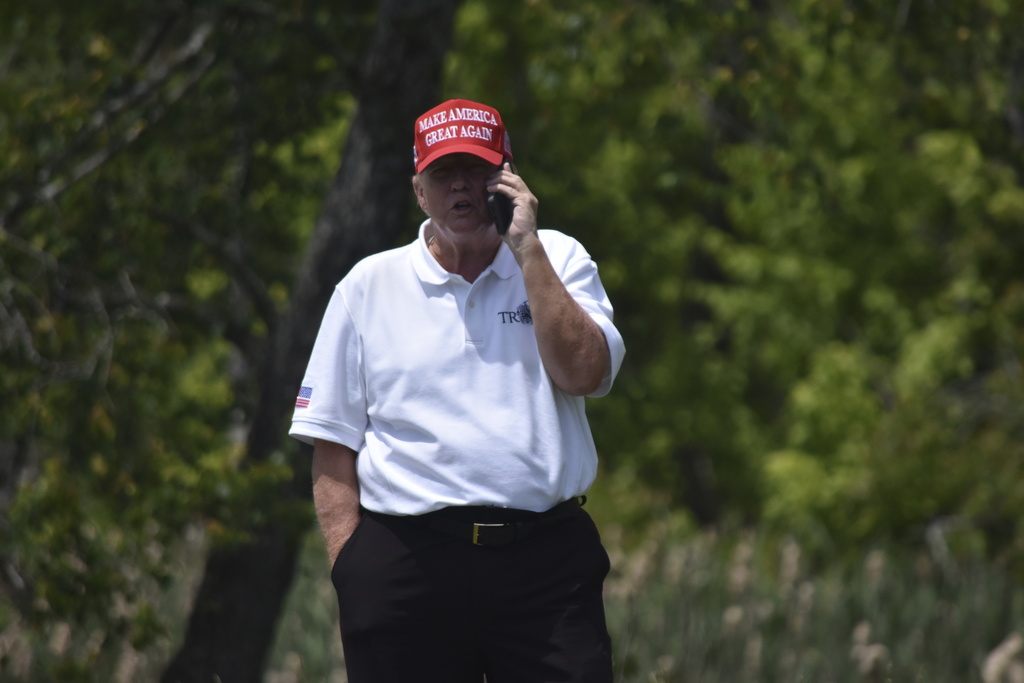
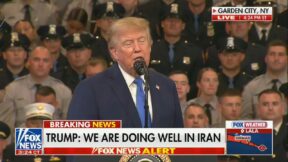
At some point Monday morning, while American forces were operating in the Middle East and the world’s attention was fixed on what comes next in Iran, the phone rang, and the president of the United States picked it up.
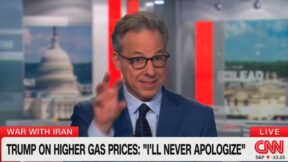
On the other end was Jake Tapper.
There is something cinematic about that image. A kinetic military operation is underway, with real intelligence moving in real time. Allies are watching. Adversaries are listening. And the leader of the free world is fielding an incoming call from a cable news anchor as if it were an old friend checking in. Don’t ask me why but I like to imagine Trump channelling the Budweiser commercials of yesteryear answering the phone “whasssssup!”
Now, mind you, this was not a formally scheduled Oval Office interview. It was not routed through a press aide or patched through by a communications director. Tapper dialed. Trump answered. The result was a headline: “The big one is coming.” That’s bombshell news, both figuratively and perhaps literally.
That same day, Jonathan Karl reported that President Donald Trump revealed to him that potential Iranian successors had been killed in the strikes. Bret Baier went on air and told viewers he had just spoken with the president, who updated the number of Iranian leaders taken out — from 48 to 49 — and walked through the strategic outlook.
These were not social calls. Each one produced news. Each one altered the public understanding of what the administration believes it has accomplished and what may come next. Each one was a demonstration of what happens when prepared journalists get unfiltered access to a president who has never needed a script.
Now linger on the mechanics for a second. It’s no secret that Trump’s private phone number has made the rounds. A growing number of reporters and media personalities openly boast of having his direct line, which means one thing with some certainty: that phone is ringing constantly. It’s safe to imagine not a single game of Royal Kingdom played in the private residence makes it to the second level without an interruption.
And yet, from that endless incoming tide of calls, texts and probably a few misdials from people who got the number third-hand, Trump picks up for Jake Tapper, Jonathan Karl and Bret Baier. That choice is neither random nor accidental.
This is also worth noting in the context of a media moment when self-styled new media voices are loudly advertising their proximity to power — your Tim Pools, your Brian Glenns, the whole ecosystem of MAGA-adjacent influencers who have made White House access part of their brand. Trump went old school. Tapper, Karl and Baier are the heaviest hitters in American political media, and they came prepared. They asked specific questions. They made significant news. The contrast with what influencer access typically produces is implicit in the results themselves.
Trump has never shown much interest in the traditional communications architecture. He views the information battlefield as inseparable from the military one. Shaping coverage in real time is not ancillary to governing — it is governing. If he can inject his framing directly into the coverage of Karl, Tapper, and Baier, he is not freelancing. He is prosecuting another front. Whether that calculus also accounts for what those nine-minute calls displace — the briefings, the ally consultations, the quiet strategic thinking that wartime demands — is a question worth sitting with.
There is something bracing about the accessibility itself. He is not hiding behind talking points delivered by staff. In a media environment that often feels overly managed, that directness carries real appeal.
But the very quality that makes these calls compelling is what makes them worth scrutinizing. They are unscripted. They bypass the guardrails that exist to ensure precision when precision matters most. A casual update of a target count, a phrase about what is “coming” — these travel fast and land in places far beyond the chyron, where allies parse tone, markets price in uncertainty, and adversaries listen for anything that sounds like intent.
Two things can be true here. It is remarkable that the president is willing to take direct calls from top anchors in the middle of a war and make news in the process. It is also a little surreal that the most powerful office in the world operates, at least in part, like a very well-connected Rolodex. Whether that is a feature of this presidency or something stranger and more contingent is a question we may not be able to answer until well after the calls have stopped.
This is an opinion piece. The views expressed in this article are those of just the author.
New: The Mediaite One-Sheet "Newsletter of Newsletters"
Your daily summary and analysis of what the many, many media newsletters are saying and reporting. Subscribe now!





Comments
↓ Scroll down for comments ↓