
House GOP Hides Jan 6 Memorial Plaque Per Report — Defying Law Mandating Display

AP Photo/J. Scott Applewhite
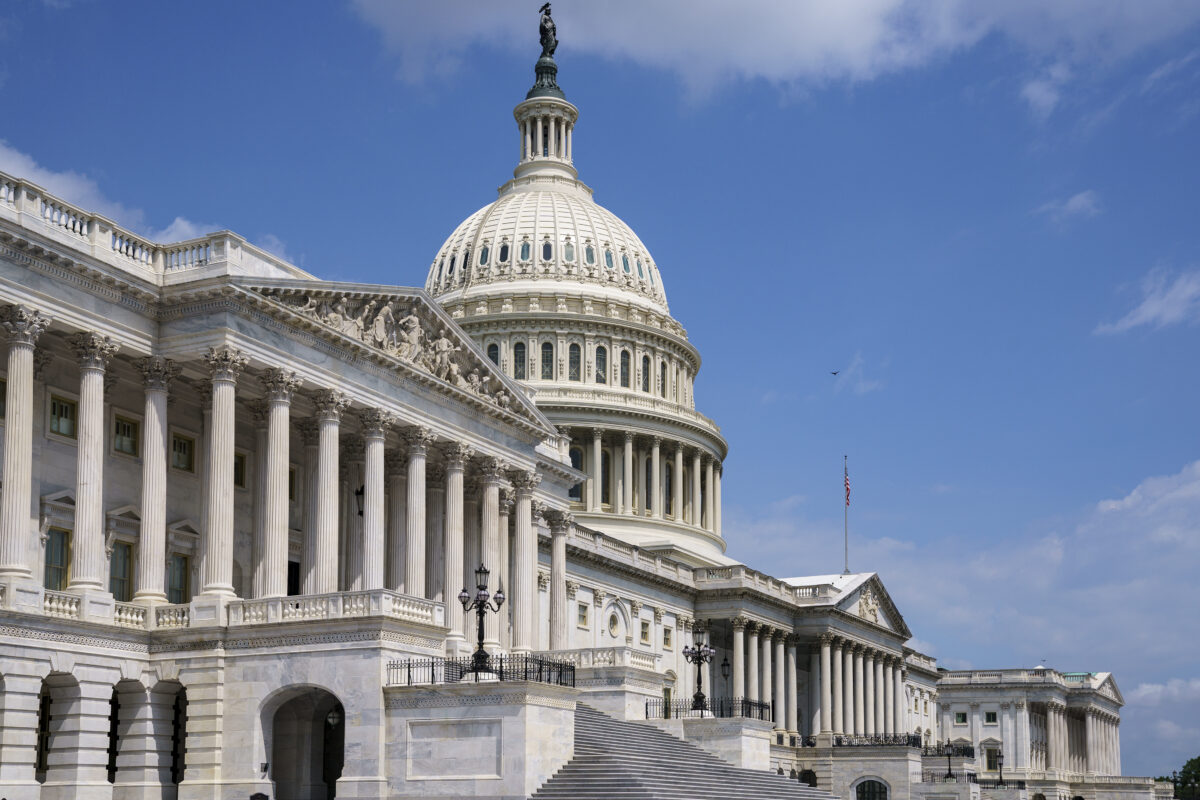
A bronze memorial honoring the police officers who defended the U.S. Capitol on Jan. 6, 2021 has been completed for years, but remains hidden in a basement workshop despite a 2022 federal law requiring its permanent public display. According to a report by The Washington Post, the plaque’s continued burial ultimately hinges on one person: House Speaker Mike Johnson (R-LA).
In a detailed account marking the fifth anniversary of the Capitol attack, Post congressional reporter Paul Kane reported that the large bronze plaque — bearing an image of the Capitol and the names of more than 20 law enforcement agencies — has never been installed, even though Congress ordered it to be placed on the Capitol’s West Front within one year.
The memorial does exist. Rep. Joe Morelle (D-NY) found it last May in a basement workshop beneath a House office building, tucked among lockers, shelves, and equipment. “It’s a beautiful tribute to the men and women who protected the Capitol during the onslaught,” Morelle said at the time. Months later, the plaque remains exactly where he found it.
The law mandating the memorial passed on a bipartisan basis in 2022 and gave the Architect of the Capitol a clear deadline. That deadline came and went. The Architect has since testified that final instructions to install the plaque would need to come from the Speaker’s office — meaning Johnson has effective veto power over whether the memorial is ever displayed.
Johnson, a staunch ally of President Donald Trump, supported efforts to overturn the 2020 election and has minimized the significance of Jan. 6. His office now claims the statute is “not implementable,” despite Congress explicitly ordering the plaque’s creation and placement.
The Justice Department has echoed that position, arguing the law is vague and that the plaque is incomplete because it does not list the names of all 3,600 officers who defended the Capitol — a standard that would require a memorial wall rather than a plaque, effectively making compliance impossible.
The contrast could not be sharper. On his first day back in office last January, Trump pardoned more than 1,500 people charged in connection with the Jan. 6 attack in a single stroke of the pen. This week, House Republicans will mark the fifth anniversary by not marking it at all, gathering instead with Trump at the Kennedy Center, miles — and a symbolic universe — away from the building they now claim was never truly under threat.
Democrats, shut out of the installation process, have resorted to symbolism of their own. More than 100 have hung reproductions of the plaque outside their offices, including one positioned where Johnson and reporters regularly pass near Minority Leader Hakeem Jeffries’s (D-NY) office, ensuring some version of the memorial is seen even if the real one is not.
Two officers injured during the attack, former Capitol Police officer Harry Dunn and D.C. police officer Daniel Hodges, have filed a lawsuit seeking to force the plaque’s installation. Dunn dismissed the legal justifications for delay. “It’s the law,” he told the Post. “If they don’t want to honor us, then change the law.”
For now, the plaque remains in the basement, a quiet lesson in how institutional memory is erased — not by changing history, but by hiding it where no one is meant to look.
New: The Mediaite One-Sheet "Newsletter of Newsletters"
Your daily summary and analysis of what the many, many media newsletters are saying and reporting. Subscribe now!







Comments
↓ Scroll down for comments ↓