‘Laughing Stock’: Read the Scathing Private Email Romney Wrote About Trump’s Performance as President

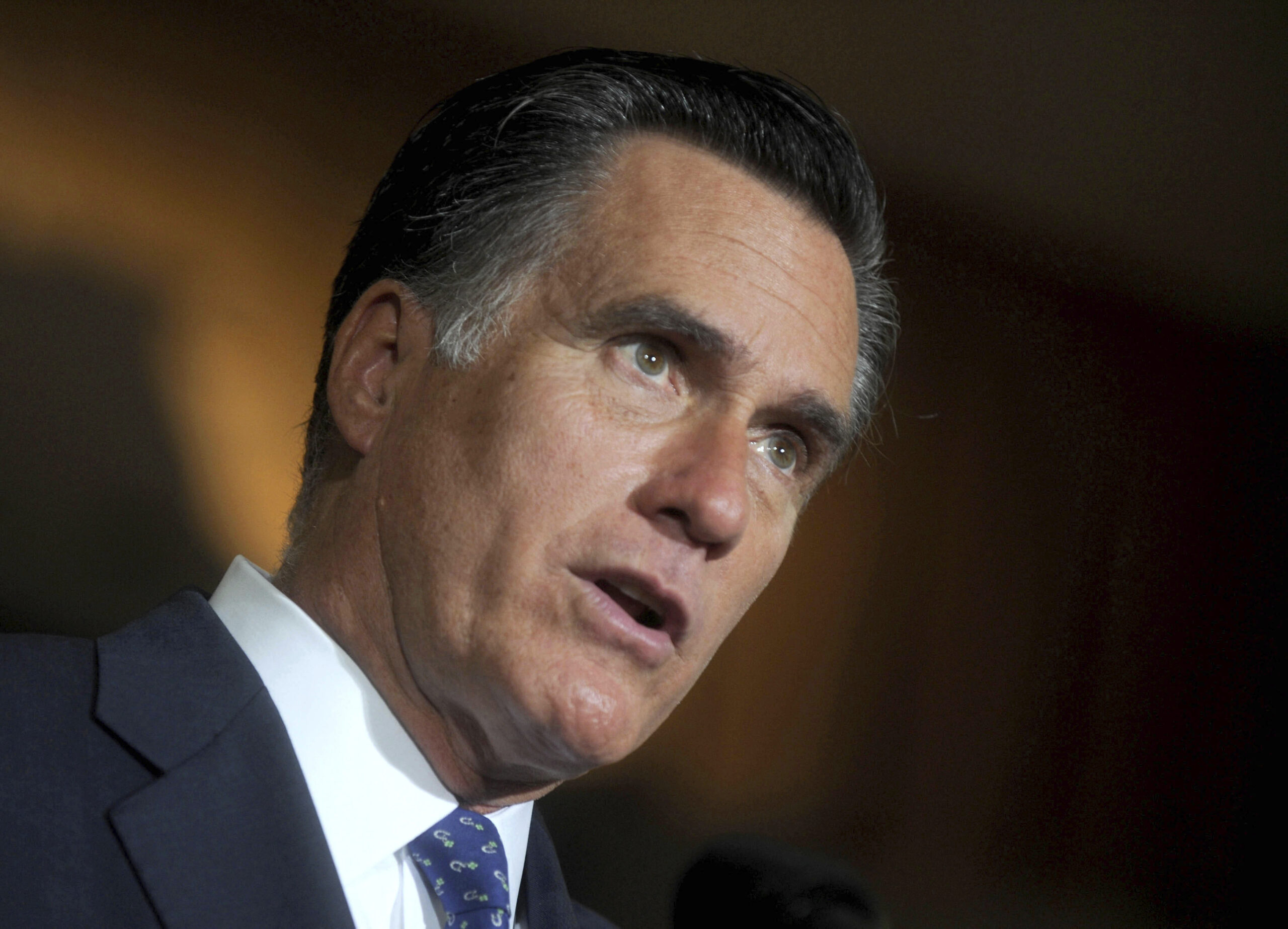
Dennis Van Tine/STAR MAX
Mitt Romney went from the standard-bearer of the Republican Party when he won its nomination for president in 2012 to a pariah when he was elected to the Senate as one of the few Republicans in Washington who publicly opposed then-president Donald Trump. A fascinating new biography of the Utah senator by McKay Coppins, Romney: A Reckoning, tracks that shift.
The book, which is based on extensive conversations between Romney and Coppins as well as a trove of Romney’s private journal writings and communications, offers a stunning view of Romney’s private thoughts as he grappled with the rise of Trump and his complete takeover of the Republican Party.
By the time Romney arrived in Washington D.C. as a newly-elected senator in 2018, he found himself appalled by Trump’s conduct as president. The start of his presidency was chaotic, and after the midterm elections Romney saw it as getting worse: Trump erratically fired his attorney general, Jeff Sessions, for appointing a special counsel to handle the Russia probe; Trump defied the pleas to Pentagon officials to pardon army officers who had been convicted of horrific war crimes; Trump routinely trashed U.S. allies and promoted authoritarians.
Still, Romney was reluctant to publicly speak out against the president. “He saw no reason to exacerbate tensions with the White House before he was even sworn in, nor was he eager to start alienating his soon-to-be colleagues in the Republican caucus,” Coppins writes.
He remained quiet, confining his frustrations with Trump to emails with advisers and his own journal. “I’m finding it hard to stay silent as T becomes increasingly unhinged,” he wrote in one email to advisers.
Then: Trump abruptly announced the withdrawal of U.S. troops from Syria; Defense Secretary James Mattis, one of the “adults in the room”, resigned the next day; Trump shut down the government over a demand for border wall funding, “sending thousands of workers home without paychecks just before the [Christmas] holiday.”
Christmas eve, a little after 11 p.m., Romney sent a furious email to his advisers with the subject line: “I’m no prophet.”
The email read:
He was the last person I wanted as the Republican nominee. I made that clear. After he won the nomination, I watched his campaign to see if he might surprise me. He did not. When he won, I hoped he would rise to the occasion. His call for me to potentially serve at State fueled that hope—after all, I had been a very vocal detractor.
Unfortunately, President Trump did not grow to match the office. His smallness has instead diminished it. The American President has long served as a model for the nation; few would imagine holding Donald Trump up for their children to emulate. Around the world, he, and to some degree the nation that elected him, have become a laughing stock. His poverty of character has been exposed so often and in so many ways that many here have become inured to it. Not so for those who watch him from abroad.
I was asked repeatedly to apologize for what I said about Donald Trump, to say that having spent more time with him, I had learned that I was wrong. I demurred. But in truth, I did not imagine that he would be so tragic as president. The incessant lying, the adulterer payoffs, the unwillingness to study and deliberate, the weakening of alliances, the elevation of autocrats, the impetuous decision, the demonizing of others, the divisiveness, the inability to hire and retain people of accomplishment — these are as stunning to me as they are to others. I did not think he would be this bad.
Coppins describes the email as a cathartic endeavor for Romney, the experience akin to “exorcising a demon.” But Romney did not stop there. He decided to write an op-ed decrying Trump’s failures as commander-in-chief. “The president shapes the public character of the nation. Trump’s character falls short,” was published in the Washington Post on Jan. 1, 2019, days before Romney was sworn in as a senator.
The piece, Coppins writes, “was not as scathing as his Christmas Eve missive. His new staff had steered him toward a more stately, senatorial tone.”
Still, it prompted a wave of vitriol from Trump and his supporters. That acrimony — as well as Romney’s unpopular standing among his Republican colleagues in the senate — did not abate as he remained a vocal critic of Trump throughout his presidency, which boasted two impeachments (Romney voted to convict both times) and an attempt to overturn the 2020 election that ended in a violent riot at the Capitol.
New: The Mediaite One-Sheet "Newsletter of Newsletters"
Your daily summary and analysis of what the many, many media newsletters are saying and reporting. Subscribe now!







Comments
↓ Scroll down for comments ↓