Twitter Announces New Fact Checking Policy Ahead of Midterms Including ‘Prebunks’ to Preemptively Tackle Misinformation

OLIVIER DOULIERY/AFP via Getty Images
With the 2022 midterm elections approaching, Twitter has released a plan they say will help combat misinformation and strengthen election integrity.
Posted on Thursday to Twitter’s blog, the company said, “We aim to enable healthy civic conversation on Twitter, while ensuring people have the context they need to make informed decisions about content they encounter.”
The company said that as of today, it will begin heavy enforcement of their Civic Integrity Policy. This policy aims to combat misleading claims and false information about voting access and election results.
Claims about how to participate in a civic process like how to vote, misleading content intended to intimidate or dissuade people from participating in the election, and misleading claims intended to undermine public confidence in an election – including false information about the outcome of the election.
Tweets that fall into this category may be flagged with tabs, notifying users that the post may contain false information. As a result, some posts will not be able to be liked or shared on the platform.
The website will be bringing back “Prebunks,” first launched in the 2020 election, to help preemptively debunk misinformation.
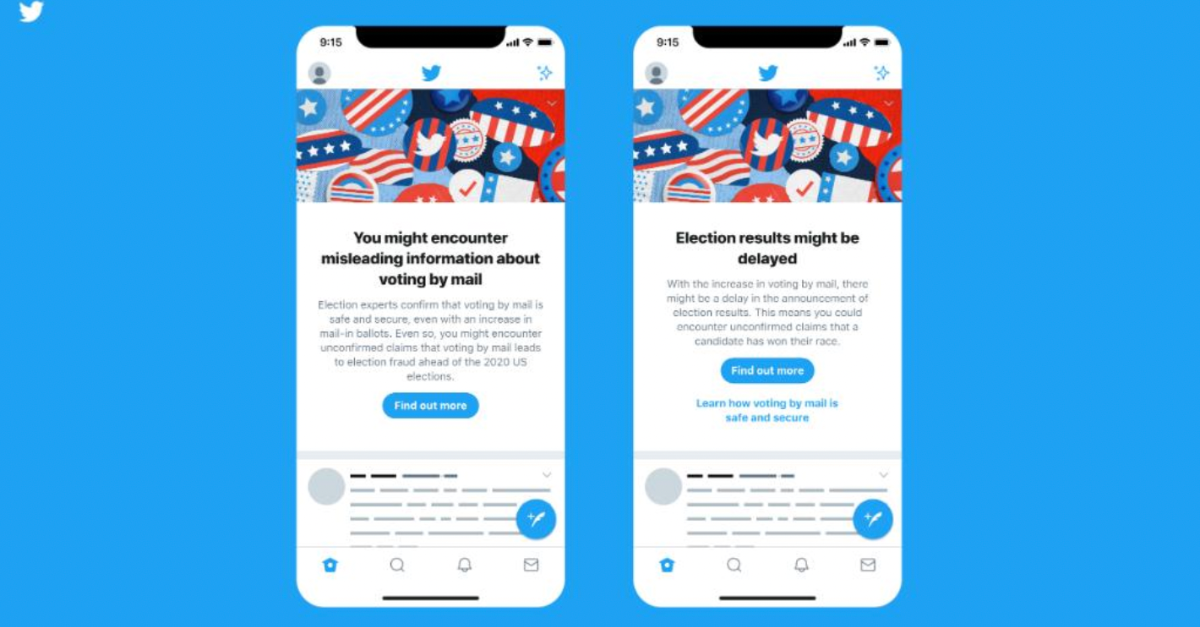
Courtesy – Twitter
Users will be subjected to banners of information in both their timeline and search bar, when looking at certain topics, providing facts and details about hot topics. Twitter refers to these measures as integral tools “to get ahead of misleading narratives.”
The website will continue to label candidates on their profile page to help counteract fake accounts. Additionally, they aim to improve the algorithm for recommended tweets that appear in your notifications. Earlier this year, Twitter conducted tests regarding misleading Tweets and published their finding in the blog post.
Earlier this year, in the US and Brazil, we tested ways to prevent misleading Tweets from being recommended through notifications. Early results show that impressions on misleading information dropped by 1.6 million per month, as a direct result of the experiment.
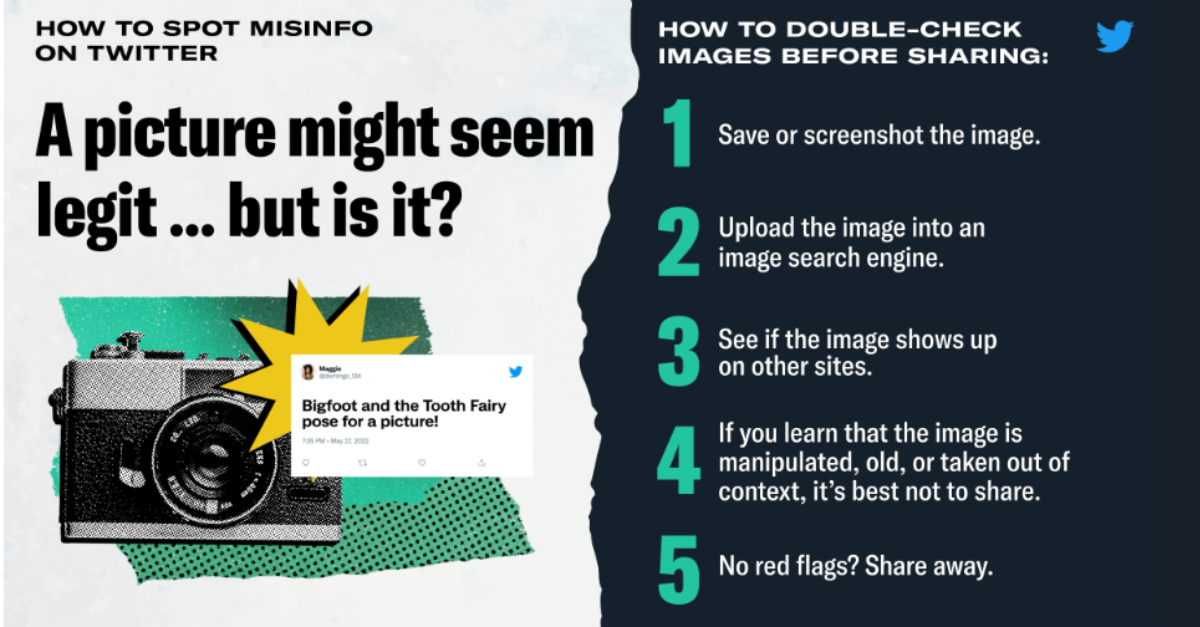
The post concluded by warning users against deceptive pictures. Attached was an infographic with a five step process users can follow to verify pictures they discover on the site.