‘I Was So F*cking Freaked Out’: Ex-NYT Staffer Describes ‘Crying’ and ‘Bloodthirsty’ Colleagues Seeking Vengeance for Cotton Op-Ed

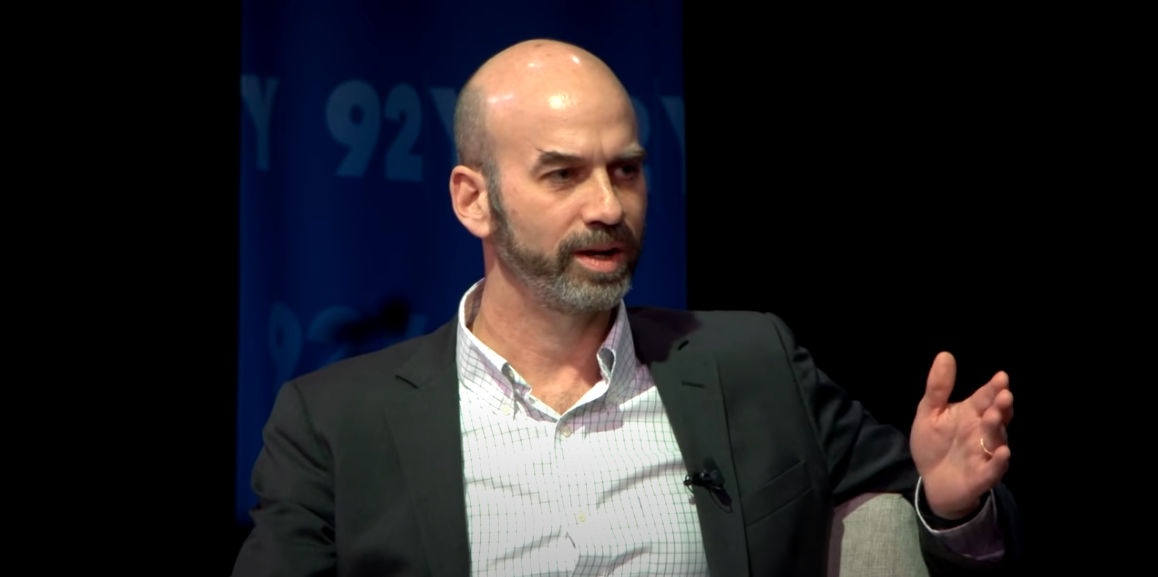
Ex-New York Times editorial page editor James Bennet
Embarrassing details about the extent of the 2020 staff revolt at the New York Times have been revealed in a new book featuring an interview with former Times staffer Shawn McCreesh.
Mediaite obtained excerpts of Steve Krakauer’s new book, Uncovered: How the Media Got Cozy with Power, Abandoned Its Principles, and Lost the People. It includes McCreesh’s account of the “Maoist struggle session” at the Times that led to the ouster of editorial page editor James Bennet in 2020.
The internal clash at the Times was no secret. The publication of an op-ed by Senator Tom Cotton (R-AR), headlined “Send in the Troops” and arguing for the National Guard to respond to the 2020 riots, sparked outrage at the paper.
Many employees tweeted that the publishing of the op-ed endangered Black journalists at the paper of record, and 1619 Project creator Nikole Hannah-Jones said that “as a black woman” and journalist, she was “deeply ashamed” that the Times published the article.
Bennet, the top editor of the Times opinion pages, eventually resigned under pressure.
According to McCreesh — now a features writer at New York Magazine — Cotton’s call for federal intervention to quell violent riots in cities across the country was not just enough to force out Bennet, but to bring out a “bloodthirsty” side of his former colleagues at the Times.
The riots, which accompanied peaceful protests of the police murder of George Floyd, an African-American Minnesota man, were enough to spark company and opinion staff meetings about Cotton’s submission.
At the latter, McCreesh said that Charlie Warzel, a White tech writer, started to cry because “none of his friends wanted to talk to him anymore because he worked for this horrible evil newspaper that would print this op-ed.”
“It was just so bizarre what was happening,” said McCreesh. “It was like a Maoist struggle session.”
McCreesh told Krakauer that leadership at the Times “completely lost their nerve” in the face of “angry backbiting staffers” including some Bennet had brought to the Times. McCreesh said he was “so fucking freaked out” by the mob and remarked that the scene “was like a murder.”
McCreesh said:
“There was like this giant communal Slack chat for the whole company that became sort of the digital gallows,” he told me. “And all these angry backbiting staffers were gathering there and demanding that heads roll and the most bloodthirsty of the employees were these sort of weird tech and audio staffers and then a handful of people who wrote for like the Arts and Leisure section, and the Style section, and the magazine, which, in other words, you know, it was no one who was actually out covering any of the protests or the riots or the politics. It was just sort of like a bunch of Twitter-brained crazies kind of running wild on Slack. And the leadership was so horrified by what was happening. They just completely lost their nerve.”
“The worst part was that a lot of the people who were stabbing James in the front were the ones that he hired and brought to the newspaper,” McCreesh added. “It was like Caesar on the floor of the Roman Senate or something. Just this sort of horrible moment, and I remember closing my laptop and pouring a huge glass of wine, even though it was at like noon. Because I was so fucking freaked out by what we had just witnessed.”
Both Bennet and Warzel declined to speak on the record with Krakauer about the incident. Last October, Bennet told Semafor‘s Ben Smith he was treated like an “incompetent fascist” for publishing Cotton’s perspective.
Bennet also said his only regret was affixing an editor’s note to the op-ed. “My regret is that editor’s note. My mistake there was trying to mollify people,” he said. “I never apologized for publishing the piece and still don’t.”
Krakauer’s Uncovered will take “readers inside CNN after the shock Trump election, and “ESPN after the shift away from sports-only coverage,” among other examples in an effort to explain why the press is comprised of “a bunch of geographically isolated, introspection-free, cozy-with-power, egomaniacal journalists thirsty for elite approval,” according to its publisher.